
Adaptive reuse • Existing Buildings • Temporary works • Demolition engineering • Building Modification
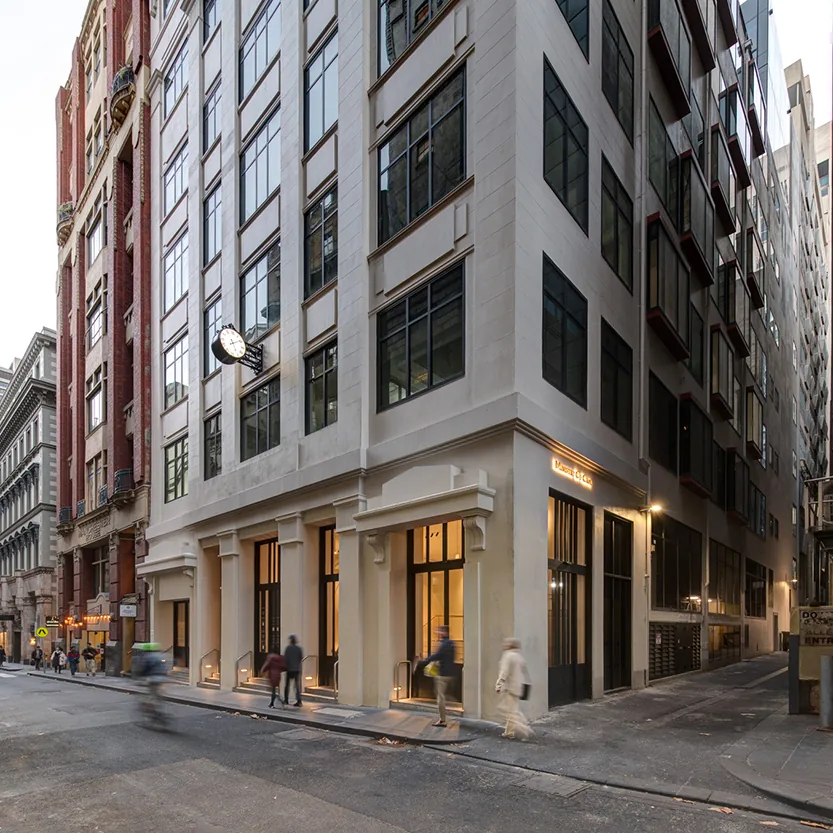
Invicta House.
The most challenging part of an adaptive reuse project is often not what gets built, but how the existing structure is carefully transformed to make it possible.
Project Overview
The most challenging part of an adaptive reuse project is often not what gets built, but how the existing structure is carefully transformed to make it possible.
The Challenge
Invicta House required significant structural modification to unlock a new future for one of Melbourne’s historic CBD buildings. The project combined heritage retention, vertical expansion and major internal reconfiguration within an existing structure never intended to accommodate those changes.
A particularly complex challenge involved removing significant portions of the ground floor slab to create a new arrival experience connecting the basement and ground floor levels. That slab provided critical restraint to basement walls and columns supporting the structure above, meaning the existing building needed to remain stable while fundamental structural elements were removed and reconstructed.
Our Approach
SFE’s involvement began with a review of an existing demolition methodology proposed for construction equipment operating on the existing floor structure. Using first-principles engineering and experience working with heritage buildings, a more efficient structural solution was developed that avoided extensive temporary works and unnecessary strengthening.
That initial engagement evolved into a broader role supporting demolition engineering, temporary works design, structural alteration and strengthening. Detailed staging methodologies were developed to maintain stability as floors, restraints and structural elements were progressively removed and reconstructed.
Particular attention was given to temporary support of basement walls and slender columns while the ground floor structure was modified to deliver the architect’s vision.
The Outcome
The project demonstrates how careful engineering can unlock opportunities within existing buildings that might otherwise appear too difficult, risky or expensive to pursue.
By combining temporary works, demolition sequencing, strengthening and adaptive reuse strategy, the project creates a new future for a significant heritage building while preserving the character that makes it worth keeping in the first place.
Tell Us About Your Project
Every project begins with a conversation.