

New buildings • Structural Investigation • Forensic engineering • Building Modification
371-375 Pitt Street Hotel.
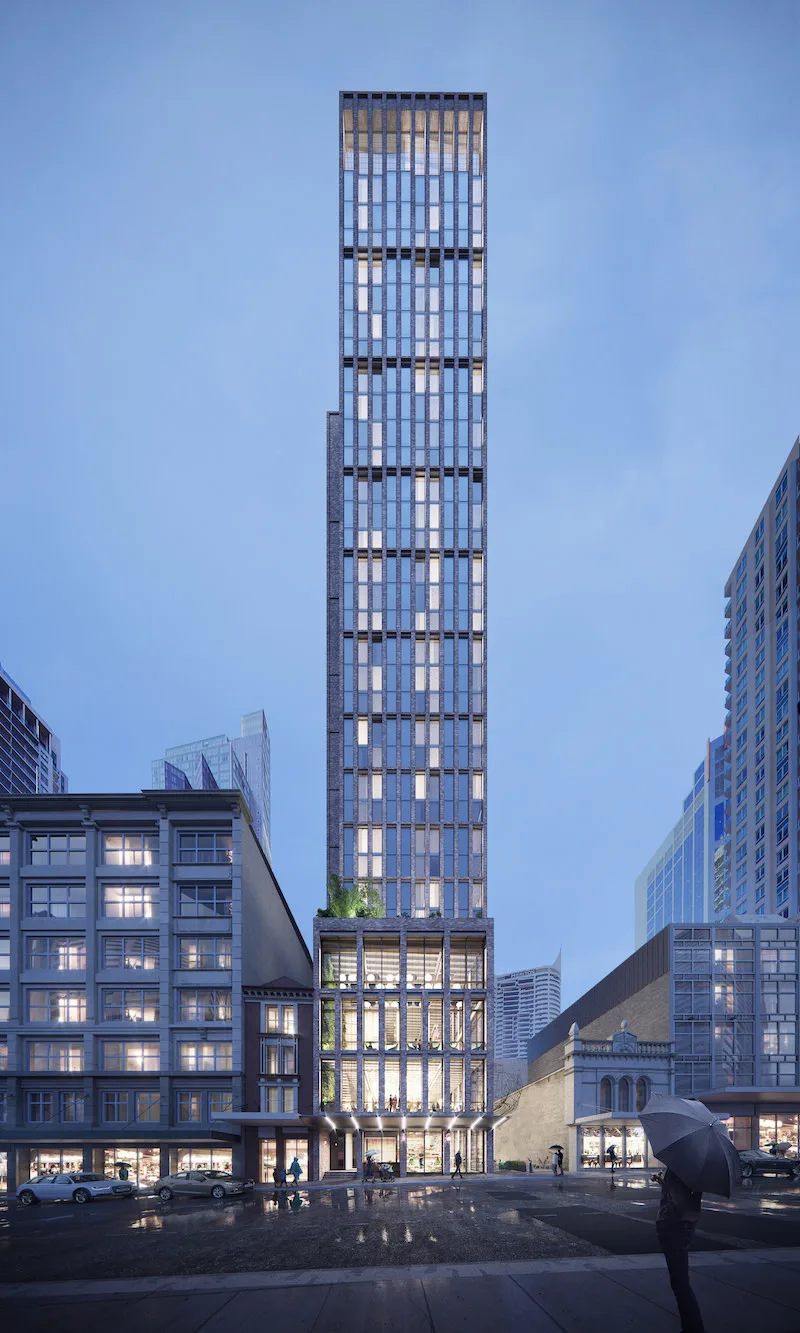
Sheer Force Engineering provided an independent structural peer review and advanced analysis of a proposed 35-storey hotel development at 371-375 Pitt Street in Sydney, New South Wales. Working from the project's ETABS model, wind engineering information and structural documentation, SFE undertook a detailed assessment of building behaviour, stiffness, drift, stability and potential design refinements to support informed decision-making during the project's early design phase.
Overview
Major projects are often shaped by key decisions made long before detailed documentation begins. At 371-375 Pitt Street, Sydney, the proposed development comprised a 35-level hotel tower with two basement levels, a reinforced concrete core and steel-framed composite floor system. The project occupies a constrained CBD site within Sydney's dense urban environment and sits amongst a complex network of surrounding buildings and infrastructure.
Sheer Force Engineering was engaged by the project team to independently review the structural analysis model, wind-loading assumptions and overall lateral stability strategy for the tower. The engagement focused on assessing the feasibility of removing a proposed northern core wall extension while maintaining acceptable structural performance.
The review extended beyond a conventional model audit. SFE undertook detailed examination of building drift, sway, modal response, wind effects and potential structural optimisation strategies, providing the client with an evidence-based framework for assessing possible design changes and improving overall structural efficiency
The Challenge
Unlike many new-build projects where the structural system develops progressively through the design process, this commission required critical review of an already advanced structural scheme while testing whether significant modifications could be accommodated without compromising performance.
The proposed hotel tower relied heavily on its reinforced concrete core for stiffness and lateral stability. Early assessment identified that the building appeared relatively flexible for its height and that careful consideration would be required before removing any existing stiffness elements from the structural system.
Key challenges included:
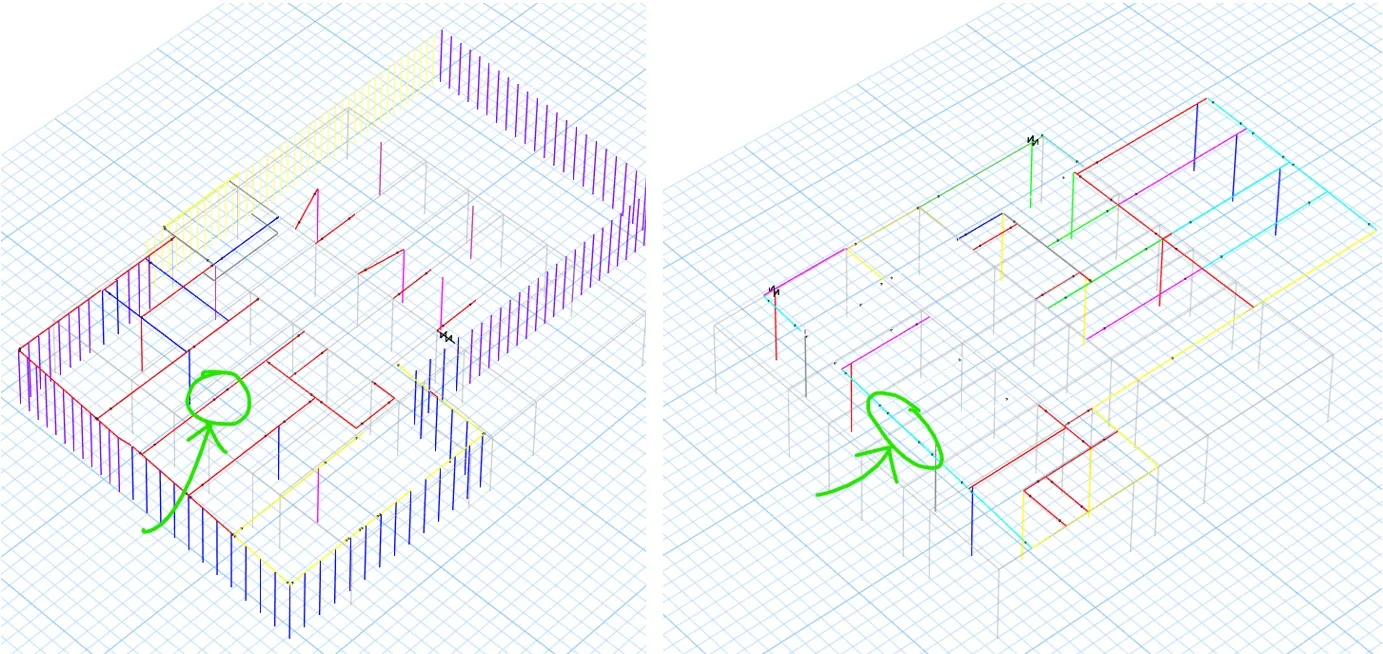
The analysis model contained instability mechanisms that prevented successful modal analysis until rectified.
Multiple beam release and membrane support issues required investigation before meaningful results could be obtained.
The impact of removing part of the northern core required assessment against drift and sway performance criteria.
Wind loading had a significant influence on the overall behaviour of the tower.
The project required balancing structural efficiency, usable floor area, architectural intent and overall building performance.
Our Approach
Sheer Force Engineering adopted a staged review process combining peer review, advanced modelling assessment and strategic structural option studies.
Base Model Review
The engagement commenced with a detailed review of the ETABS analysis model and supporting documentation including structural drawings and wind engineering information.
The investigations identified:
Instability mechanisms associated with beam end releases.
Unsupported membrane and shell elements.
Model accuracy issues requiring correction prior to assessment.
Building drift and stiffness concerns requiring further investigation.
After resolving the identified modelling instabilities, SFE undertook detailed review of:
Modal behaviour.
Building sway characteristics.
Inter-storey drift performance.
Wind-load effects.
Base shear response.
Overall structural stiffness.
Wind and Lateral Stability Assessment
Particular attention was given to understanding:
The relationship between wind loading and building drift.
The influence of wind-tunnel data on the structural design.
Code-based comparisons against AS1170.2 wind actions.
Potential opportunities to refine wind assumptions through further peer review.
SFE compared model-generated wind effects against independent code-based assessments to better understand the sensitivity of the building's performance to wind loading assumptions.
Structural Enhancement Studies
Rather than simply commenting on the existing scheme, our team developed multiple structural enhancement iterations to explore practical pathways for improving performance while maintaining development objectives.
These studies included:
Increasing concrete elastic modulus to better reflect dynamic behaviour and long-term concrete strength gain.
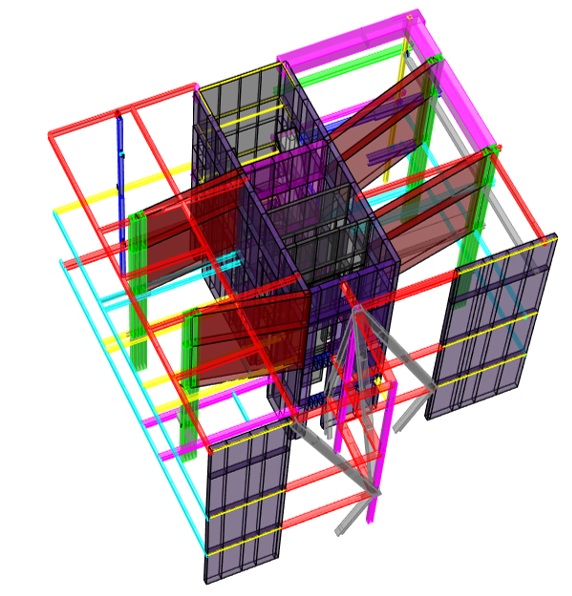
Assessing rooftop outrigger wall systems.
Exploring additional intermediate outrigger systems through the building height.
Improving engagement between the southern diagrid façade and the central core through strategic wall modifications.
Evaluating the resulting impacts on drift, sway and overall stiffness.
The studies demonstrated a progressive reduction in building period, drift and overall deflection, allowing the project team to make informed decisions regarding future development of the structural system.
Throughout the engagement, SFE treated the building as a complete structural system, focusing not only on compliance but also on the interaction between architecture, wind behaviour, floor planning and structural efficiency.
The Outcome
The project team received an independent technical review of the proposed tower together with a clear roadmap for improving structural performance and assessing future design changes.
Rather than relying solely on preliminary model outputs, the study established a deeper understanding of the building's true behaviour and identified practical options for increasing stiffness and reducing drift. The review also highlighted the importance of ongoing refinement of wind-loading assumptions and structural modelling as the project developed.
Benefits delivered included:
Independent structural peer review.
Resolution of analysis model instability issues.
Advanced assessment of drift and sway behaviour.
Independent review of wind-loading implications.
Evaluation of multiple structural enhancement strategies.
Improved confidence in future design decision-making.
Tell Us About Your Project
Every project begins with a conversation.