Heritage Structural Engineer Sydney.

Investigation, repair, adaptive reuse, structural modification, capacity assessment and strengthening for heritage buildings throughout Sydney and New South Wales.

Sheer Force Engineering · Structural engineers for existing buildings · Sydney

Heritage buildings rarely reveal their full story at first glance. We help owners, architects and project teams understand the risks, constraints and opportunities within existing structures before significant decisions are made. Our Sydney office supports heritage projects throughout Sydney and New South Wales.

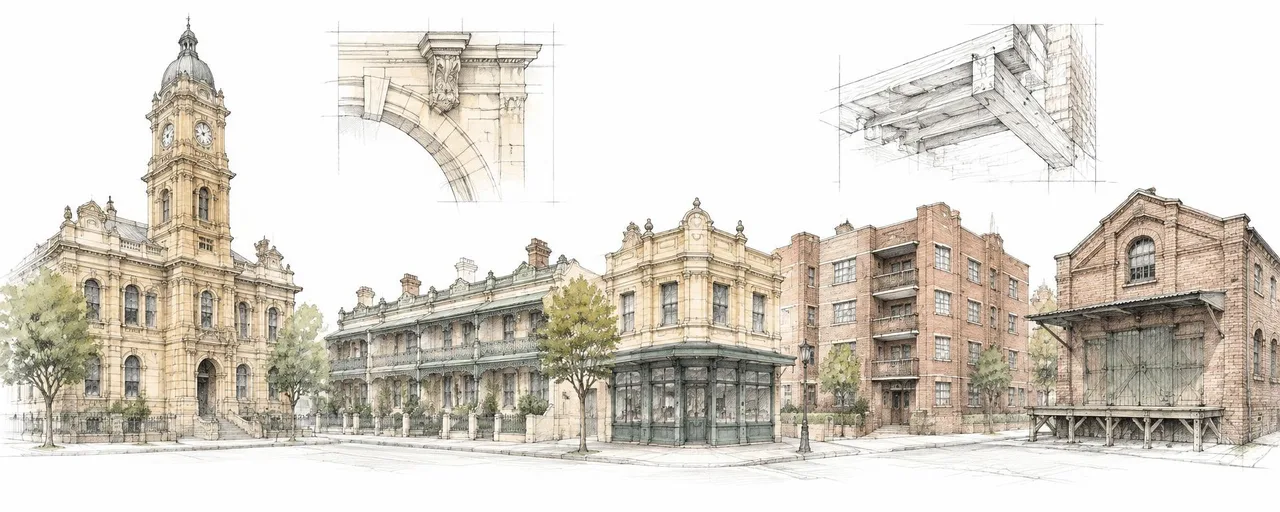
Architectural sketch of Sydney heritage buildings: a sandstone civic building with clock tower, Federation terraces, a corner shopfront, an inter-war apartment block and a brick warehouse

01

Deterioration & Defects In Sydney Heritage Buildings

Sydney's heritage buildings are built from sandstone, soft-fired brick, lime mortar and hardwood timber — materials that have performed for well over a century. Visible decay is common, but it rarely tells the whole story. Diagnosis comes before repair. Establishing whether moisture, salts, movement, corrosion or an earlier alteration is responsible is what leads to a durable, proportionate fix.

Defects We Commonly Investigate

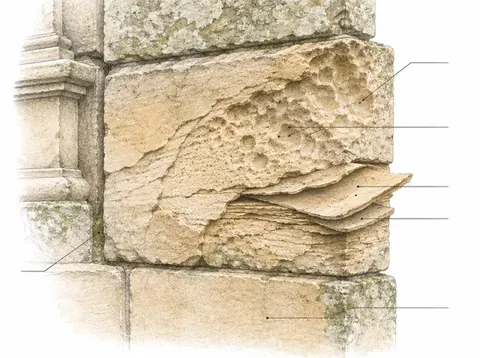
Sandstone Weathering & Decay

Sydney sandstone is durable but sensitive to salts, moisture cycling and incompatible repairs. Surface loss, delamination and eroded detail are common on exposed elevations and parapets.

What you may notice

  • Flaking and contour scaling
  • Salt staining and powdering
  • Failed cement patch repairs

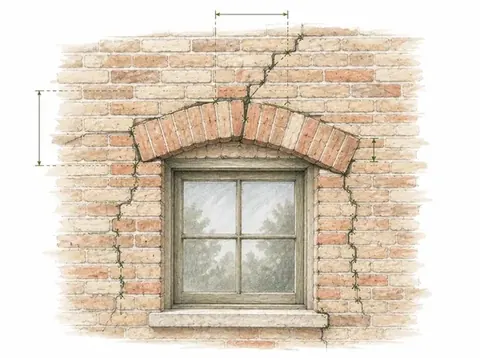
Masonry Cracking & Movement

Cracks in heritage brick and stone walls record how a building has moved. Pattern, width and whether movement is still active matter far more than the crack itself.

What you may notice

  • Stepped cracking around openings
  • Bulging or leaning walls
  • Distorted arches and lintels

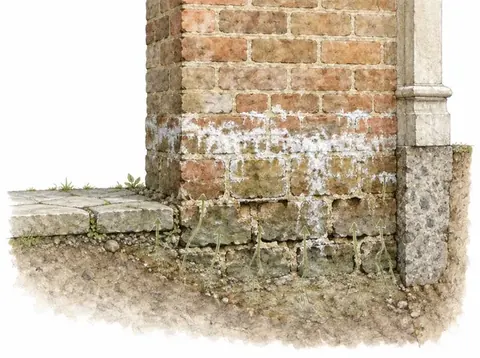
Rising Damp & Moisture

Moisture drives most heritage deterioration. Failed damp courses, raised ground levels and poor drainage quietly damage masonry, mortar and timber long before the issue becomes structural.

What you may notice

  • Tide marks and efflorescence
  • Crumbling mortar at low level
  • Decay in subfloor timbers

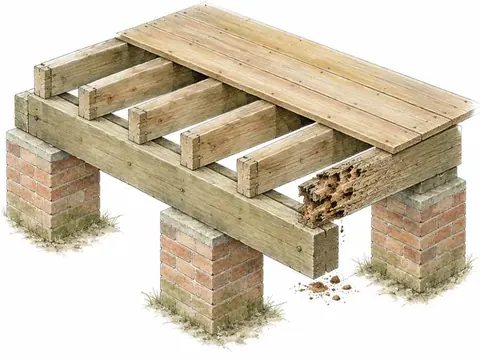
Timber Decay & Termites

Floors, roofs and verandahs in Sydney's terraces and Federation homes rely on hardwood framing. Termite or fungal damage rarely means wholesale replacement.

What you may notice

  • Springy or uneven floors
  • Sagging roof lines
  • Damaged bearers and joist ends

Corrosion Of Embedded Steel

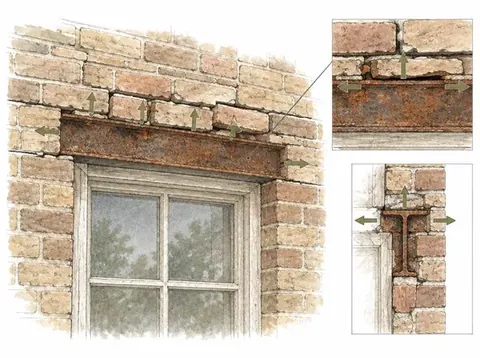
Iron cramps, steel lintels and early reinforced concrete corrode wherever water reaches them. Expanding rust cracks and displaces the masonry around it.

What you may notice

  • Horizontal cracking at lintels
  • Spalling concrete
  • Rust staining on façades

Undocumented Alterations

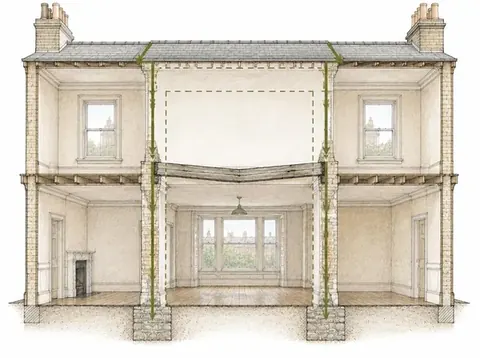
Removed walls, enlarged openings and past renovations often redistribute load in ways no one recorded. Many apparent defects trace back to an earlier intervention.

What you may notice

  • Unexpected sagging above openings
  • Cracking near past renovations
  • Missing or cut members

Engineering Insight

Treating The Symptom Rarely Fixes The Problem

Repointing a cracked wall, replacing decayed stone or patching spalled concrete will only last if the underlying cause has been dealt with.

Our investigations are designed to find that cause, so repair budgets are directed at what will actually make a difference.

02

Alterations & Structural Modifications

Most heritage buildings in Sydney have already been changed many times. A new change is usually achievable — the question is how to make it without overloading historic fabric or removing the elements that give the building its significance.

We test proposals early, identify where new structure should carry new loads, and work with architects and heritage consultants to keep interventions discreet and reversible where possible.

In New South Wales, heritage alterations often require structural, heritage and planning considerations to be resolved together. Early engineering input helps establish what is structurally feasible, what heritage fabric may be affected and what information the wider consultant team will require before significant design and approval costs are incurred.

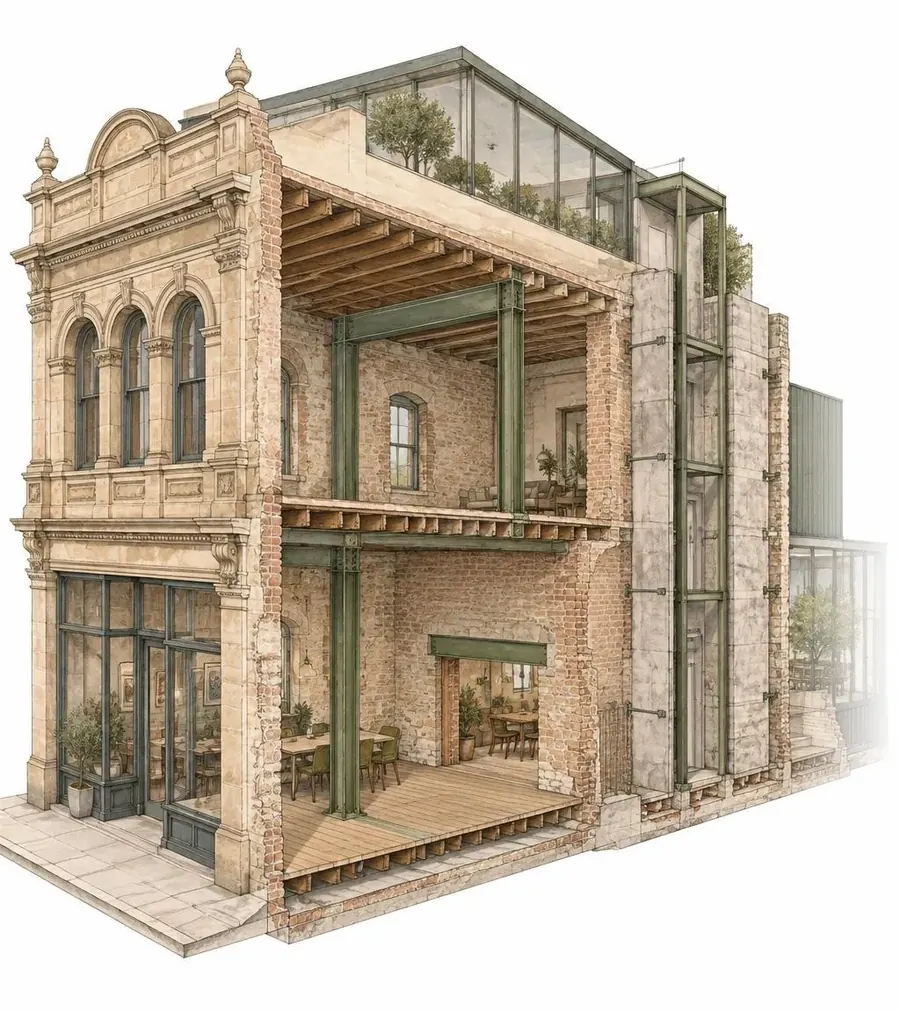
Architectural cutaway sketch of a Sydney heritage building with its sandstone facade retained and new steel framing, openings, lift core, rooftop and rear additions highlighted in olive green

Modifications We Commonly Support

  • New openings in load-bearing masonry
  • Rear additions and extensions
  • Added levels and rooftop structures
  • Lift and stair insertions
  • Plant, services and solar loads
  • Temporary works and façade retention
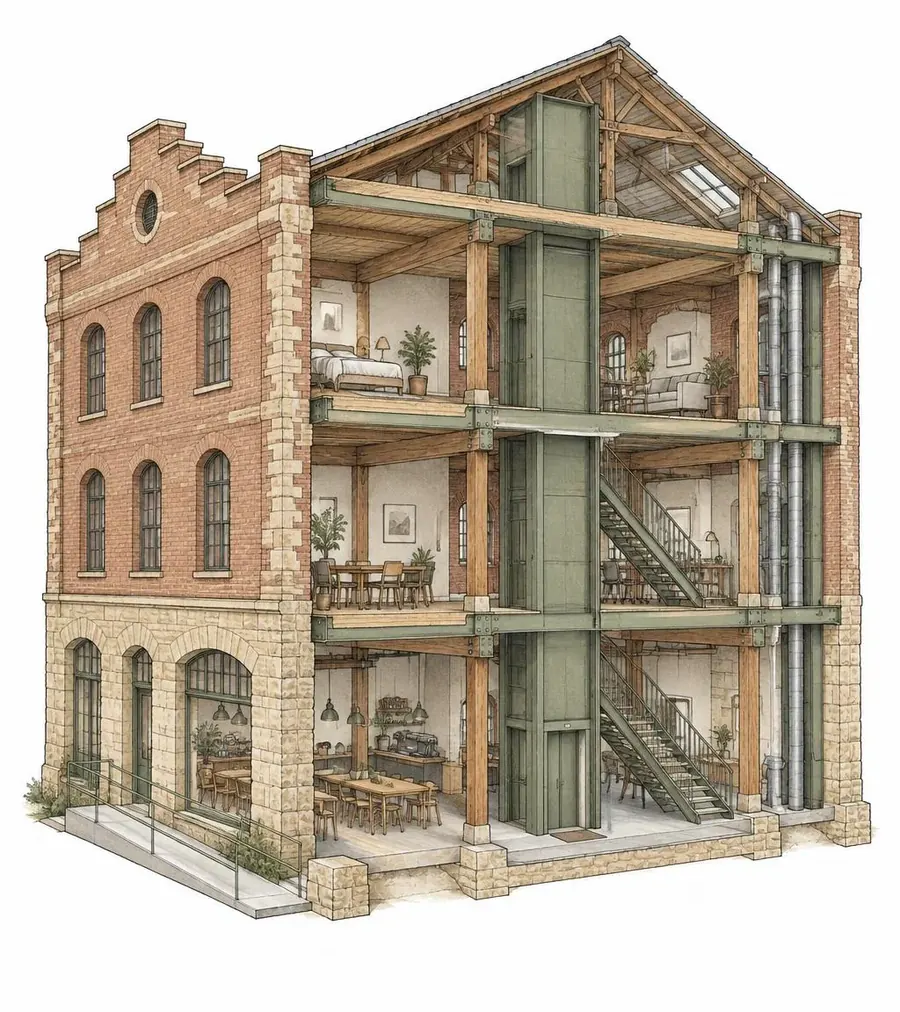
Architectural cutaway sketch of a Sydney heritage warehouse adapted into apartments and a café, with a new lift, stair, services and strengthening highlighted in olive green

03

Adaptive Reuse & Change Of Use

Adaptive reuse projects often begin with a deceptively simple question:

‘Can this building support what we want it to become?’

In New South Wales, changing the use of a heritage building can trigger structural, heritage, accessibility, fire-safety and planning considerations simultaneously. Establishing feasibility early helps project teams avoid investing heavily in concepts that are difficult to justify, approve, fund or construct.

We assess the existing structure, identify likely constraints, test proposed interventions and help project teams understand what is realistically achievable before the design process progresses too far.

Whether a warehouse is becoming apartments, a church is becoming a community space or a commercial building is being repositioned for a new use, understanding the building’s structural capability early gives the wider project team a stronger foundation for design, approvals and delivery.

Engineering Perspective

The Earliest Feasibility Work Often Saves The Most Time.

Understanding structural constraints early helps project teams avoid costly redesigns, reduces approval risk and improves the likelihood that heritage fabric can be retained while still achieving the project’s commercial objectives.

04

How We Approach Heritage Buildings

Our methodology is investigation-first and conservation-led, consistent with the principles of the Australia ICOMOS Burra Charter.

Heritage buildings are not treated as blank canvases. Understanding significance before intervention allows project teams to retain important historic fabric, minimise unnecessary change and develop practical solutions that support the building’s ongoing use.

This approach underpins many of the heritage conservation, adaptive reuse and building-upgrade projects undertaken throughout Sydney and New South Wales. It helps owners, architects and project teams navigate structural, heritage and planning considerations while retaining what makes a place worth preserving.

Heritage Engineering Credentials

Our heritage engineering advice is supported by professional engineering qualifications, existing-building expertise and conservation-led methodology. While every heritage building presents unique challenges, the engineering principles guiding our approach remain consistent: understand significance, investigate thoroughly and intervene proportionately.

  • Chartered Professional Engineers

    Advice led by chartered structural engineers accountable for every recommendation.

  • National Registrations & Credentials

    Professional registrations held across the jurisdictions in which we practise.

  • Sydney & NSW Heritage Experience

    Structural assessment, heritage engineering and existing-building work delivered across Sydney and New South Wales.

  • Existing Building & Heritage Expertise

    A practice focused on buildings that already stand, from terraces to civic landmarks.

  • Australia ICOMOS Burra Charter Methodology

    Guided by the principles of the Australia ICOMOS Burra Charter: understand significance first, then do as much as necessary and as little as possible.

  • Investigation-First Approach

    Causes diagnosed through inspection, testing and analysis before repairs are designed.

Our Four-Step Approach

  1. 01

    Understand The Building

    Review history, previous alterations and available records. Establish what is significant before discussing what should change.

  2. 02

    Investigate The Structure

    Inspect, measure and, where needed, open up. Identify load paths, materials and the real cause of any distress.

  3. 03

    Intervene Proportionately

    Design repairs and modifications that do as much as necessary and as little as possible, retaining original fabric wherever practical.

  4. 04

    Document Clearly

    Provide reports, sketches and drawings that consultants, councils and builders can act on with confidence.

05

Heritage Approvals In NSW

In New South Wales, works to heritage buildings may be governed by local council heritage controls, heritage conservation areas or, for items on the State Heritage Register, by Heritage NSW. The approval pathway is set by your planner and heritage consultant.

Heritage approval pathways can feel complex because structural, heritage, planning and building requirements often overlap. One of the most valuable things engineering can provide early is clarity about what is feasible, what information is likely to be required and where genuine structural constraints may exist.

Our role is structural: demonstrating that proposed works are feasible, explaining how significant fabric will be protected during construction, and keeping intervention to what is genuinely required. We coordinate with architects, heritage consultants, certifiers and builders so engineering input supports — rather than delays — the wider process.

Engineering Perspective

The Most Expensive Approval Problems Are Often Discovered Too Late.

Early structural investigations help identify feasibility issues, heritage constraints and documentation requirements before significant design and consultant costs are incurred.

Engineering Input We Typically Provide

  • Structural condition reports
  • Structural feasibility statements
  • Methodology for works to significant fabric
  • Temporary works and façade retention concepts
  • Sketch details for heritage-sensitive repairs
  • Responses to council and consultant queries

We do not provide planning or legal advice. Engineering documentation is prepared to support the approval strategy determined by your project team.

SYDNEY HERITAGE

Sandstone, Federation and the fabric that makes Sydney.

Sydney’s heritage buildings are defined not just by how they look, but by how they were constructed. Hawkesbury sandstone civic buildings, Victorian and Federation terraces, inter-war apartments, warehouses and commercial buildings each carry their own structural characteristics and vulnerabilities.

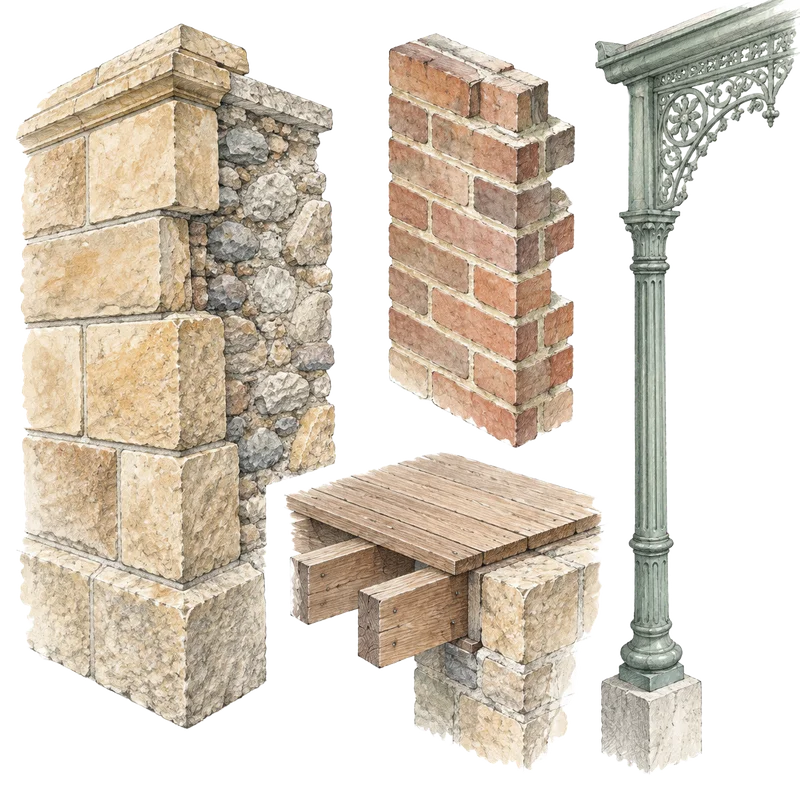
Many heritage structures contain masonry walls with rubble cores, soft lime mortars, cast-iron elements, embedded timber framing and undocumented alterations made over many decades. Drawings are often incomplete or inaccurate, requiring investigation before reliable engineering decisions can be made.

Understanding how these buildings actually behave is often the key to successful conservation, structural repair, adaptive reuse and modification projects. The more accurately a structure is understood, the more original fabric can usually be retained.

Sketch of Sydney heritage building fabric: sandstone wall with rubble core, Federation brickwork, hardwood floor bearing into masonry and a cast-iron verandah column

Engineering Perspective

Sydney Heritage Buildings Rarely Match The Drawings.

Decades of undocumented alterations, repairs and changing uses often mean the structure on site differs significantly from historic records. Investigation and verification remain critical parts of heritage engineering.

10

Heritage Engineering Sydney — Frequently Asked Questions

What does a heritage structural engineer in Sydney do?

A heritage structural engineer investigates, assesses, repairs, strengthens and adapts heritage buildings. In Sydney that commonly means sandstone and brick masonry, Federation and Victorian terraces, inter-war apartments and historic commercial and civic buildings. The aim is to understand how the building performs today and how it can be repaired or changed while retaining its significance.

Do you work on heritage buildings across NSW, not just Sydney?

Yes. We support heritage projects throughout Greater Sydney and New South Wales from our Sydney office, travelling to regional sites where the project warrants a site visit.

Can a heritage building be structurally modified?

In most cases, yes. New openings, additions, added levels, lifts and rooftop works are often achievable once the existing structure and its significance are understood. Our approach is usually to carry new loads on new structure rather than asking historic fabric to do more than it was built to do.

Do I need structural input for a heritage DA or approval?

Often. Where works affect load-bearing elements or significant fabric, councils, heritage consultants and building certifiers commonly ask for structural justification. We provide condition reports, feasibility statements and methodology to support the wider application. Planning and heritage advice remain the role of your planner and heritage consultant.

How do you work with Heritage NSW, councils and heritage consultants?

We work as part of the project team. The heritage consultant defines what is significant, the architect shapes the proposal and we establish how it can be built safely with the least intervention. Where items are on the State Heritage Register or within a heritage conservation area, we provide engineering information to support the approval pathway the team is pursuing.

Can a heritage building be adaptively reused?

Yes. Warehouses, schools, churches, terraces and civic buildings regularly accommodate new uses. Adaptive reuse typically involves a capacity review, strengthening where required, and coordination with heritage and fire consultants so new use and significance can coexist.

Is cracking in my sandstone or brick building serious?

Not necessarily. Many cracks are historic and stable. Others indicate active movement, moisture problems or corrosion. An investigation establishes the cause, whether movement is ongoing and what, if anything, needs to be done.

Why is my heritage sandstone deteriorating?

Sandstone decay is usually driven by moisture and salts rather than load, and is often accelerated by cement-based repairs or poor drainage. Identifying the moisture source and previous interventions comes before any conservation or repair works.

Can heritage buildings be strengthened?

Yes. Floors, walls, roofs and footings can be strengthened for higher loads, new uses or improved resilience. Strengthening is designed around the existing structure so significant fabric is retained wherever practical.

Should I get a structural assessment before buying a heritage property?

It is worthwhile. A pre-purchase structural assessment can identify defects, deterioration, movement and capacity limits that affect future repair costs or development plans.

What heritage building defects are most common in Sydney?

We commonly see sandstone weathering, masonry cracking and movement, rising damp, termite and fungal decay in timber, corrosion of embedded steel and the effects of undocumented past alterations.

How much does a heritage structural assessment cost?

It depends on the size, significance and condition of the building and the scope of investigation required. Contact our Sydney team to discuss the building and we will recommend an appropriate scope.

Contact Our Sydney Team

Have a heritage building we should look at?

Whether you're planning alterations, investigating structural concerns, undertaking adaptive reuse works or seeking to better understand a heritage structure, we'll help you understand the risks, constraints and opportunities before committing to the next step.

Sydney office

Suite 302, Level 3, 50 York Street, Sydney NSW 2000

Telephone (Sydney)

(02) 8074 0227

Response

Usually within one business day