

Heritage • Remediation • Existing Buildings • Condition Assessment • Structural Investigation
Wilsons Promontory Light Station Precinct.
Sheer Force Engineering undertook condition assessments, restoration design and structural documentation for the Wilsons Promontory Light Station Precinct as part of Parks Victoria's Heritage Icons Program. The project involved multiple heritage cottages, service buildings, former engine sheds and a deteriorated maritime jetty structure. Through detailed investigation and restoration planning, SFE developed a conservation-focused strategy that prioritised repair and retention of existing heritage fabric while improving the long-term durability and safety of the precinct.
Project Overview
Located at the southernmost tip of mainland Australia, Wilsons Promontory Light Station is one of Victoria's most significant maritime heritage sites. The precinct contains a collection of heritage cottages, service buildings, engine sheds and jetty infrastructure that have supported operation of the light station for generations.
As part of Parks Victoria's Heritage Icons Program, the precinct was identified for conservation and restoration works to preserve its heritage significance and ensure its ongoing use by visitors and staff.
Sheer Force Engineering was engaged as part of the consultant team led by RBA Architects and Conservation Consultants to undertake condition assessments, identify deterioration mechanisms and develop structural restoration solutions for key assets throughout the precinct.
The Challenge
Heritage engineering is challenging.
Remote heritage engineering is something else entirely.
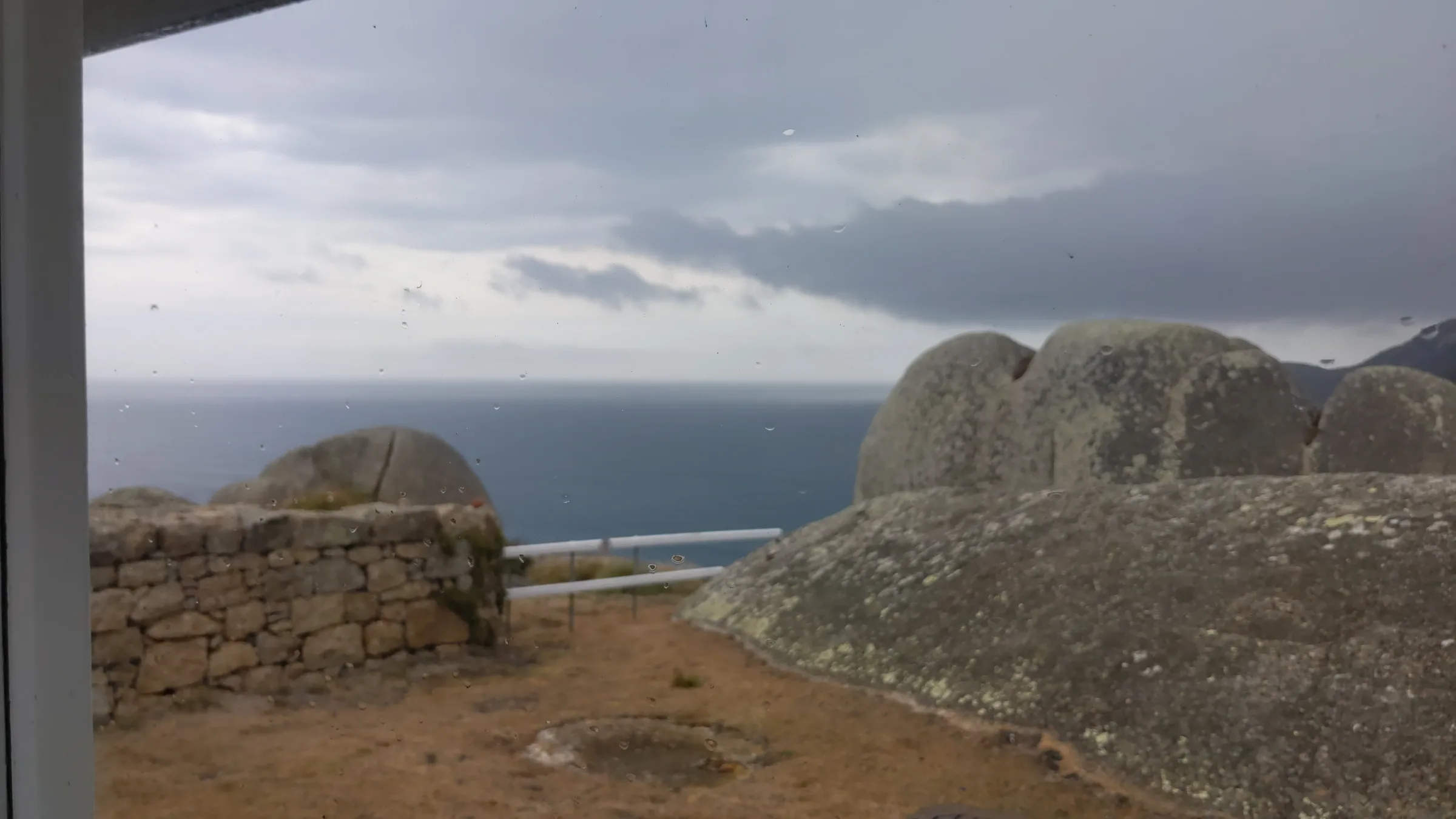
The Wilsons Promontory Light Station precinct is exposed to some of the harshest environmental conditions in Victoria, including:
Salt-laden marine exposure.
High winds.
Difficult site access.
Constant weathering.
Long-term maintenance challenges.
The assessment incorporated:
Four heritage accommodation cottages.
Ranger office and workshop buildings.
Two former engine sheds.
Historic jetty and viewing platform infrastructure.
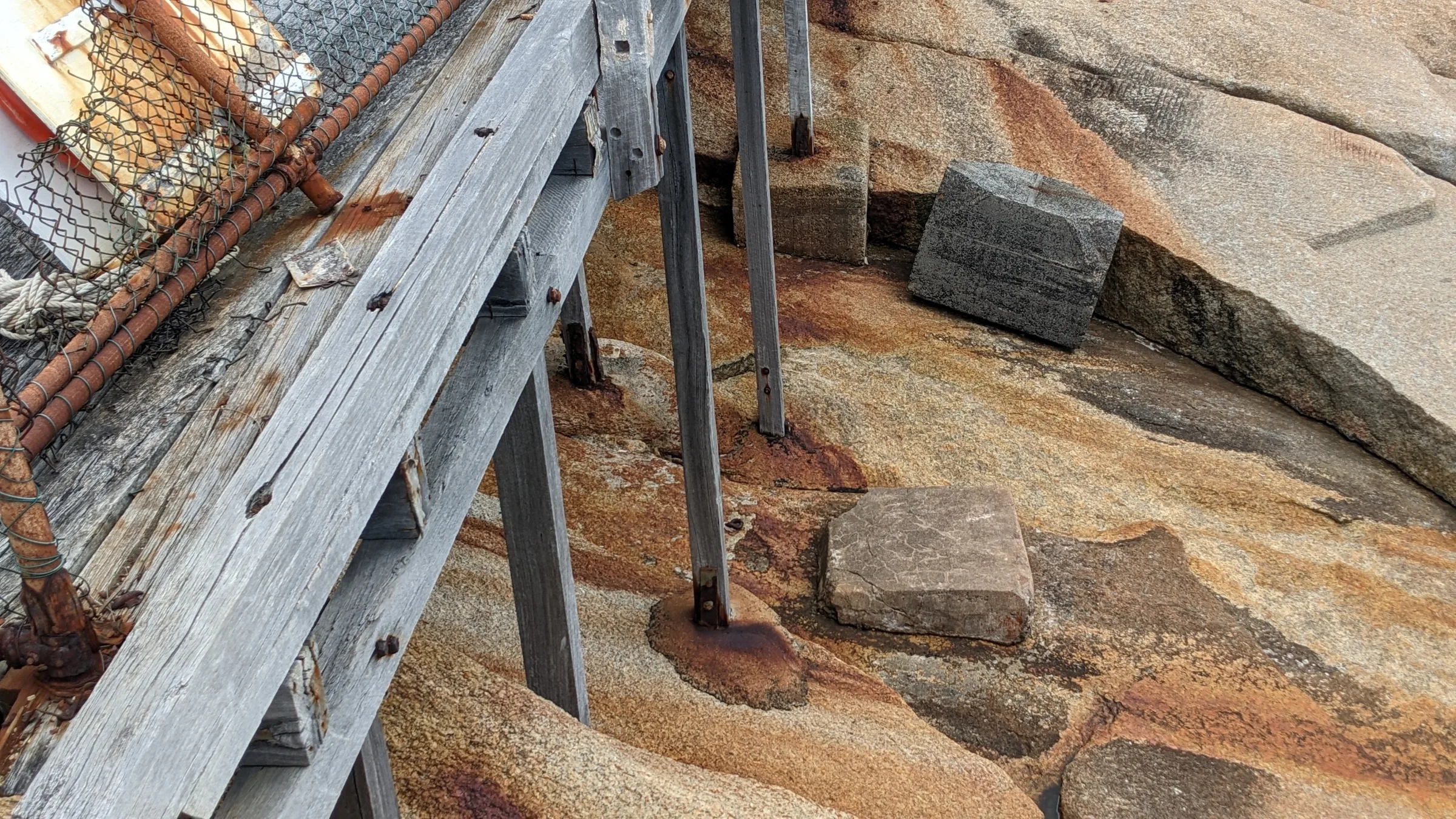
While various defects were identified across the precinct, the primary challenge was the deteriorated timber jetty structure located on the rocky shoreline north of the station.
A previous engineering study had considered alternatives including complete demolition, reconstruction or closure of the jetty. The challenge for SFE was determining whether the existing structure could be conserved and restored rather than replaced.
Our Approach
Sheer Force Engineering undertook detailed visual inspections over multiple days across the entire precinct.
The assessment examined:
Heritage cottages.
Masonry structures.
Timber-framed buildings.
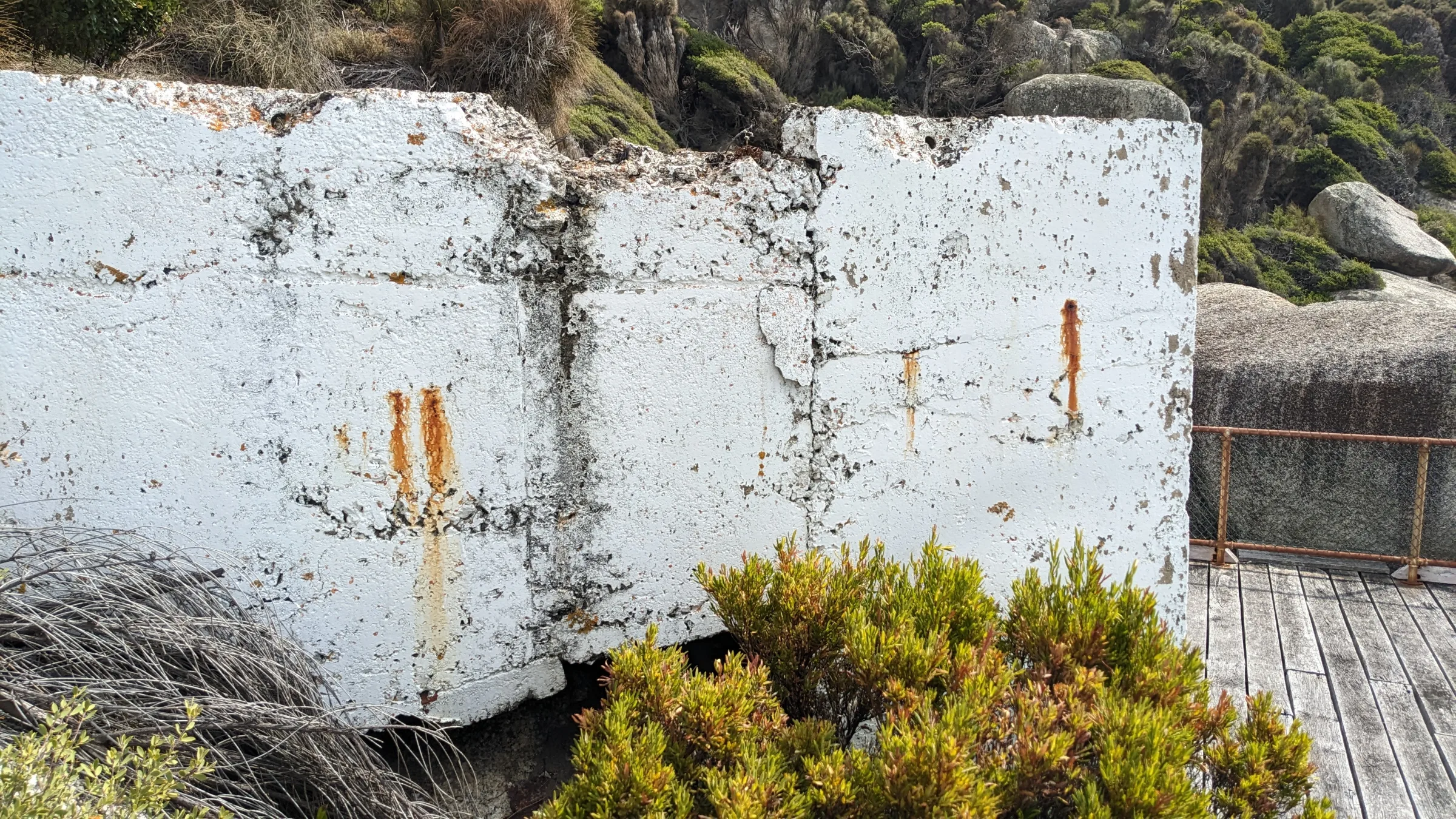
Concrete infrastructure.
Historic jetty elements.
Existing repair history.
Structural deterioration mechanisms.
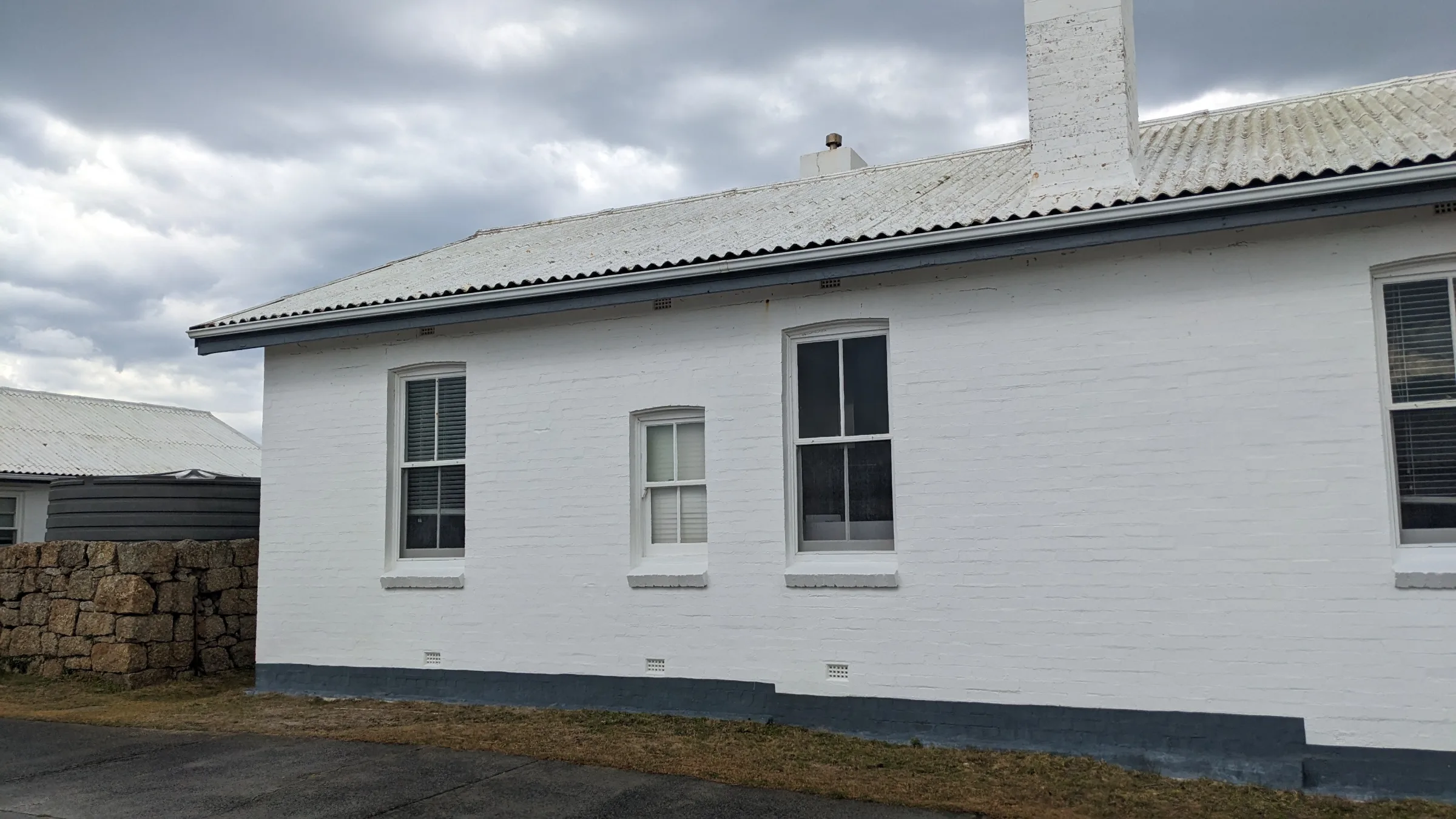
At the cottage buildings, only relatively minor structural interventions were identified, with the majority of structures found to be performing well considering their age. Recommendations focused primarily on isolated lintel replacement, drainage improvements and ongoing monitoring.
The historic jetty required a far more detailed review.
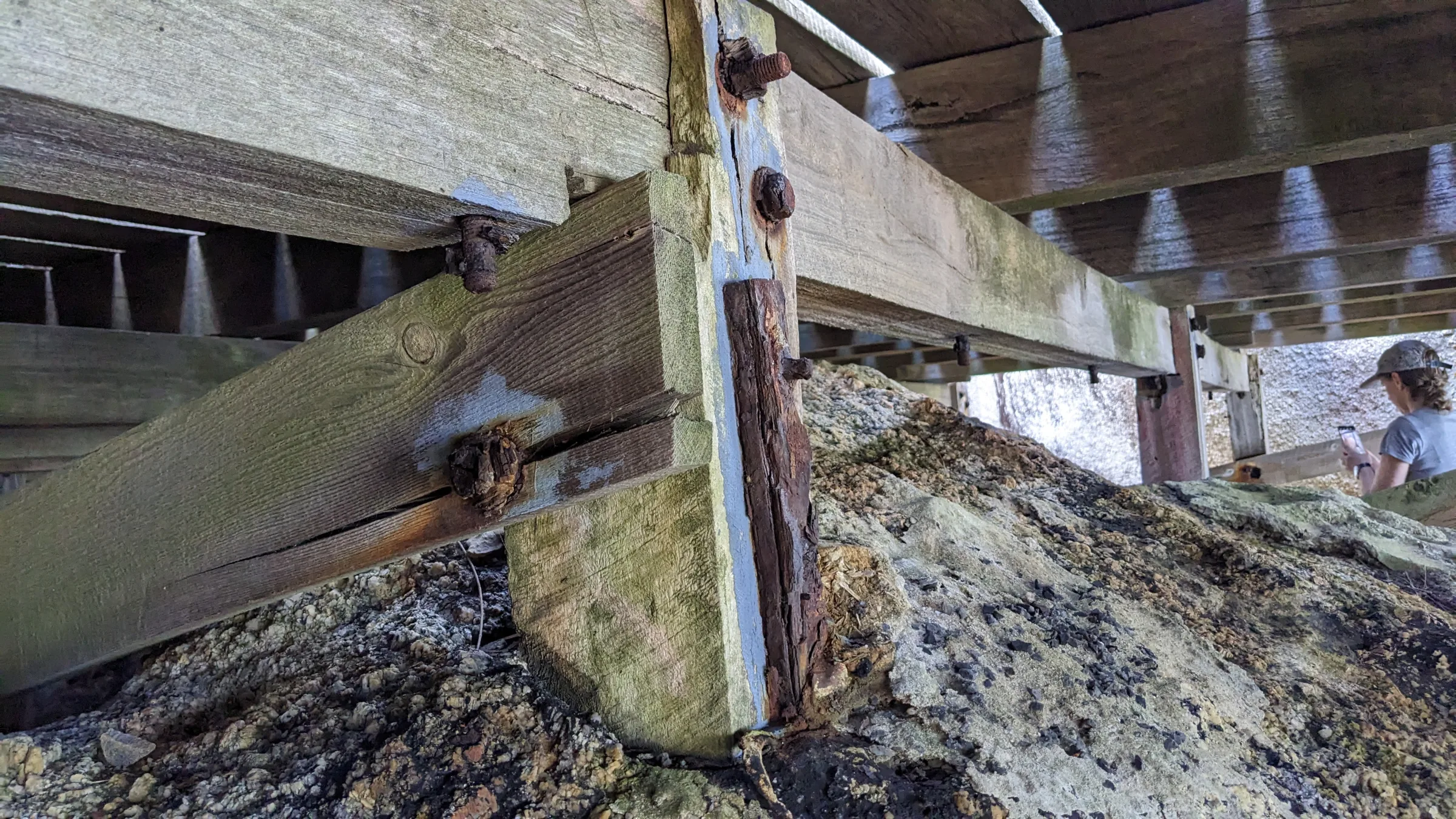
The timber jetty structure is supported directly on the underlying rock formation and contains a combination of timber decking, timber joists, timber bearers, timber posts and steel connection hardware.
Rather than immediately recommending replacement, SFE investigated which elements remained viable and how deterioration could be selectively addressed while retaining as much original fabric as possible.
The Findings
The structural assessment found that the most significant deterioration throughout the precinct was concentrated within the jetty structure.
Key defects included:
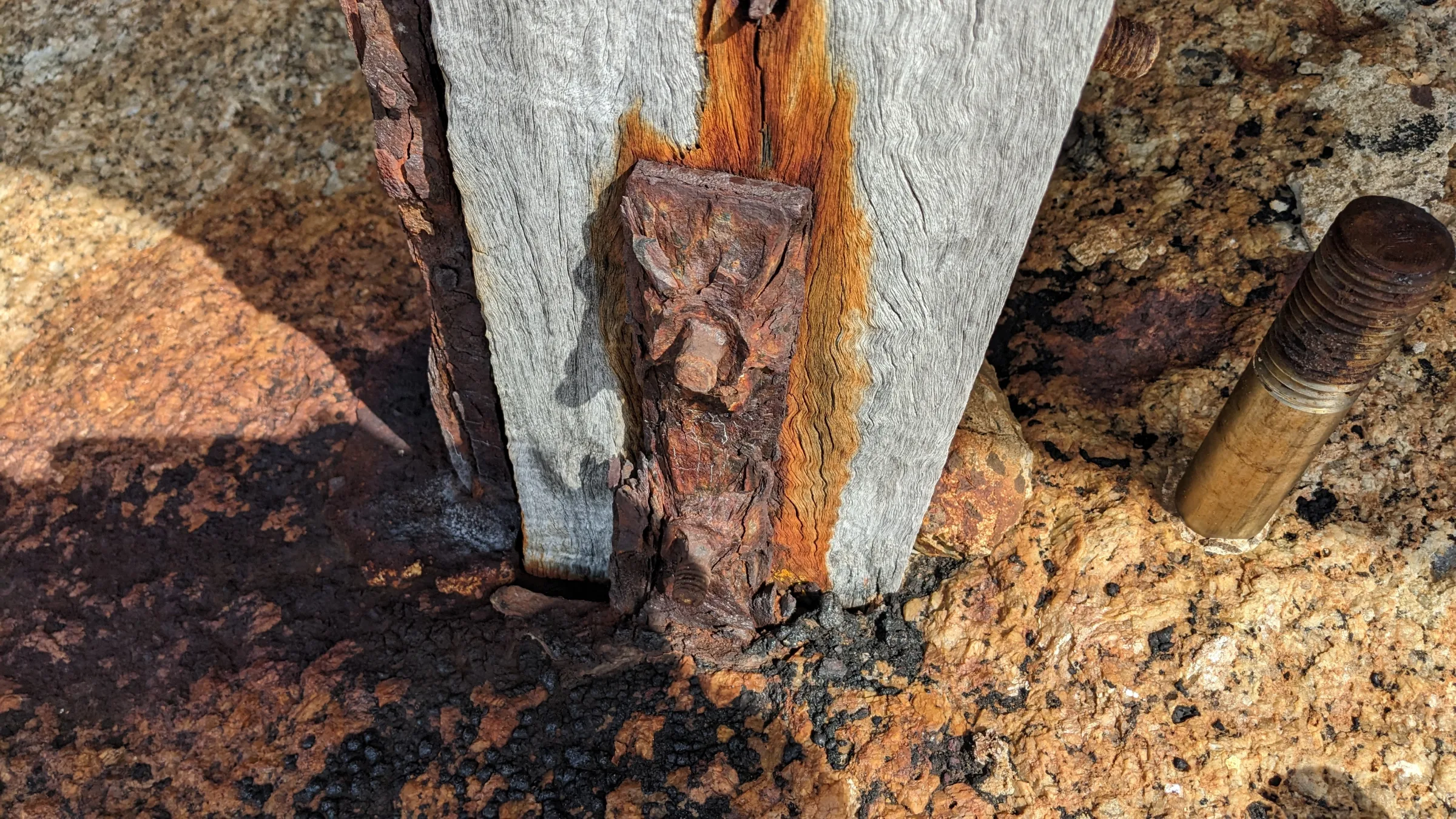
Severe corrosion of steel base connections.
Corrosion of embedded fixing rods.
Corroded bolted timber connections.
Split timber cross-bracing members.
Deteriorated timber decking.
Splitting and deterioration of timber joists.
Failure of the existing balustrade system.
The deterioration was largely attributable to decades of exposure within an aggressive marine environment.
Importantly, the assessment concluded that repair and strengthening of the jetty remained feasible.
Rather than replacing the structure entirely, SFE identified a strategy focused on targeted rehabilitation of individual components.
The restoration strategy included:
Replacement of heavily corroded steel base connections.
Repair of split timber bracing.
Selective replacement of deteriorated timber members.
Replacement of corroded bolts and fixings.
Repair and reinstatement of timber decking.
Installation of protective flashing to improve future durability.
Replacement of failed balustrade systems.
The Outcome
Following completion of the structural investigation, Sheer Force Engineering prepared detailed restoration drawings and intervention methodologies for both the jetty structure and selected precinct buildings.
The proposed approach focused on retaining and repairing existing elements wherever practicable rather than pursuing wholesale replacement.
This strategy provided several benefits:
Preservation of original heritage fabric.
Reduced construction complexity.
Reduced disruption to the heritage asset.
Reduced material replacement.
Improved durability in the marine environment.
Reduced reliance on extensive heavy lifting and marine construction activities.
The project ultimately demonstrated that even severely weathered heritage infrastructure can often be conserved through careful investigation and targeted intervention rather than complete reconstruction
Tell Us About Your Project
Every project begins with a conversation.