

Existing Buildings • Forensic engineering • Expert Witness • Condition Assessment • Structural Investigation
St Kilda Road Apartment Insurance Dispute.
Sheer Force Engineering undertook an independent forensic engineering assessment of a water-damaged apartment following a major plumbing failure in a multi-storey residential building. The investigation reviewed water intrusion pathways, damage mechanisms, wet-area performance, compliance issues and competing causation reports. Through detailed inspection, testing and evidence-based analysis, SFE concluded that the observed deterioration was predominantly attributable to the insured water-loss event and developed recommendations for comprehensive remediation.
Project Overview
A burst plumbing fitting within an apartment on an upper level caused a significant water-loss event affecting multiple apartments throughout a multi-storey residential building in Melbourne. Water passed through wall cavities, ceiling spaces and floor areas, impacting several dwellings over multiple levels.
One of the affected apartments experienced extensive water intrusion throughout the bathroom, ensuite, hallway, bedrooms and adjoining living spaces. Water remained present within portions of the dwelling for an extended period following the incident, creating concerns regarding concealed damage, moisture retention and long-term deterioration.
The homeowner engaged Sheer Force Engineering to undertake an independent assessment of the damage and review a causation report previously prepared on behalf of the insurer.
The assignment ultimately became a detailed forensic investigation into the cause of the observed damage and whether the proposed insurer position was supported by the available evidence.
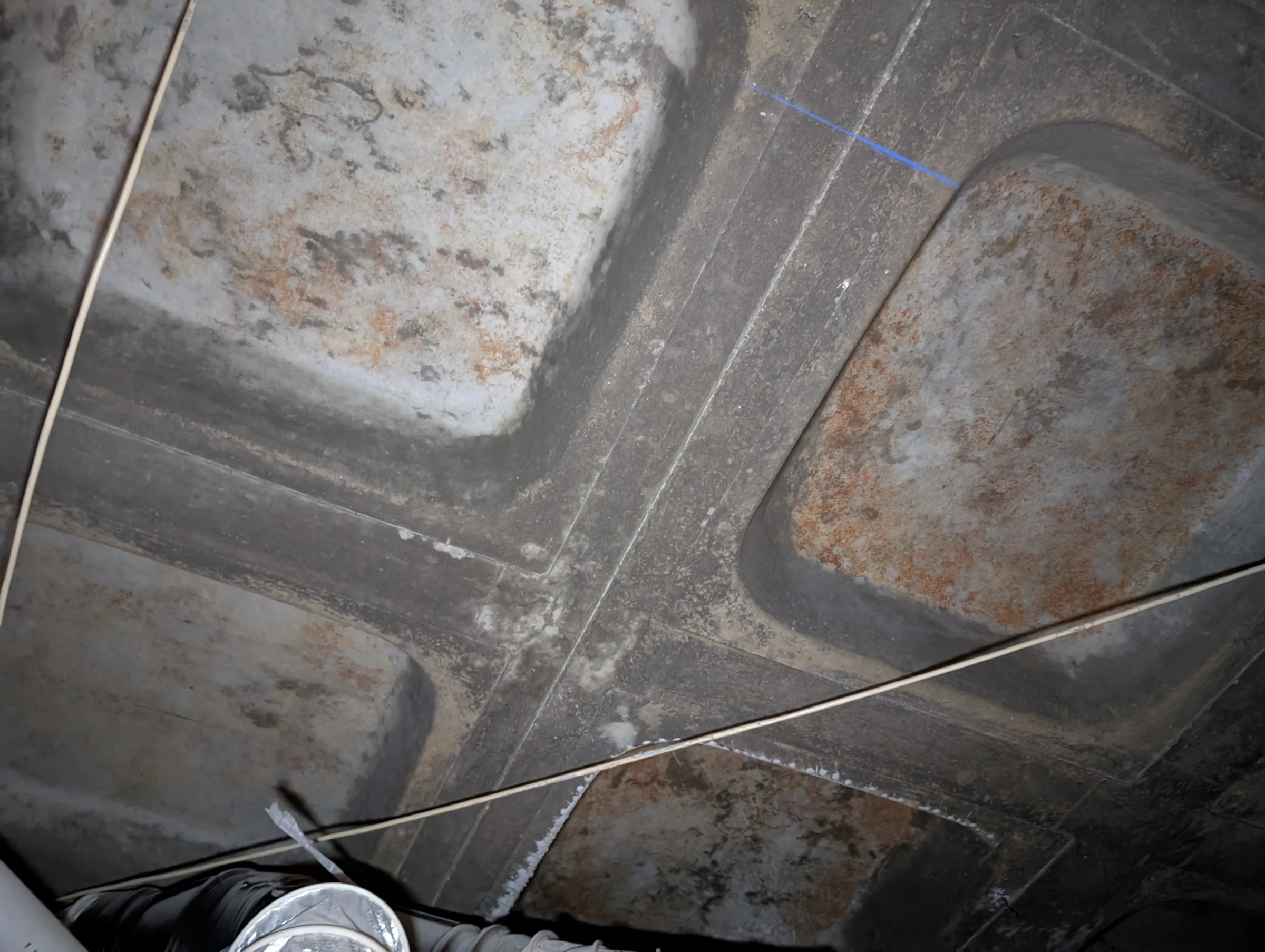
The Challenge
Insurance disputes often emerge when two parties agree that damage exists but disagree on why it occurred.
In this case, visible defects throughout the apartment included:
Cracking to plasterboard.
Swollen door frames.
Delaminated wall tiles.
Paint deterioration.
Moisture damage to joinery.
Ceiling deterioration.
Separation at wall and ceiling junctions.
Softened and "spongy" plasterboard wall linings.
The insurer's consultant suggested that portions of the damage may have been associated with pre-existing defects, waterproofing issues and workmanship concerns rather than being entirely attributable to the insured event.
The challenge was determining:
Which defects were genuinely caused by the water-loss event.
Which defects predated the event.
Whether the tiled wet areas were defective.
Whether the apartment had been performing adequately prior to the water ingress.
What remediation was actually required
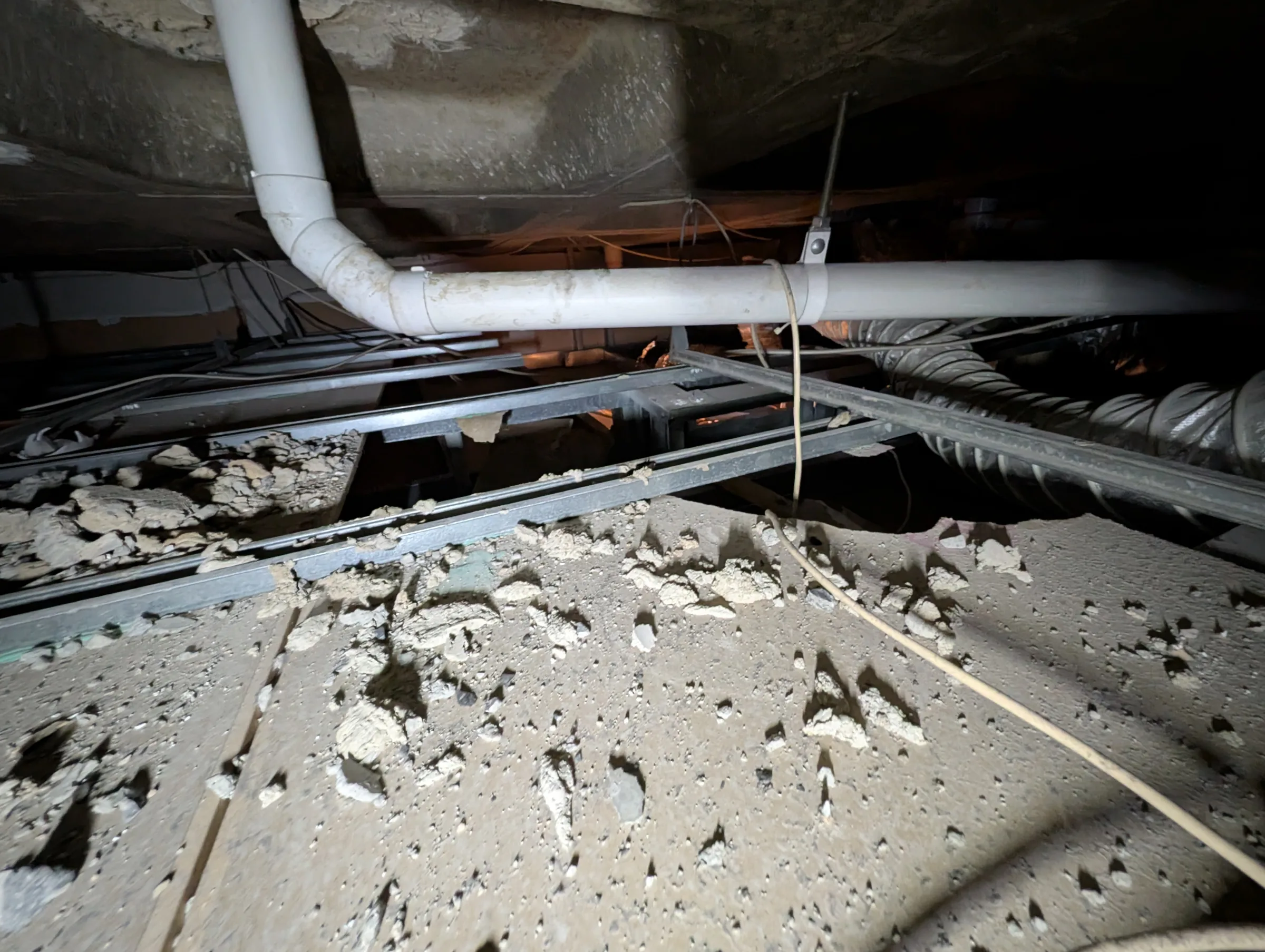
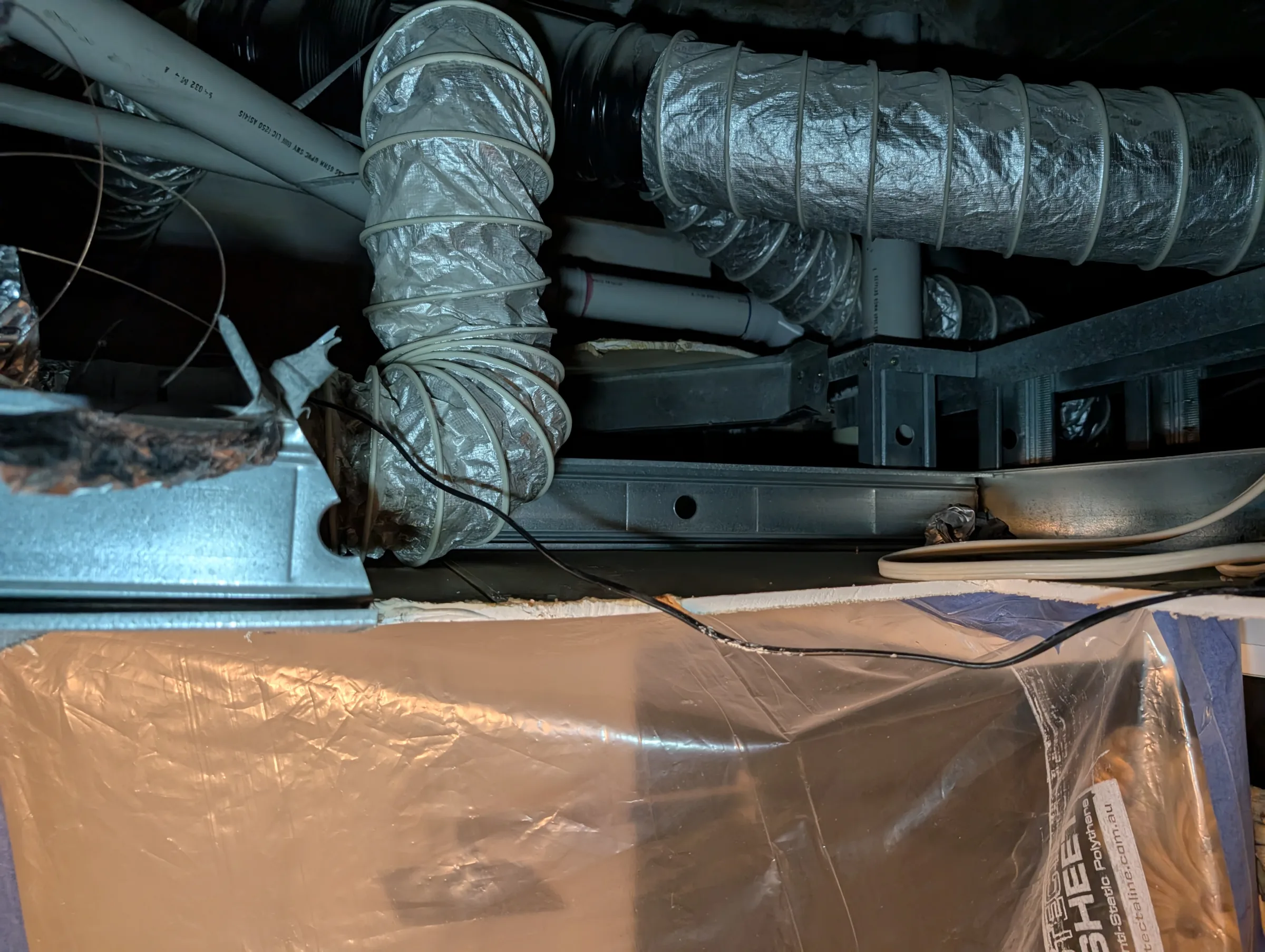
Our Approach
Rather than relying solely on visual observations, Sheer Force Engineering undertook a more comprehensive forensic assessment.
The investigation incorporated:
Site inspection.
Review of photographs taken during and immediately after the incident.
Review of insurer-appointed consultant reports.
Assessment of tile drainage performance.
Floor level and fall measurements.
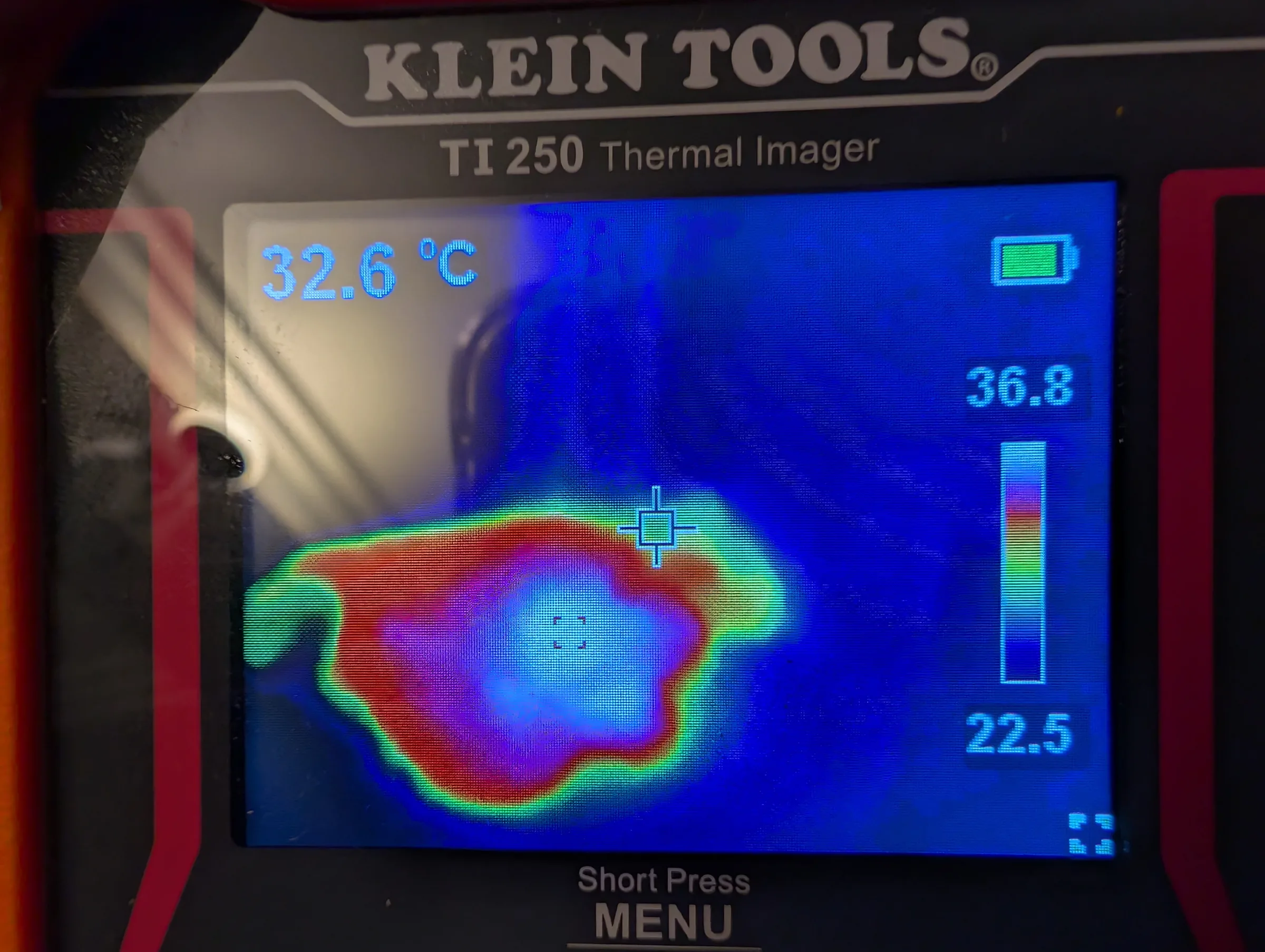
Thermal imaging investigations.
Assessment of waterproofing indicators.
Review against National Construction Code requirements.
Review against relevant Australian Standards.
A detailed plan was developed mapping the extent of water penetration throughout the apartment.
Importantly, the investigation focused on testing assumptions rather than accepting them.
Following the Evidence
The most interesting aspect of the project was how often assumptions made in competing reports could be tested directly.
Rather than simply debating opinions, SFE measured floor falls, observed drainage behaviour and assessed actual building performance.
The Shower Areas
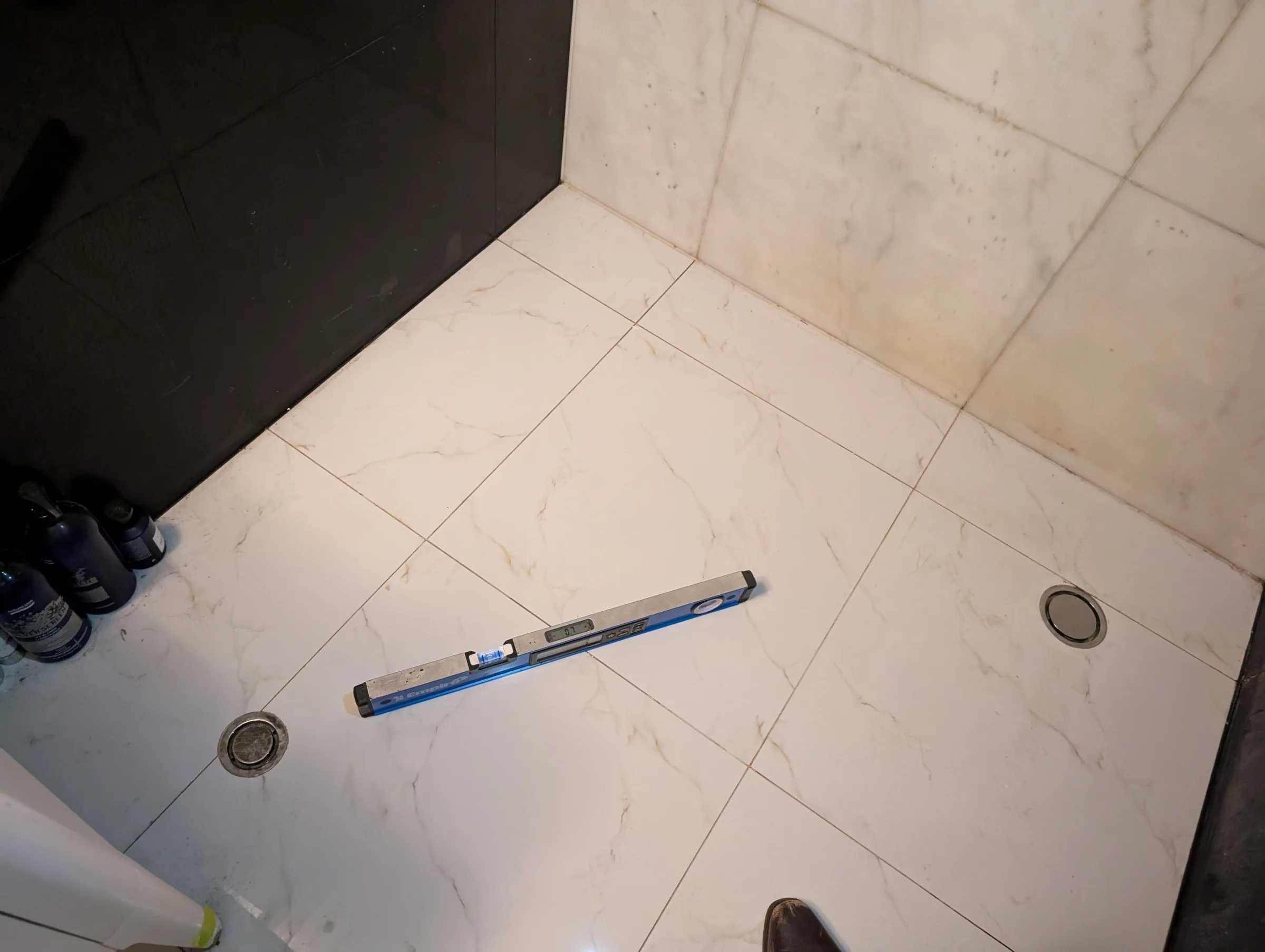
One suggestion within competing commentary was that inadequate falls around the showers contributed to damage and performance issues.
SFE measured tile falls using a digital level and undertook water spray testing combined with thermal imaging assessment to observe drainage behaviour directly.
The assessment identified that:
Some measured falls did not strictly satisfy NCC minimum recommendations.
Despite this, the shower areas drained effectively during testing.
Water was directed toward the waste points.
No evidence suggested the shower performance could explain the widespread water damage observed throughout the apartment.
A similar outcome was identified for the ensuite.
What We Found
The investigation concluded that the dominant cause of the observed damage was the insured water-loss event.
Multiple observations supported that conclusion.
Damage Corresponded Exactly with the Water Path
The most severe damage was concentrated within areas known to have been affected by water entering wall cavities and ceiling spaces during the incident.
Areas removed from the documented water intrusion path remained in notably good condition and generally lacked the same deterioration mechanisms.
Plasterboard Had Lost Structural Integrity
The wall linings exhibited substantial moisture-induced deterioration.
The plasterboard was found to be soft and locally unstable, with widespread cracking and movement when subjected to light pressure.
Examples included separation between wall and ceiling junctions, cracking and moisture expansion.
Timber Joinery Had Swollen Due to Water Exposure
The investigation identified swelling and damage to MDF door frames, skirting boards and other timber-based joinery elements.
Particularly telling was the location of the damage.
The most severe swelling occurred in locations that could not be explained through ordinary wet-area usage yet aligned closely with the reported path of water intrusion from the burst pipe event.
Tile Delamination Was a Consequence, Not the Cause
A detached tile within the ensuite formed an important part of the dispute.
SFE concluded that the primary mechanism leading to delamination was water ingress into the cavity behind the waterproofed surface rather than isolated workmanship issues.
The report noted that while minor construction imperfections may have existed, the overwhelming cause of deterioration remained the large volume of water introduced during the insured event.
Reviewing Competing Opinions
A significant component of the engagement involved reviewing the insurer's causation report and assessing whether the conclusions were supported by observation and measurement.
Rather than dismissing the report outright, SFE examined each proposition individually and compared it against:
Measured field data.
NCC requirements.
Australian Standards.
Site observations.
Thermal imaging results.
Known water intrusion pathways.
The resulting assessment identified a number of conclusions that were considered either incomplete, unsupported by measurable evidence or inconsistent with observed conditions.
This transformed the conversation from:
"Whose opinion is correct?"
to
"Which conclusion is actually supported by evidence?"
The Outcome
Sheer Force Engineering concluded that the majority of the identified deterioration was attributable to the insured event and that the scope of rectification required was substantially greater than isolated repairs.
Because moisture had affected concealed areas behind wall finishes and waterproofed surfaces, the report concluded that remediation should involve:
Removal of affected wall finishes.
Replacement of compromised plasterboard.
Removal and replacement of affected wet-area tiling.
Reinstatement of waterproofing systems.
Replacement of damaged ceiling linings.
Further drying and moisture management.
The assessment provided the homeowner with an independent evidence-based position regarding the actual cause and extent of damage.
Why This Project Matters
Insurance disputes are rarely won through volume.
They are won through evidence.
This project demonstrates the value of structured forensic investigation, measurement, testing and engineering reasoning in circumstances where competing technical explanations exist.
For Sheer Force Engineering, it showcases expertise in:
Insurance disputes.
Expert witness investigations.
Water damage assessments.
Building defect analysis.
Causation investigations.
Existing buildings.
Forensic engineering.
Tell Us About Your Project
Every project begins with a conversation.