
Insights
What We’re Learning.
Thoughts, lessons and observations drawn from investigations, design work, site inspections, heritage structures, adaptive reuse projects and engineering practice.
The most valuable lessons often come from buildings that behave differently than expected.
Never miss a new insight.
Receive email notifications when new articles, project lessons and technical insights are published.
Search Results
14 Insights

What Are the Common Problems Encountered by a Structural Engineer
Structural engineering can be a rewarding profession, but it comes with its share of challenges. This article explores common problems faced by Structural Engineers, including multidisciplinary coordination, scope creep, communicating complex concepts, fluctuating workloads, and balancing the use of technology. It also provides practical strategies to overcome these issues, helping engineers improve project outcomes, strengthen client relationships, and develop more effective professional skills.
Read Insight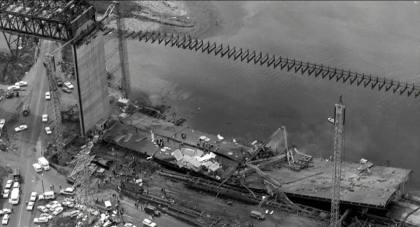
Why Did the West Gate Bridge Collapse
The 1970 collapse of Melbourne’s West Gate Bridge was one of Australia’s worst engineering disasters and had a profound impact on bridge design and construction practices worldwide. This article examines the bridge’s steel box girder design, construction methodology and the sequence of events leading to failure. It explores how fabrication tolerances, construction-induced buckling, imposed corrective loads and the removal of critical structural bolts combined to overstress a bridge span, ultimately causing a catastrophic collapse and valuable lessons for the engineering profession.
Read Insight
What Should All Structural Engineers Know
Imposter syndrome is common in structural engineering, but a solid grasp of the fundamentals builds confidence. This article outlines the core knowledge every structural engineer should understand within the first few years of practice, including units and conversions, bending moment and shear force diagrams, reading structural drawings, simple beam equations, lateral torsional buckling, trigonometry, algebra, concrete cover requirements, and other essential engineering principles that underpin sound design and professional growth.
Read Insight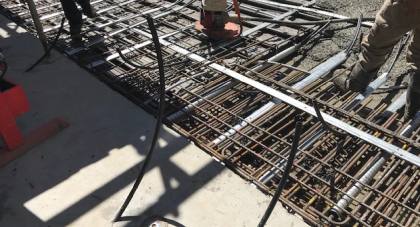
Construction Joint in Slabs
Construction joints are essential in concrete slabs, allowing large structures to be built in manageable stages while maintaining structural continuity. This article explains when construction joints are required, including pour volume limitations, shrinkage control and unforeseen construction interruptions. It explores detailing requirements for slab-on-ground and suspended slabs, methods of transferring shear and tension across joints, and the design considerations for joints at slab steps and folds, helping engineers and contractors create durable and structurally effective concrete slabs.
Read Insight
Shell vs Membrane, Which One to Use in Etabs
ETABS offers two area object types for modelling slabs: membrane and shell elements, each suited to different structural applications. While membrane slabs have no out-of-plane bending stiffness and distribute loads using tributary area methods, shell slabs model true slab behaviour through finite element analysis, including deflection and load sharing. This article compares shell and membrane elements in ETABS, explains how each behaves under loading, and provides practical guidance on when to use them for one-way slabs, two-way slabs, beams, walls and flat plate structures.
Read Insight
What Does a Structural Engineer Do Day to Day
What does a structural engineer actually do each day? This article provides a firsthand look at the profession, exploring how responsibilities evolve from graduate engineer to technical director. It covers technical design, site inspections, project coordination, client communication, project management, financial oversight, and leadership responsibilities. Through real daily schedules, it highlights the skills, challenges, and career progression that shape the day-to-day life of a structural engineer.
Read Insight
Can Structural Engineers Work from Home
Can structural engineers work from home? Drawing on firsthand experience during Melbourne’s extended COVID-19 lockdowns, this article explores how remote work has changed the profession. It examines the technology that enabled engineers to deliver complex projects from home, the benefits of increased flexibility and family time, and the challenges of collaboration, mentoring, wellbeing, and maintaining work-life boundaries. It also considers how hybrid work models may shape the future of structural engineering.
Read Insight
How to Prepare for Your Structural Engineering Interview
Preparing for a Structural Engineering interview requires more than just technical knowledge. This guide provides practical advice on researching employers, preparing for technical and behavioural questions, understanding your market value, and presenting your skills effectively at every career stage. Whether you are a graduate, intermediate engineer, senior engineer or international applicant, learn how to approach interviews with confidence, demonstrate your experience, ask the right questions and maximise your chances of securing your next engineering role.
Read Insight
How to Become a Structural Engineer
Becoming a Structural Engineer involves a combination of education, practical experience and professional development. This guide outlines the typical pathway from high school through to university, graduate employment, professional registration and Chartered Engineer status. It also explores the skills required for success, the role of mathematics, opportunities for overseas engineers, and what day-to-day life in the profession looks like. Whether you're a student or career changer, this article provides a roadmap for building a rewarding career in structural engineering.
Read Insight
Why Did the FIU Bridge Collapse
The 2018 collapse of the FIU Pedestrian Bridge was one of the most significant structural failures in recent history, resulting in multiple fatalities and prompting a major engineering investigation. This article examines the bridge’s design, construction methodology and the events leading to the collapse. Through a detailed review of the structural configuration, construction joints, post-tensioning system and load path, it explores the likely failure mechanisms at the critical node connection and the engineering lessons that can help prevent similar tragedies in the future.
Read Insight
Is Structural Engineering Hard?
Many students considering a career in structural engineering ask whether the profession is “hard.” Drawing on over 16 years of industry experience, this article explores the realities of studying and practising structural engineering, from university through to professional practice. It examines the skills, mindset and personality traits that help engineers succeed, while explaining why the profession is often better described as challenging rather than difficult. Learn what to expect at each stage of the journey and whether structural engineering may be the right fit for you.
Read Insight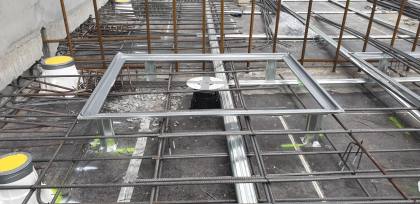
AS3600 Changes: Setdowns in 200 Flat Plate Slab Fails for Adequacy in Fire Case
AS3600-2018 introduced significant changes to the fire design requirements of flat plate concrete slabs, creating new challenges for common apartment detailing such as set-downs and balcony transitions. This article explains how flat plate slabs achieve fire resistance, the impact of local slab thickness reductions, and the industry's evolving interpretation of Clause 5.5.2. Through practical examples, it explores why shower set-downs near columns may not be easily justified using calculation methods, and how Structural Engineers are adapting to comply with the latest Australian Code.
Read Insight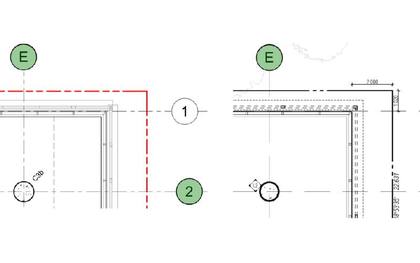
How to Read Structural Drawings: A Deep Dive from a to Z
Structural drawings are the roadmap that communicates how a building’s structural framework is designed, sized and constructed. This beginner’s guide explains how to read structural drawings, understand common symbols, grids, schedules, title blocks, scales and general arrangement plans. It also explores the differences between structural and architectural drawings, how beams, slabs, columns and voids are identified, and how engineers use drawings to coordinate construction across multiple building disciplines.
Read Insight
Etabs oAPI/Api Tutorial: How to Crack Automation Speed Secrets Using VBA and Excel
Artificial intelligence and automation are rapidly transforming the engineering industry, but rather than replacing Structural Engineers, they are creating new opportunities to improve efficiency and design workflows. This article explores how ETABS’ API can be used with VBA in Microsoft Excel to automate repetitive modelling tasks, exchange data between software platforms and develop custom engineering tools. Through a practical example, learn how engineers can use coding, APIs and automation to streamline structural design while enhancing productivity and quality.
Read InsightLooking For Advice?
Can’t find the answer you’re looking for?
Tell us about your building, project or challenge and we’ll help point you in the right direction.