
Density of Construction Materials and Construction Elements
Accurate load assessment is fundamental to structural engineering, and material density is a key input in determining dead loads on buildings and infrastructure. The reference guide provides the densities of common construction materials including concrete, steel, timber, masonry, soils and metals, along with the weights of typical construction systems such as roofs, walls, floors and ceilings. Whether performing hand calculations, preliminary design or detailed analysis, these values provide engineers with practical resource for estimating structural loads and evaluating building performance.
Quentin Suckling · December 2021 · 6 min read
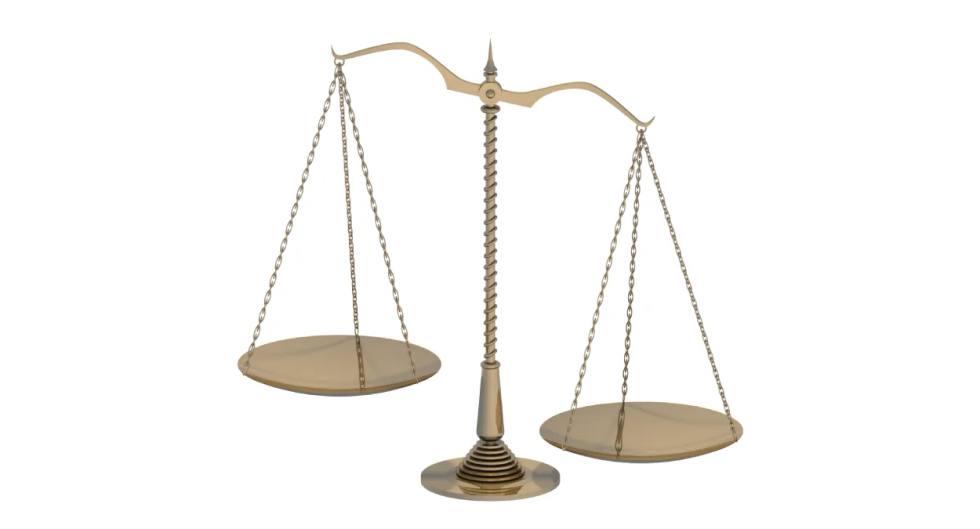
Density of construction materials is an important part of assessing the load on a structure or building. In order to successfully design a structure, first the applied load needs to be assessed. This article provides the density of common construction materials. It also provides the density of construction systems…
The density of a substance is its mass per unit volume. Common units for density of construction materials include kilograms per cubic metre (kg/m2), kilonewton per cubic metre (kN/m2) and pound per cubic foot (lb/ft3). Density is also referred to as volumetric mass density and specific mass.
On a molecular level, materials with a higher density have closer packed atoms compared to less dense materials whose atoms are spaced further apart.
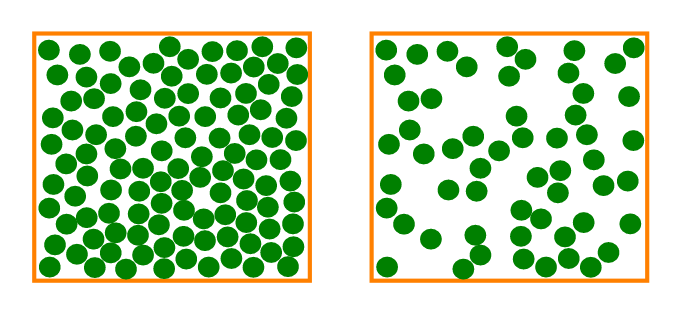
The density of materials can change with different temperatures. Using our understanding of how the arrangement of atoms can affect density, generally as a substance heats up, the atoms become spaced further apart thus reducing its density. The density of construction materials presented in this article assume density at room temperature. For further reading on how the atomic structure of steel affects the behaviour of reinforcing bar, take a look at THIS article.
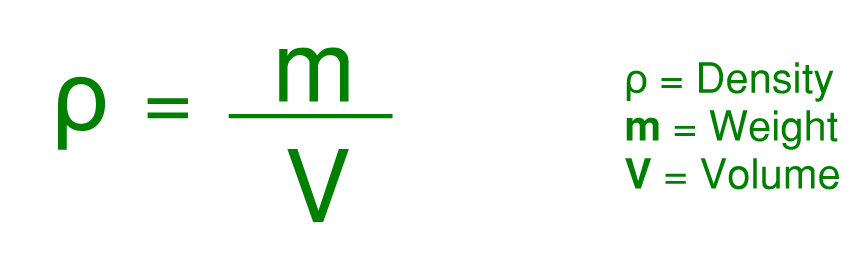
The density of a material is given by ρ (the Greek letter, rho). The formula for density is weight (m) divided by volume (V)…
This article presents two separate tables (use the jump link below to fast-forward to the one that interests you):
Density of Construction Materials: This table presents the raw material densities for a range of different construction materials including timbers, metals, water, glass etc.
Weight of Construction Systems: This table presents the weight per square metre of building systems which are constructed from raw materials. These include, brick, cement sheeting, plasterboard, tiles, tin roof sheeting etc.
Density of Common Construction Materials
Construction Material | Density (kN/m3) | Density (kg/m3) | Density (lb/ft3) |
Aluminium | 26.7 | 2723 | 170.0 |
Asphalt | 21.2 | 2162 | 135.0 |
Bitumen | 10 to 14 | 1019 to 1427 | 64 to 89 |
Brass | 83.5 | 8514 | 531.5 |
Cobalt | 87.4 | 8912 | 556.4 |
Cement Mortar | 14.4 | 1468 | 91.7 |
Cement Mortar | 20.1 | 2050 | 128.0 |
Chalk | 21 | 2141 | 133.7 |
Clay Soil | 19 | 1937 | 120.9 |
24 | 2447 | 152.8 | |
86.3 | 8800 | 549.4 | |
Cork (normal) | 1.7 | 173 | 10.8 |
Cork (compressed) | 3.7 | 377 | 23.6 |
Fibre Cement Sheet (uncompressed) | 14.2 | 1448 | 90.4 |
Fibre Cement Sheet (compressed) | 17.2 | 1754 | 109.5 |
Fibre Cement Sheet (Fire-resistant lining sheet) | 9.1 | 928 | 57.9 |
Fibre Cement Sheet (Insulating sheet) | 6.9 | 704 | 43.9 |
Glass – Window (soda-lime) | 25.5 | 2600 | 162.3 |
Gravel Soil | 20 | 2039 | 127.3 |
Granite, basalt, trachyte | 26.4 | 2692 | 168.1 |
Iron, cast | 70.7 | 7209 | 450.1 |
111 | 11319 | 706.6 | |
Limestone (dense) | 24.5 | 2498 | 156.0 |
Limestone (Mt. Gambier) | 12.5 | 1275 | 79.6 |
Magnesium | 17.4 | 1774 | 110.8 |
Marble | 26.5 | 2702 | 168.7 |
Nickel | 89.1 | 9086 | 567.2 |
6.9 | 704 | 43.9 | |
Sand (dense and wet) | 20 | 2039 | 127.3 |
Sandstone | 22.5 | 2294 | 143.2 |
18 | 1835 | 114.6 | |
Shale | 25 | 2549 | 159.1 |
21 | 2141 | 133.7 | |
Steel | 76.9 | 7841 | 489.5 |
Timber (Radiata Pine, Australia) | 5.3 | 540 | 33.7 |
Timber (Radiata Pine, New Zealand) | 4.6 | 469 | 29.3 |
Timber (Cypress, Australia) | 7 | 714 | 44.6 |
Timber (Douglas Fir) | 5.5 | 561 | 35.0 |
Timber (Hoop) | 5.3 | 540 | 33.7 |
Timber (Blackbutt) | 8.7 | 887 | 55.4 |
Timber (Grey Gum) | 10.6 | 1081 | 67.5 |
Timber (Grey Ironbark) | 11 | 1122 | 70.0 |
Timber (Jarrah) | 8 | 816 | 50.9 |
Timber (Spotted Gum) | 10 | 1020 | 63.7 |
Timber (Tallow wood) | 10 | 1020 | 63.7 |
Timber (Turpentine) | 9.5 | 969 | 60.5 |
Timber (White Mahogany) | 9.5 | 969 | 60.5 |
Timber (Vic Ash) | 6.3 | 642 | 40.1 |
Timber (Teak) | 7 | 714 | 44.6 |
Timber (Oak) | 8.5 | 867 | 54.1 |
Timber (Maple) | 7.6 | 775 | 48.4 |
Timber (Larch) | 5.9 | 602 | 37.6 |
Timber (Elm) | 7.8 | 795 | 49.7 |
Timber (Ebony) | 9.6 to 11.2 | 978 to 1142 | 61 to 71 |
Timber (Birch) | 6.7 | 683 | 42.7 |
Timber (Ash, White) | 6.7 | 683 | 42.7 |
Timber (Ash, Black) | 5.4 | 551 | 34.4 |
Timber (Balsa) | 1.7 | 173 | 10.8 |
Timber (Bamboo) | 3 to 4 | 305 to 407 | 19 to 25 |
Timber (Cedar) | 3.8 | 387 | 24.2 |
Timber (Aspen) | 4.2 | 428 | 26.7 |
Timber (American Red Wood) | 4.5 | 459 | 28.6 |
Timber (European Red Wood) | 5.1 | 520 | 32.5 |
Tin | 72.8 | 7423 | 463.4 |
Water | 10 | 1020 | 63.7 |
Zinc | 70 | 7138 | 445.6 |
Density of common construction raw materials in kilonewton per metre cubed (kN/m3), kilogram per metre cubed (kg/m3) and pound per cubit foot (lb/ft3)
Weight of Common Construction Systems
Construction Element | Weight kN/m2 | Weight lb/ft2 |
Ceilings (Fibrous Plaster, 10mm thick) | 0.09 | 1.9 |
Ceilings (Gypsum Plaster, 13mm thick) | 0.13 | 2.7 |
Ceilings (Lime Plaster, 13mm thick) | 0.24 | 5.0 |
Ceilings (Portland Cement Plaster, 13mm thick) | 0.29 | 6.1 |
Ceilings (Suspended metal lath and gypsum plaster (FRL – 1hr) | 0.25 | 5.2 |
Ceilings (Suspended metal lath and gypsum plaster (FRL – 2hr) | 0.5 | 10.4 |
Ceilings (Suspended metal lath and gypsum plaster (No Fire Rating) | 0.15 | 3.1 |
Floors (Asphalt, 25mm thick) | 0.53 | 11.1 |
Floors (Cinder-concrete filling, 25mm thick) | 0.43 | 9.0 |
Floors (Clay tiling, 13mm thick) | 0.27 | 5.6 |
Floors (Compressed fibre cement sheet, 15mm thick) | 0.23 | 4.8 |
Floors (Magnesium oxychloride (sawdust filler), 25mm thick | 0.35 | 7.3 |
Floors (Magnesium oxychloride (mineral filler), 25mm thick | 0.53 | 11.1 |
Floors (Terrazzo paving, 16mm thick) | 0.43 | 9.0 |
Roofs (Fibre Cement, corrugated sheeting 6mm thick, standard corrugations) | 0.11 | 2.3 |
Roofs (Fibre Cement, corrugated sheeting 6mm thick, including lap and fastenings) | 0.13 | 2.7 |
Roofs (Fibre Cement, corrugated sheeting 6mm thick, deep corrugations) | 0.12 | 2.5 |
Roofs (Fibre Cement, corrugated sheeting 6mm thick, including lap and fastenings) | 0.16 | 3.3 |
Roofs (Fibre-cement Shingles) | 0.22 | 4.6 |
Roofs (Bituminous felt (5-ply) and gravel | 0.43 | 9.0 |
Roofs (Acrylic resin sheet, corrugated, 3mm thick, standard corrugations) | 0.04 | 0.8 |
Roofs (Acrylic resin sheet, corrugated, 3mm thick, deep corrugations) | 0.06 | 1.3 |
Roofs (Slates – 10mm thick) | 0.7 | 14.6 |
Roofs (Steel sheet, flat galvanized, per mm thickness) | 0.08 | 1.7 |
Roofs (steel, galvanized standard corrugated sheeting, 1.00mm incl. laps and fastenings) | 0.12 | 2.5 |
Roofs (steel, galvanized standard corrugated sheeting, 0.80mm incl. laps and fastenings) | 0.1 | 2.1 |
Roofs (steel, galvanized standard corrugated sheeting, 0.60mm incl. laps and fastenings) | 0.08 | 1.7 |
Roofs (steel, galvanized standard corrugated sheeting, 0.50mm incl. laps and fastenings) | 0.05 | 1.0 |
Roofs (Tiles, terracotta, French pattern) | 0.57 | 11.9 |
Roofs (Tiles, Concrete) | 0.53 | 11.1 |
Roofs (Zinc sheet, per 10mm thick) | 0.76 | 15.9 |
Walls and Partitions (Acrylic resin sheet, flat, per 1.0mm of thickness) | 0.01 | 0.2 |
Walls and Partitions (Autoclaved aerated concrete block masonry 100mm thick) | 0.50 to 0.65 | 10.4 to 13.6 |
Walls and Partitions (Fibre Cement Sheet, 4.5mm thick) | 0.07 | 1.5 |
Walls and Partitions (Fibre Cement Sheet, 6.0mm thick) | 0.11 | 2.3 |
Walls and Partitions (Fibre-cement compressed decking 15mm thick) | 0.26 | 5.4 |
Walls and Partitions (Fibre-cement sheet – fire resistant, lining sheet, 9mm thick) | 0.08 | 1.7 |
Walls and Partitions (Fibre-cement sheet – fire resistant, lining sheet, 15mm thick) | 0.1 | 2.1 |
Walls and Partitions (Brick Masonry, Solid burnt clay, per 10mm thickness) | 0.19 | 4.0 |
Walls and Partitions (Brick Masonry, Solid calcium silicate (Sand-lime), per 10mm thickness) | 0.18 | 3.8 |
Walls and Partitions (Concrete hollow block masonry, Standard aggregate, 90mm thick) | 1.45 | 30.3 |
Walls and Partitions (Concrete hollow block masonry, Standard aggregate, 140mm thick) | 1.83 | 38.2 |
Walls and Partitions (Concrete hollow block masonry, Standard aggregate, 190mm thick) | 2.1 | 43.9 |
Walls and Partitions (Concrete hollow block masonry, Lightweight aggregate, 90mm thick) | 1.2 | 25.1 |
Walls and Partitions (Concrete hollow block masonry, Lightweight aggregate, 140mm thick) | 1.51 | 31.5 |
Walls and Partitions (Concrete hollow block masonry, Lightweight aggregate, 190mm thick) | 1.82 | 38.0 |
Walls and Partitions (Fibre insulation board, per 100mm thickness) | 0.34 | 7.1 |
Walls and Partitions (Fibrous plaster board, per 100mm of thickness) | 0.92 | 19.2 |
Walls and Partitions (Hardboard, per 100mm of thickness) | 0.96 | 20.1 |
Walls and Partitions (Particle or flakeboard, per 100mm of thickness) | 0.66 | 13.8 |
Walls and Partitions (Plaster board, per 100mm of thickness) | 0.76 | 15.9 |
Walls and Partitions (Plaster, Portland cement, per 10mm of thickness) | 0.23 | 4.8 |
Walls and Partitions (Plaster, lime, per 10mm of thickness) | 0.19 | 4.0 |
Walls and Partitions (Plaster, Gypsum, per 10mm of thickness) | 0.17 | 3.6 |
Walls and Partitions (Plywood, per 10mm of thickness) | 0.04 to 0.12 | 0.84 to 2.51 |
Weight of common construction elements in kilonewton per metre squared (kN/m2) and pound per square foot (lb/ft2)
Tagged
Never miss a new insight.
Receive email notifications when new articles, project lessons and technical insights are published.
Leave a message.
A thought, a question or a correction on this article — it comes straight to our team. Messages are reviewed by us before they appear beneath the article.
Tell us about your building.
Can’t find the answer you’re looking for? Tell us about your building, project or challenge and we’ll help point you in the right direction.
About The Author

Quentin Suckling
Director - Structural Engineering
Quentin Suckling is the Director and Principal Structural Engineer at Sheer Force Engineering. Passionate about heritage preservation and adaptive reuse, he enjoys understanding how buildings behave and helping clients unlock the potential within existing structures. Through these articles he shares practical lessons from projects, investigations and engineering practice.