
Why a Heritage Roof Doesn't Always Need Replacement After Termite Damage
When we were asked to assess a heritage-listed factory building with extensive termite damage, the assumption was that the entire roof would need replacing. Parts of the roof had already collapsed, making that seem like a reasonable conclusion. However, a detailed structural investigation revealed that much of the damage was highly localised. By carefully mapping what timber was genuinely deteriorated and what could be retained, we developed a targeted remediation strategy that preserved significant heritage fabric while restoring structural integrity.
Quentin Suckling · August 2026 · 6 min read
When most people hear the words "termite damage" and "heritage roof" in the same sentence, they immediately assume the worst.
Replace everything.
Start again.
Strip off the roof and rebuild it from scratch.
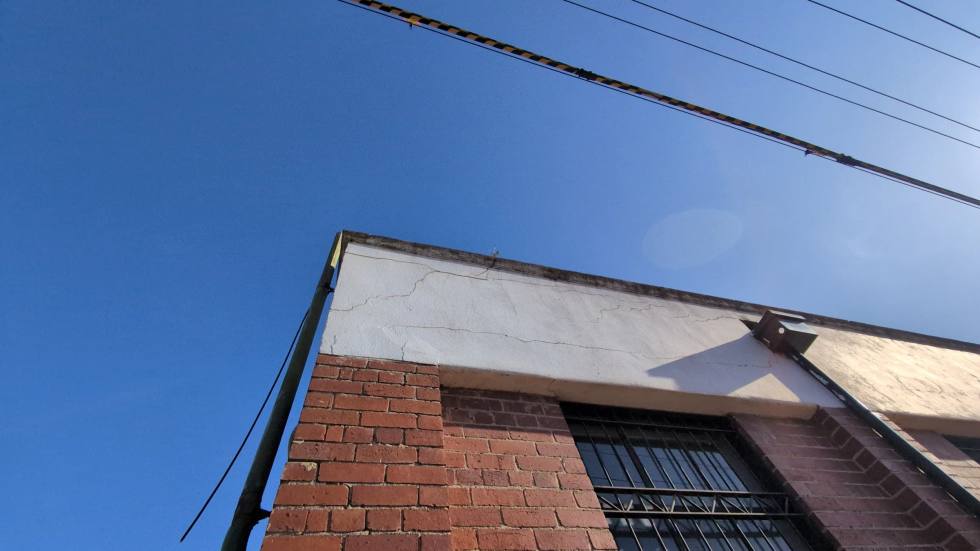
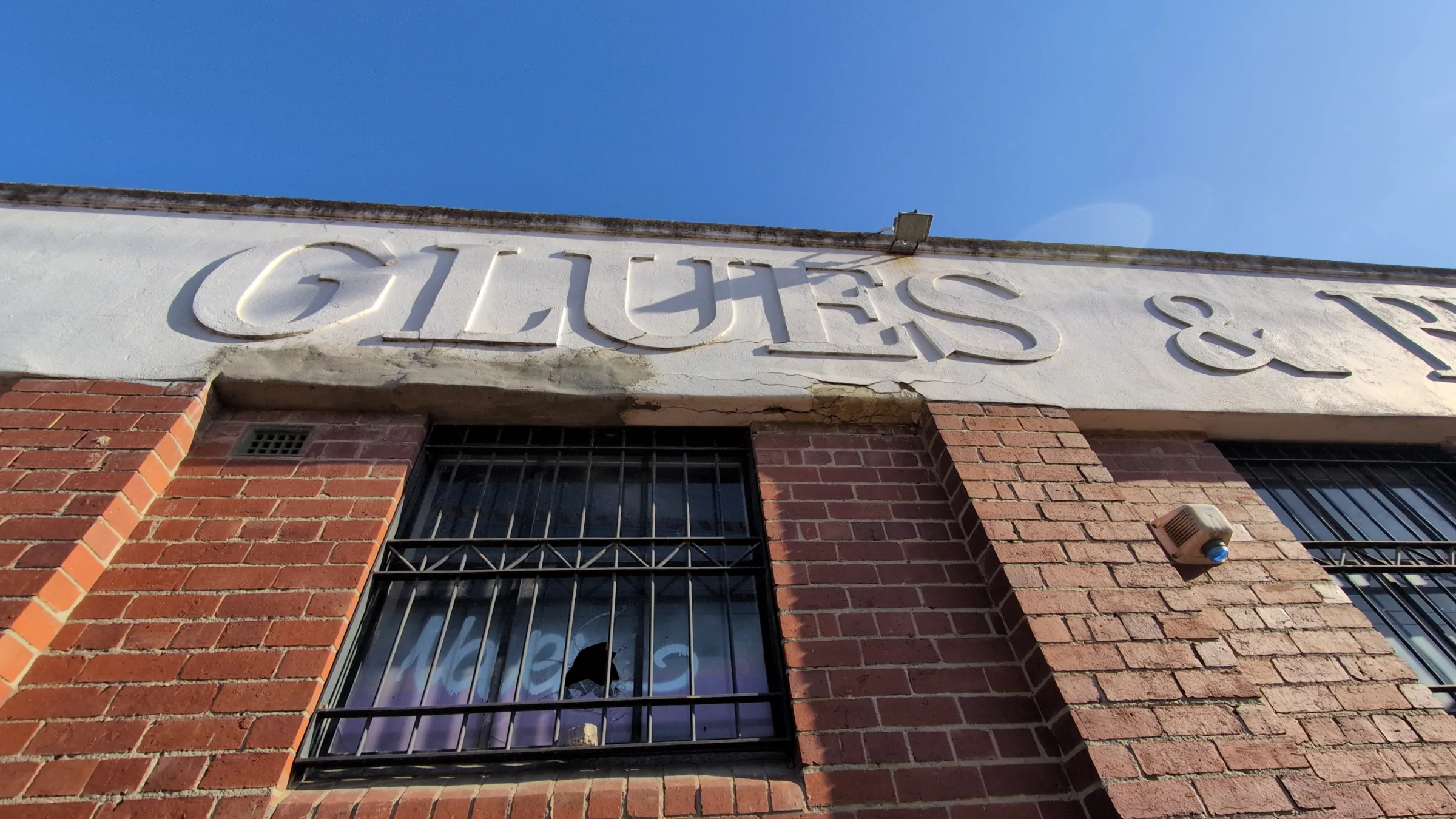
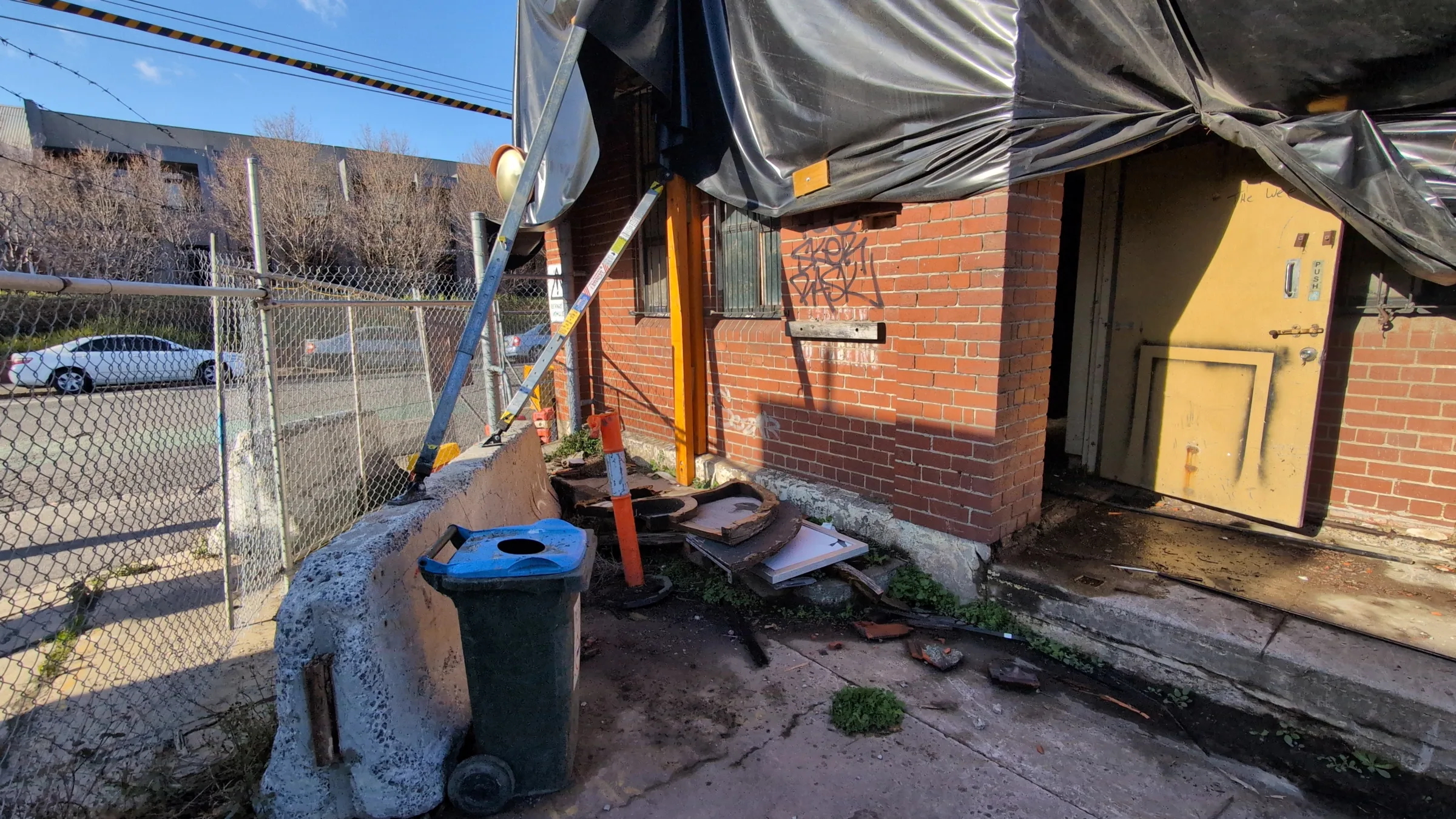
That's exactly the situation we found ourselves facing when we were asked to assess a heritage-listed factory building at Hobsons Road in Kensington. The building dated back to the 1870s and had seen more than a century of service. Over that time, various defects had developed throughout the structure, including moisture-related deterioration, cracking and corrosion. Most concerning, however, was extensive termite damage within the timber roof structure. Parts of the roof had already partially collapsed and were temporarily protected with tarpaulins.
The client needed to understand the building's condition and what would be required to restore it to a safe and serviceable state. Like many projects involving significant termite damage, there was a growing perception that complete roof replacement might be the only practical solution.
As engineers, however, we're always cautious about jumping to conclusions before understanding the full picture.
The Challenge With Termite Damage
One of the most misunderstood aspects of termite damage is how selective it can be.
People often imagine termites attacking a timber beam evenly from one end to the other. In reality, that's rarely what happens.
During this investigation, we found that some sections of timber were severely deteriorated while adjacent sections remained surprisingly sound. In some cases, the difference between compromised and structurally adequate timber was only a matter of a few hundred millimetres.
That creates a significant challenge.
If you can't accurately identify where the damage begins and ends, the safest option often becomes replacing far more timber than may actually be necessary.
For heritage buildings, that's not always an ideal outcome.
Every piece of original timber removed from a historic structure is part of the building's story that disappears forever.
Our First Observations
When we entered the roof space, there was clear evidence that deterioration was present.
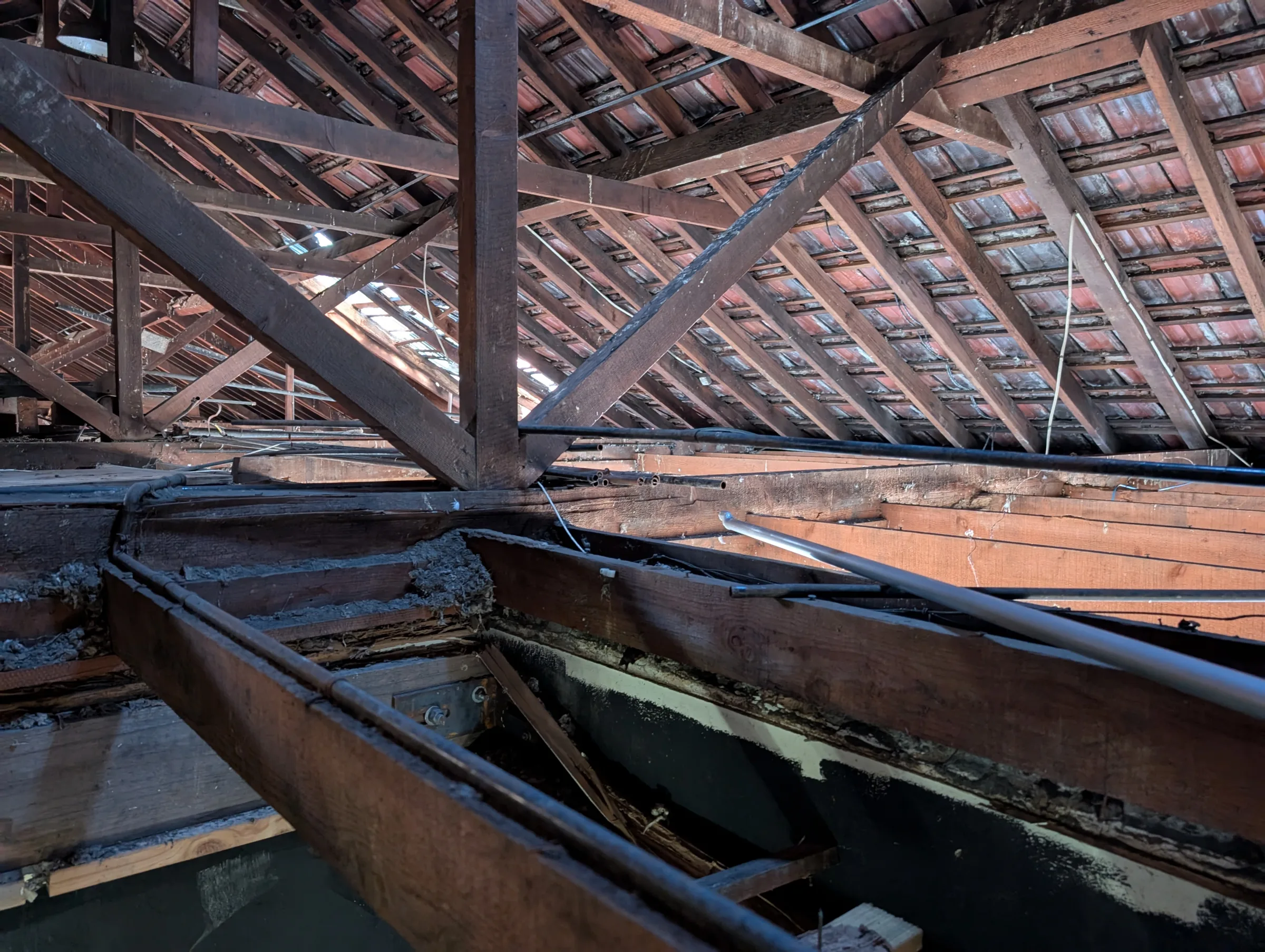
Several roof trusses exhibited signs of termite attack, timber decay and structural deterioration. Some members showed significant loss of cross-section, while portions of the roof structure had already failed. We also identified areas where termite damage had affected critical structural members responsible for supporting roof loads and maintaining stability.
At first glance, it would have been easy to assume widespread replacement was inevitable.
The problem was that visual inspection alone wasn't telling us the whole story.
Many timber members appeared sound from below, but termite damage often occurs internally before obvious external signs develop.
The question became:
How do we physically inspect hundreds of metres of roof framing when access is limited and much of the structure sits several metres above the floor?
The Moment Everything Changed
This was probably the most memorable part of the entire project.
After spending time considering the access challenges, we came up with an unusual solution.
We purchased a paint roller extension pole.
Then we duct-taped a screwdriver to the end of it.
Simple.
A little unconventional.
But remarkably effective.
Using that improvised tool, we could physically probe timber members throughout the roof space without requiring extensive access equipment or dismantling parts of the building.
Where timber was healthy, the screwdriver barely penetrated the surface.
Where termite damage existed, the screwdriver would suddenly plunge into the timber.
That immediate feedback allowed us to systematically work through large portions of the roof structure and build a much clearer understanding of exactly where damage existed.
If we were explaining this project over coffee to a friend, this is probably the story we'd tell first.
Sometimes engineering solutions aren't always sophisticated.
Sometimes they're simply effective.
What We Actually Found
As the investigation progressed, a more nuanced picture emerged.
Yes, there were roof members that required replacement.
Yes, some areas were severely deteriorated.
Yes, sections of the roof had already collapsed.
However, we also discovered that substantial portions of timber remained structurally viable.
Rather than finding a roof that had completely reached the end of its life, we found a roof containing a mixture of conditions:
Timber requiring complete replacement.
Timber suitable for localised repairs.
Timber requiring strengthening.
Timber remaining fit for continued service.
That distinction mattered enormously.
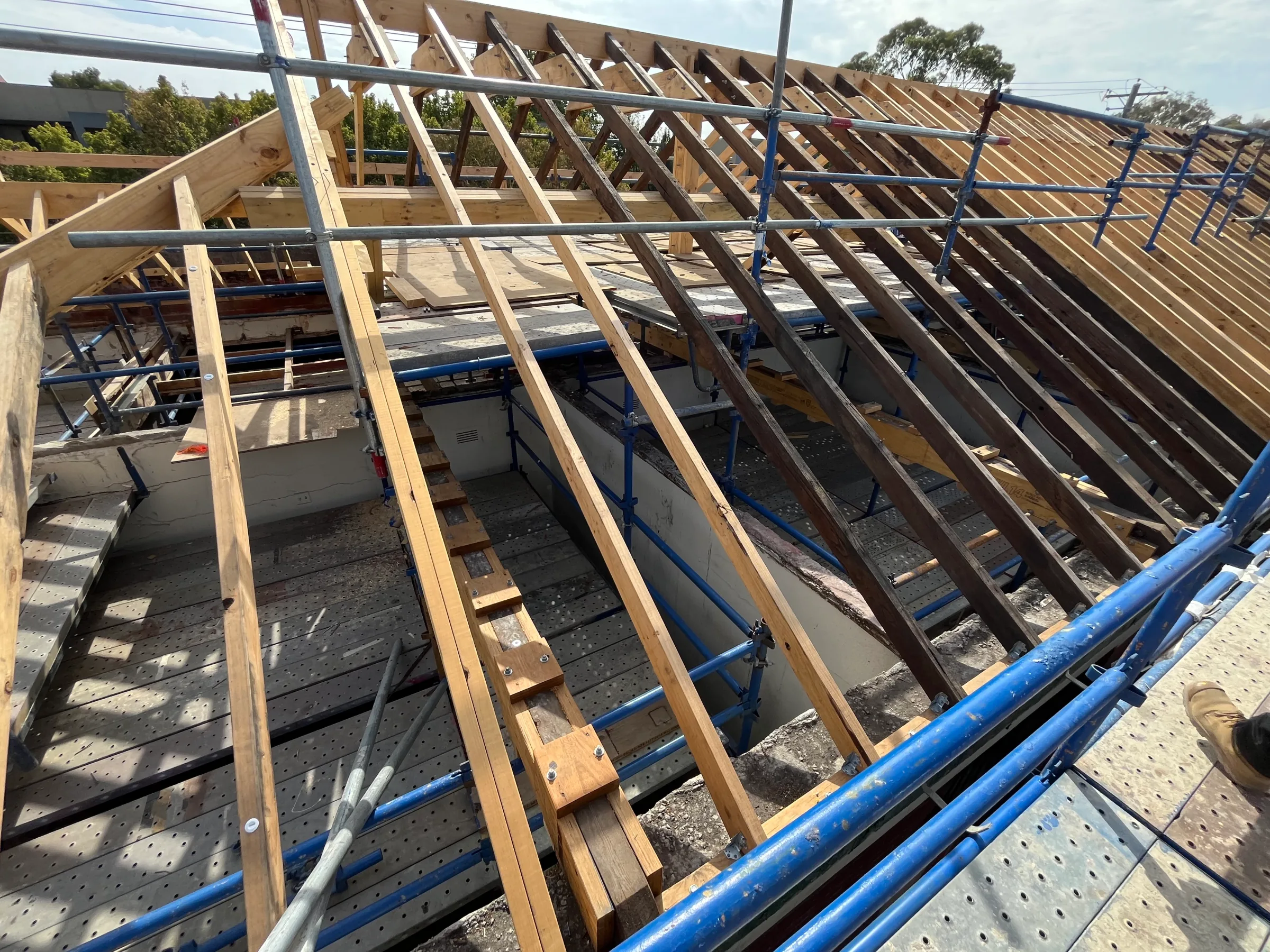
Instead of adopting a blanket demolition-and-replacement approach, we could develop a targeted remediation strategy focused on preserving as much original material as practical.
In heritage engineering, this is often considered the best outcome.
Not because replacement is inherently bad.
But because intervention should be proportionate to the actual condition of the building.
Why This Matters For Heritage Buildings
Heritage structures behave differently from modern buildings.
Many have survived for well over a century because they were robustly constructed and have developed a degree of resilience over time.
The goal is rarely to make them new again.
The goal is to ensure they remain safe, functional and preserved for future generations.
That means understanding exactly what is damaged before deciding what should be removed.
In this project, a less thorough investigation could easily have resulted in significantly more heritage fabric being discarded.
Instead, the detailed assessment allowed us to identify opportunities for selective repair, strengthening and replacement.
That approach preserved more of the building's original structure while still addressing the genuine safety concerns associated with termite damage.
A Common Myth About Termites
One of the biggest misconceptions we encounter is:
"If termites have been present, the whole structure must be replaced."
In reality, that's often not the case.
Termite damage can be highly localised.
A single section of timber can be severely compromised while other parts of the same member remain structurally sound.
This doesn't mean damaged timber should be ignored.
Far from it.
It simply means that understanding the extent of damage is just as important as identifying its existence.
A proper structural inspection allows building owners to make informed decisions based on evidence rather than assumptions.
The Outcome
The outcome of this project was ultimately far better than initially anticipated.
Rather than recommending wholesale replacement of the roof structure, we were able to identify a more focused and targeted path forward.
Areas suffering severe deterioration could be repaired, strengthened or replaced as required, while substantial portions of the original timber structure could be retained. The investigation also identified related defects including moisture-related deterioration, missing roof drainage components, cracking and corrosion that would need to be addressed as part of the broader restoration strategy.
Most importantly, the building retained the opportunity to preserve significant amounts of its original heritage fabric while extending its future service life.
Engineering Insights
This project reinforced several lessons that apply well beyond heritage buildings.
First, investigation should always come before intervention.
Second, visible deterioration rarely tells the whole story.
Third, the quality of the engineering solution is directly linked to the quality of the inspection.
Most importantly, termite damage does not automatically mean demolition and replacement.
Sometimes the most valuable outcome of an engineering investigation isn't finding what must be removed.
It's discovering what can be saved.
Key Takeaways
Termite damage is often highly localised rather than uniform.
Visual inspections alone do not always reveal the full extent of deterioration.
Heritage buildings benefit from detailed investigations before major decisions are made.
Selective repairs can often preserve significant amounts of original building fabric.
Early investigations usually provide more options than waiting until deterioration becomes severe.
Good engineering is often about understanding the problem properly
Tagged
Never miss a new insight.
Receive email notifications when new articles, project lessons and technical insights are published.
Leave a message.
A thought, a question or a correction on this article — it comes straight to our team. Messages are reviewed by us before they appear beneath the article.
Tell us about your building.
Can’t find the answer you’re looking for? Tell us about your building, project or challenge and we’ll help point you in the right direction.
About The Author

Quentin Suckling
Director - Structural Engineering
Quentin Suckling is the Director and Principal Structural Engineer at Sheer Force Engineering. Passionate about heritage preservation and adaptive reuse, he enjoys understanding how buildings behave and helping clients unlock the potential within existing structures. Through these articles he shares practical lessons from projects, investigations and engineering practice.