
Cracking in Heritage Masonry Buildings: Why the Obvious Answer Was Wrong
When we were asked to investigate severe cracking in a heritage masonry building in Carlton, the likely cause appeared obvious. A large tree stood nearby, adjacent pavement had moved, a service pit had settled, and the building had already experienced historical footing issues. Everything pointed toward settlement and underpinning. However, a closer inspection told a very different story. This investigation revealed how cracking in heritage buildings can sometimes be caused by brick growth and moisture rather than footing movement, leading to a far simpler and less invasive solution.
Quentin Suckling · September 2026 · 9 min read
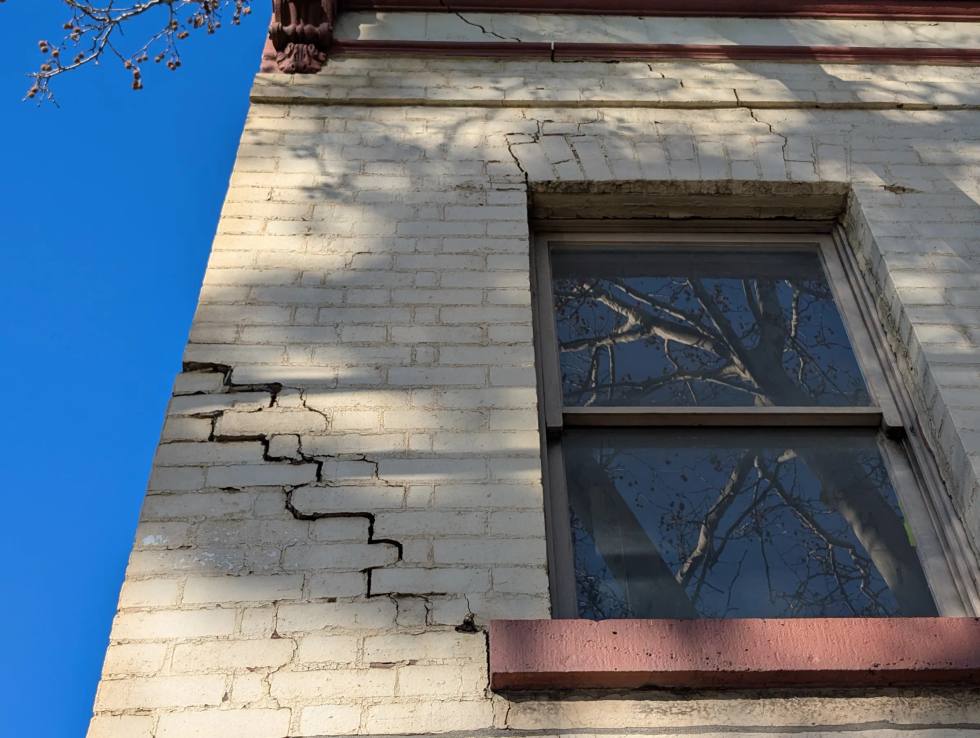
When people discover significant cracking in a heritage building, the conversation often heads in one direction almost immediately.
"The footings must be moving."
It's an understandable assumption.
After all, cracked masonry, sloping surfaces and visible movement are often associated with footing settlement. In many cases that assessment is correct.
But not always.
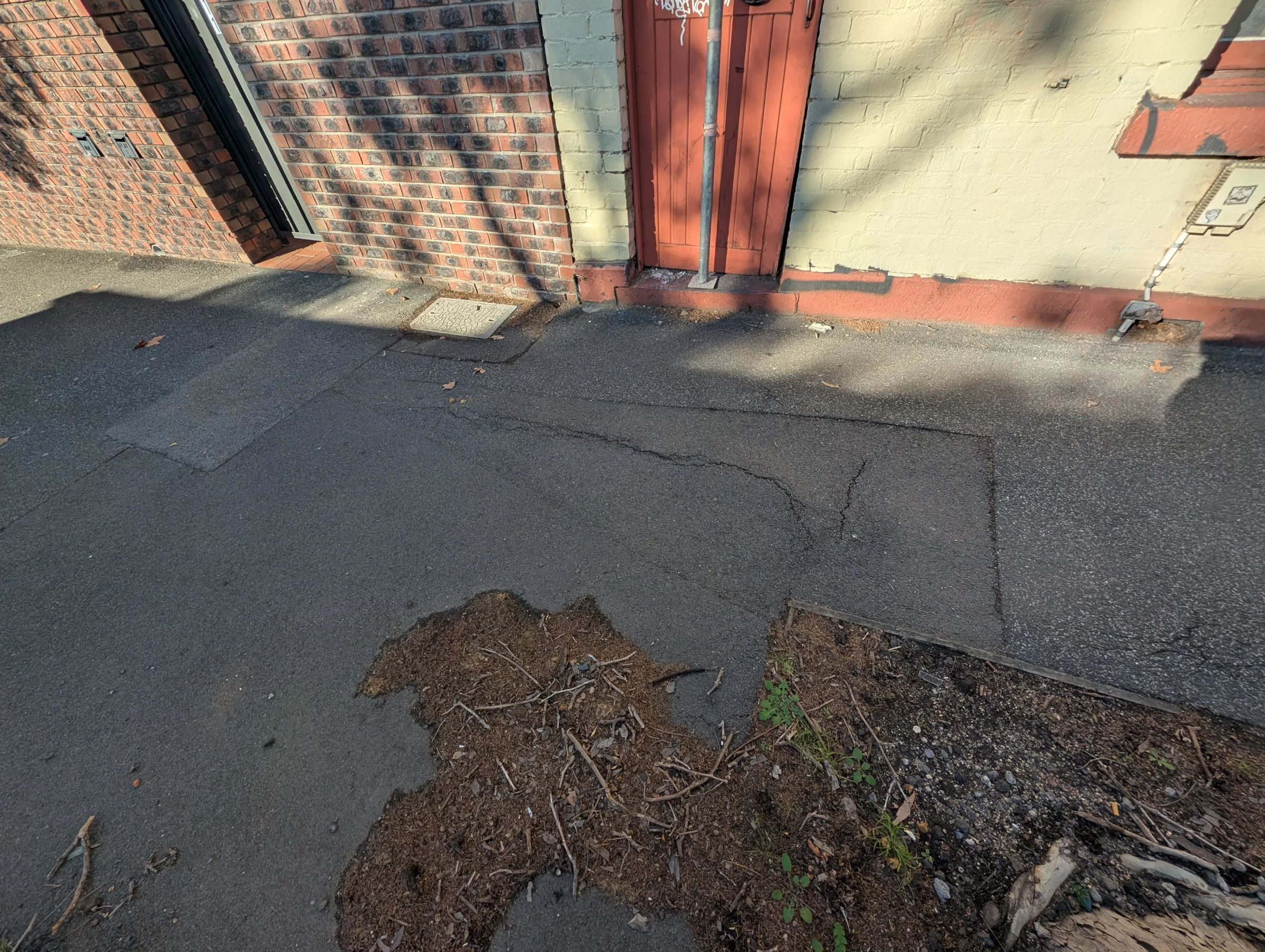
We were recently engaged to investigate cracking affecting a heritage-era masonry dwelling in Carlton. At first glance, it appeared to be a classic settlement problem. There was a large mature tree near the building, cracking in the surrounding pavement, evidence of movement adjacent to a nearby service pit and visual signs suggesting that one corner of the building had experienced historical settlement.
Everything appeared to point in the same direction.
The interesting part was that once we started looking closely at the building itself, the evidence began telling a very different story.
What Causes Cracking in Heritage Masonry Buildings?
Cracking in heritage masonry buildings can occur for a variety of reasons including footing movement, brick growth, mortar deterioration, moisture ingress, thermal expansion and historical alterations. Determining the true cause is essential because different causes require very different repair approaches. As this Carlton investigation demonstrated, the most obvious explanation is not always the correct one.
The Obvious Suspects
This project felt a little bit like a crime scene investigation.
Before visiting the property, we reviewed publicly available imagery and information relating to the site.
Several potential suspects quickly emerged.
There was a large mature tree immediately adjacent to the building.
A nearby service pit appeared to have experienced settlement.
The surrounding pavement had cracked and lifted.
The north-east corner of the building appeared to have dropped relative to surrounding areas.
At first glance, there was no shortage of possible explanations.
The interesting thing was that the building had already undergone underpinning works in the past.
For those unfamiliar with the term, underpinning involves extending or strengthening foundations to reduce further movement and improve support to the structure above.
In many situations underpinning can be highly effective.
However, if underpinning has already been undertaken and cracking continues to develop, it's usually worth asking a very important question:
Are we actually dealing with a footing problem?
The Moment Things Stopped Making Sense
The turning point came during our site inspection.
As we worked our way around the building, we noticed something unusual about the cracking patterns.
The cracks weren't simply opening vertically.
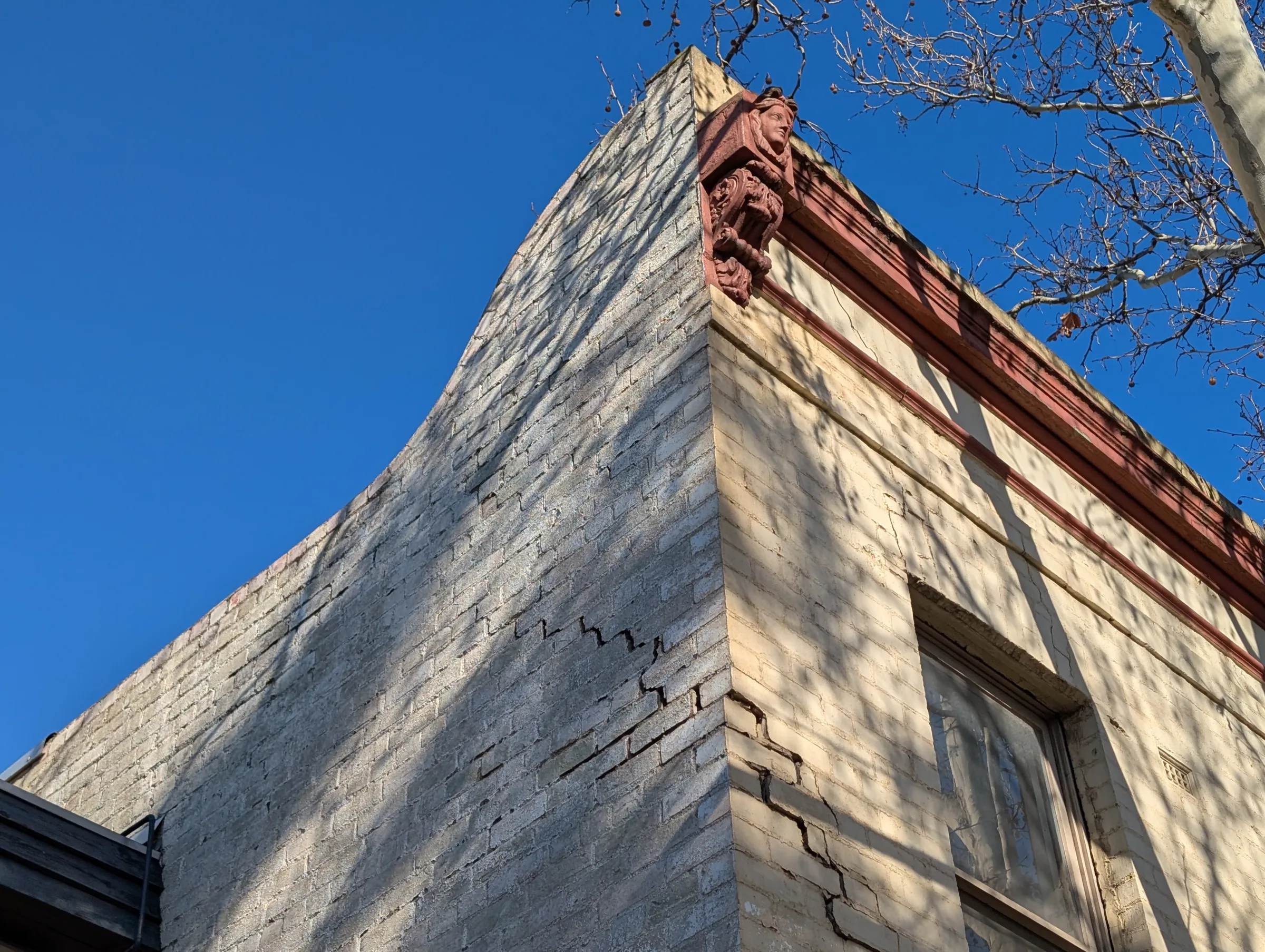
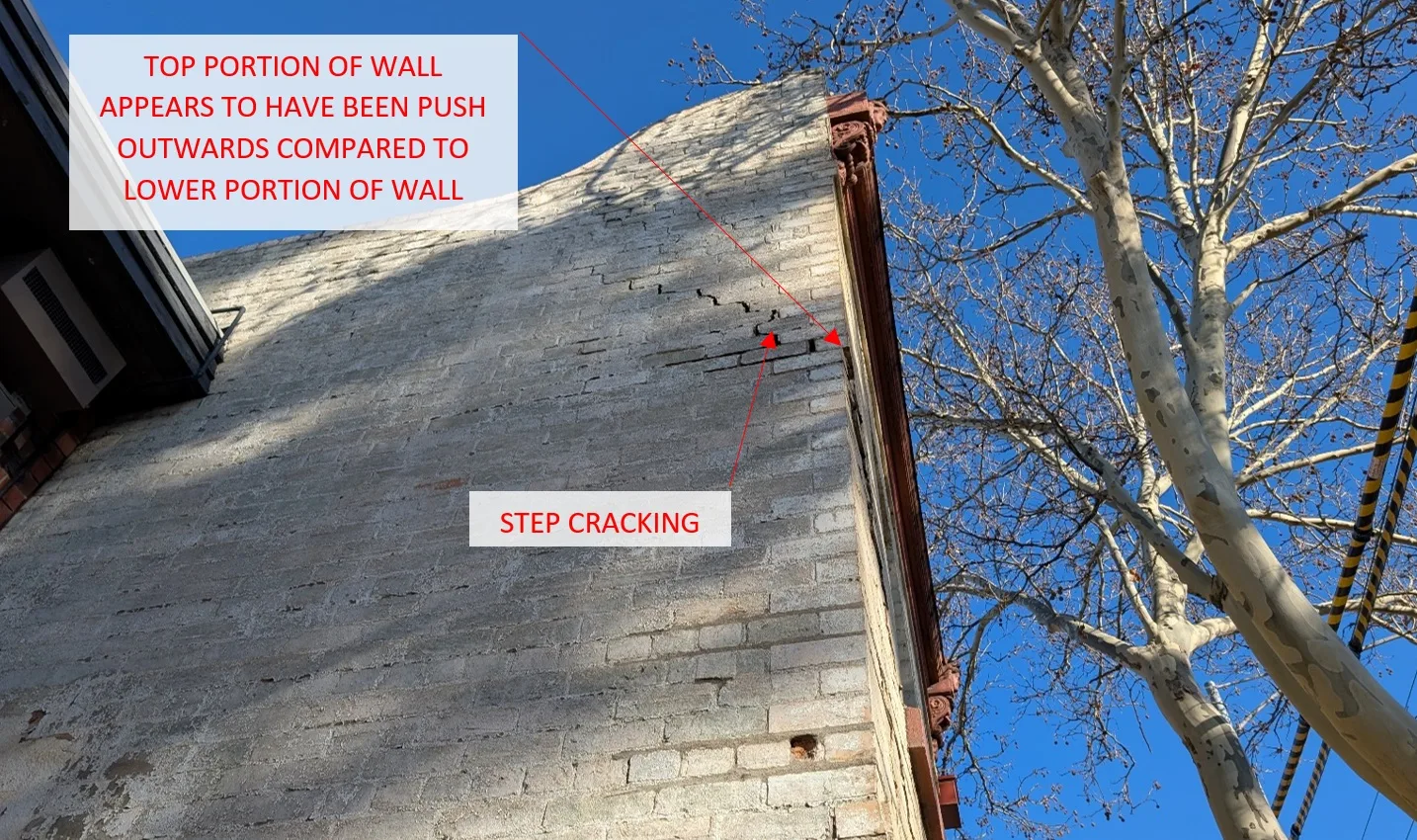
The upper portions of the masonry appeared to have moved outwards relative to the lower portions of the wall. The cracking pattern suggested horizontal movement rather than significant vertical displacement.
That observation changed everything.
If footing settlement were the primary driver, we would normally expect the movement pattern to be dominated by vertical displacement.
Instead, portions of the masonry wall appeared to be pushing towards the street.
The cracks were effectively telling us a different story.
This was the moment where the investigation started heading in a new direction.
Understanding Brick Growth
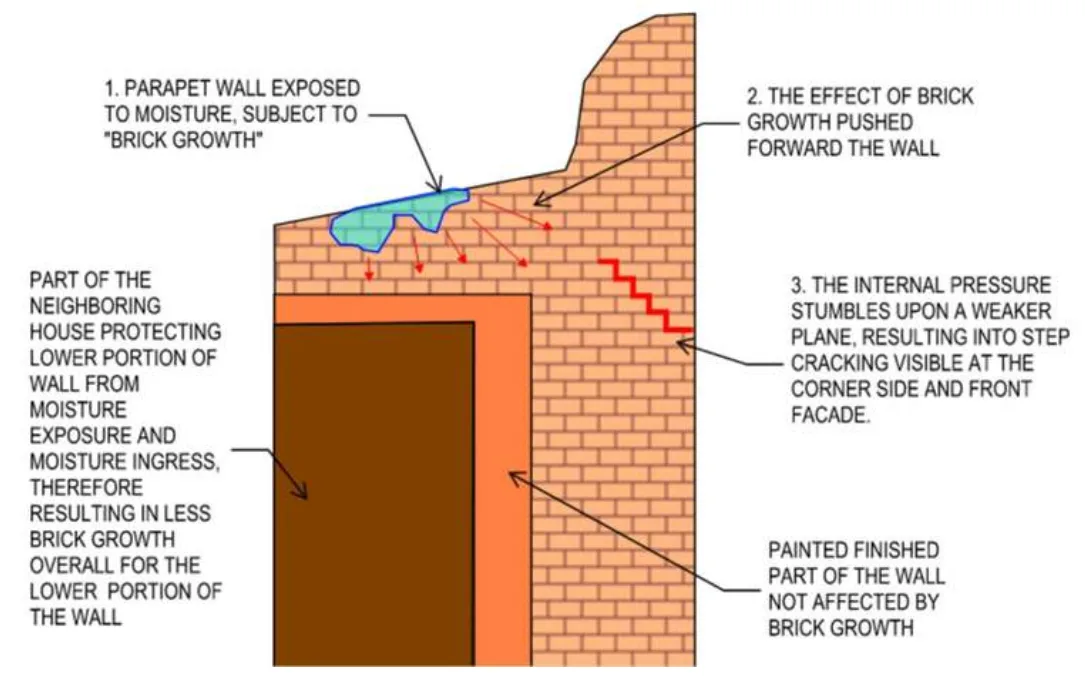
One of the most misunderstood causes of masonry cracking is a phenomenon known as brick growth.
Most people assume bricks remain the same size forever.
They don't.
Over long periods of time, masonry units can absorb moisture and gradually expand.
This process is extremely slow.
In fact, it usually occurs over many years or decades.
In heritage buildings, particularly those exposed to weather and moisture for extended periods, the cumulative effect can become significant.
In this building, several factors appeared to support this theory:
Deteriorated paint systems.
Moisture ingress through parapet locations.
Long-term exposure to weather.
Lack of articulation joints.
Brickwork exposed to differing moisture conditions across the building.
When brickwork expands and movement cannot be accommodated, stress starts to build within the wall.
Eventually, that stress must be released somewhere.
Often the result is cracking.
Common Causes of Cracking in Heritage Masonry Buildings
While brick growth was identified as the primary cause of movement in this project, it is far from the only reason heritage masonry buildings develop cracks.
One of the biggest misconceptions about heritage masonry is that all cracking means the footings are moving. In reality, masonry is a complex material system and cracking can develop for a range of reasons.
Every building is different, which is why visual similarities between cracks can sometimes lead to very different engineering conclusions.
Mortar Deterioration
Many heritage buildings were constructed using lime-based mortars rather than the stronger cement-rich mortars commonly used today.
This wasn't a mistake.
In fact, lime mortars were intentionally softer than the surrounding brickwork.
The idea was that the mortar would accommodate movement and weathering before the bricks themselves became damaged.
Over decades of exposure to moisture and weather, however, lime mortars can gradually deteriorate. We often find mortar joints that have become sandy, powdery and friable, reducing the wall's ability to distribute loads and resist movement.
In this project, localised areas of heavily deteriorated mortar were identified throughout the building. While not considered the primary cause of cracking, they were contributing to the overall condition of the masonry.
Brick Growth
Many people are surprised to learn that clay bricks slowly expand throughout their service life.
This process, known as brick growth, occurs as moisture is absorbed into the masonry over many years.
The movement is tiny on a year-to-year basis but can become significant over decades.
Where long walls have no articulation joints or movement joints, substantial stresses can build within the masonry. Eventually those stresses are relieved through cracking.
The investigation at Carlton ultimately identified differential brick growth as the most likely primary cause of movement and cracking within the building.
Thermal Movement
Heritage masonry moves every day.
As temperatures rise, brickwork expands.
As temperatures fall, brickwork contracts.
Modern masonry buildings generally contain movement joints specifically designed to accommodate these movements. Many heritage buildings do not.
As a result, thermal movement can contribute to cracking, particularly when combined with brick growth and mortar deterioration.
Moisture Ingress
If there is one recurring theme in heritage masonry investigations, it's water.
Moisture entering through parapets, flashings, deteriorated mortar joints or poorly detailed roof interfaces can dramatically alter how masonry behaves.
Water can accelerate mortar deterioration, promote brick growth and increase the likelihood of cracking.
In this project, moisture ingress through the parapet and weather-exposed portions of the wall was considered a significant contributing factor in the observed movement.
Poor Historical Repairs
Not all repairs improve a heritage building.
Over many decades, a building may undergo multiple rounds of maintenance and repairs.
Sometimes these interventions address the symptoms rather than the underlying cause.
We frequently encounter:
cracks patched without investigating movement;
rigid repairs introduced into moving walls;
inappropriate mortars used during repointing; and
expensive structural interventions that don't address the actual mechanism driving the damage.
One of the key lessons from this project was that understanding the cause of the cracking was far more important than immediately selecting a repair method.
Why Heritage Buildings Behave Differently
Heritage buildings are often far more complex than they appear.
They have typically been exposed to decades of environmental conditions, repairs, modifications and varying maintenance regimes.
They were also built using construction methods that differ considerably from modern buildings.
Many heritage masonry walls were constructed without the movement joints we commonly introduce today.
As a result, they often have limited ability to accommodate gradual expansion caused by moisture and temperature changes.
Over many years, these small movements can accumulate and eventually manifest as visible cracking.
This is one reason why heritage structures require a slightly different investigative approach.
The obvious answer isn't always the correct answer.
The Most Important Lesson
If you're dealing with cracking in a heritage masonry building, the most important step is understanding the cause before committing to potentially expensive repair works.
The biggest lesson from this project wasn't actually about masonry.
It was about assumptions.
By the time we became involved, a more invasive remediation concept had already been considered. The focus was largely on structural intervention associated with the apparent movement.
However, once the underlying mechanism was properly understood, the recommended solution became much more targeted.
Rather than continuing down a pathway focused solely on footing movement, the proposed rectification strategy involved:
Stabilising the affected wall areas.
Introducing articulation joints.
Crack stitching with helical reinforcement.
Local masonry repairs.
Repointing deteriorated mortar.
The result was a significantly less invasive solution targeted toward the actual problem rather than the assumed problem.
Key Takeaways for Heritage Building Owners
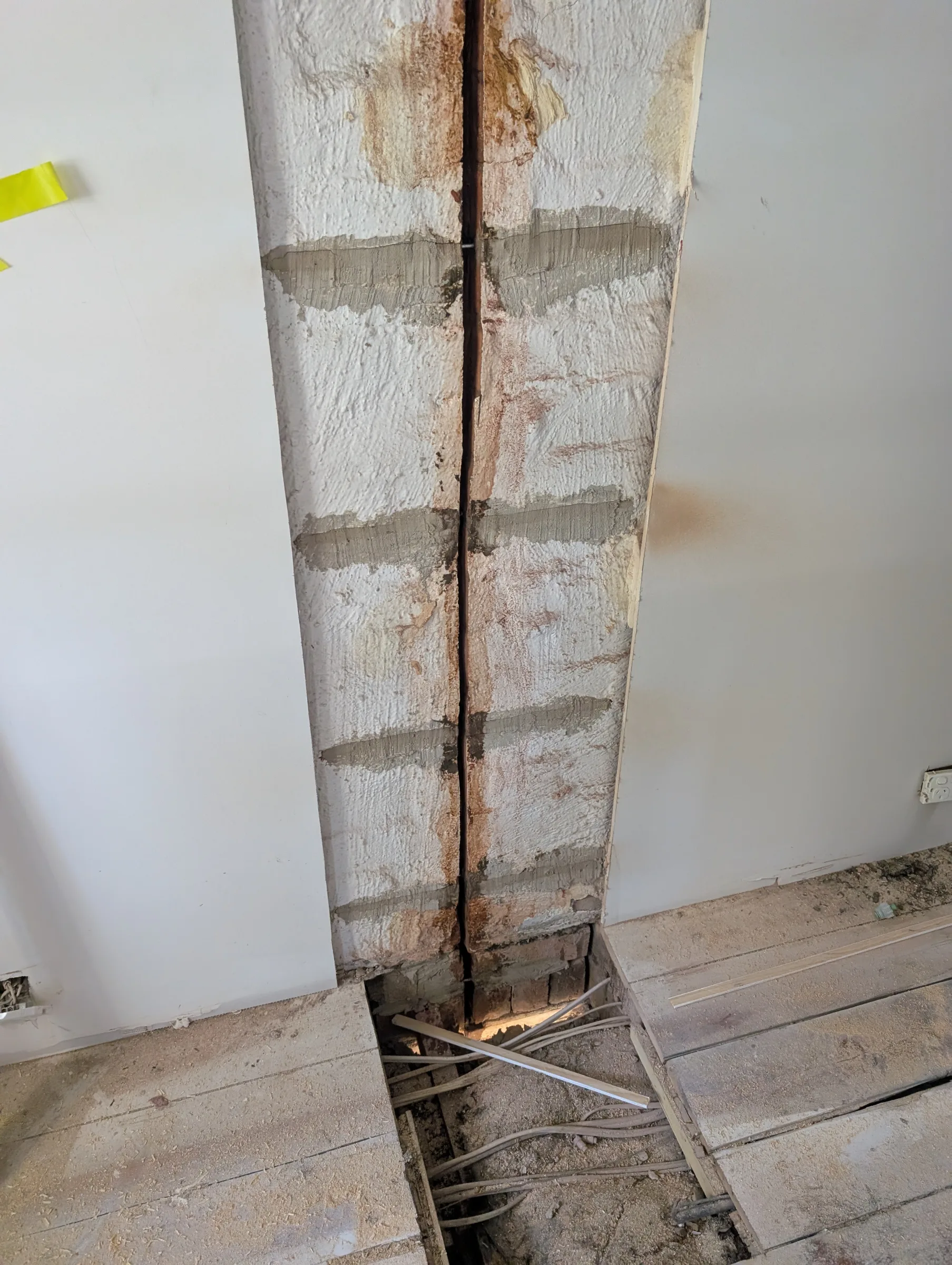
Cracks don't automatically mean footing failure.
Underpinning is not always the answer.
Heritage masonry buildings can crack due to moisture-related brick growth.
Crack patterns often provide important clues about what is actually occurring.
A proper investigation should focus on identifying the cause before designing the solution.
The most expensive intervention is not always the most appropriate intervention.
Frequently Asked Questions About Cracking In Heritage Masonry Buildings
Does cracking in a heritage masonry building always mean underpinning is required?
No. While footing movement is one possible cause of masonry cracking, it is certainly not the only cause. Heritage masonry buildings can also crack due to brick growth, mortar deterioration, moisture ingress, thermal movement and historical alterations. Determining the cause of the cracking is often more important than selecting a repair method.
Can brick growth really cause cracking in heritage buildings?
Yes. Many clay bricks slowly expand over time as they absorb moisture. While the movement is extremely small year-to-year, it can accumulate significantly over decades. In long walls without movement joints, the resulting stresses can eventually lead to cracking and wall displacement.
Why do heritage masonry buildings crack more often than modern buildings?
Many heritage buildings were constructed before movement joints became commonplace. They also often contain softer lime mortars, older brick types and construction details that respond differently to moisture and temperature changes. As these buildings age, movement and deterioration can gradually accumulate.
Can deteriorated mortar cause cracking?
Yes. Mortar is an important component of a masonry wall. As heritage lime mortars age, they can become soft, powdery and weathered. While deteriorated mortar may not always be the primary cause of cracking, it can reduce the wall's ability to distribute loads and accommodate movement.
Is cracking in old brickwork dangerous?
Not necessarily. Some cracking is cosmetic, while other cracking may indicate structural movement that warrants further investigation. The cracking pattern, location, width and progression of the cracks are often more important than the presence of the crack itself.
Can cracked heritage brickwork be repaired?
In many cases, yes. Typical repair approaches may include repointing mortar joints, crack stitching using helical reinforcement, introducing articulation joints, improving weatherproofing or providing localised structural restraint. The appropriate repair depends on the underlying cause of the movement.
How do engineers determine what is causing cracks?
The process usually involves a detailed site inspection, review of historical information, examination of cracking patterns, assessment of building movement and consideration of external influences such as moisture, vegetation, drainage and previous repairs. The objective is to understand why the building is moving before deciding how it should be repaired.
Final Thoughts
One of the reasons we enjoy forensic investigations is that they often resemble detective work.
Every building leaves clues.
Some clues point in the right direction.
Others don't.
In this case, almost everything initially suggested footing movement.
A tree, a dropped pit, pavement cracking and historical settlement all appeared to support the same theory.
Yet the masonry itself was quietly telling a different story.
By following the evidence rather than assumptions, we were able to identify a less invasive and more targeted solution that addressed the actual cause of the problem.
For heritage buildings in particular, that's often the most valuable lesson of all.
Understanding why the damage is occurring is almost always more important than rushing to fix the symptoms.
Concerned About Cracking in a Heritage Masonry Building?
Cracking in brickwork can be caused by footing movement, brick growth, mortar deterioration, moisture ingress, thermal movement or a combination of factors. Understanding which mechanism is driving the movement is often the most important step in developing the right remediation strategy.
If you're concerned about cracking in a heritage masonry building and would like a second opinion, you can CONTACT US HERE
Tagged
Never miss a new insight.
Receive email notifications when new articles, project lessons and technical insights are published.
Leave a message.
A thought, a question or a correction on this article — it comes straight to our team. Messages are reviewed by us before they appear beneath the article.
Tell us about your building.
Can’t find the answer you’re looking for? Tell us about your building, project or challenge and we’ll help point you in the right direction.
About The Author

Quentin Suckling
Director - Structural Engineering
Quentin Suckling is the Director and Principal Structural Engineer at Sheer Force Engineering. Passionate about heritage preservation and adaptive reuse, he enjoys understanding how buildings behave and helping clients unlock the potential within existing structures. Through these articles he shares practical lessons from projects, investigations and engineering practice.