
Heritage House Cracks: Why Underpinning Didn't Stop the Movement
When we were asked to investigate one of Melbourne's oldest heritage houses, the assumption seemed straightforward: the building had cracked because the footings were moving. The property had already undergone multiple underpinning campaigns over several decades, yet the cracking and movement continued. Through intrusive investigations and detailed assessment, we discovered the real issue was hidden behind the render. This project highlights why diagnosing the true cause of cracking is often more important than rushing into repairs.
Quentin Suckling · September 2026 · 10 min read
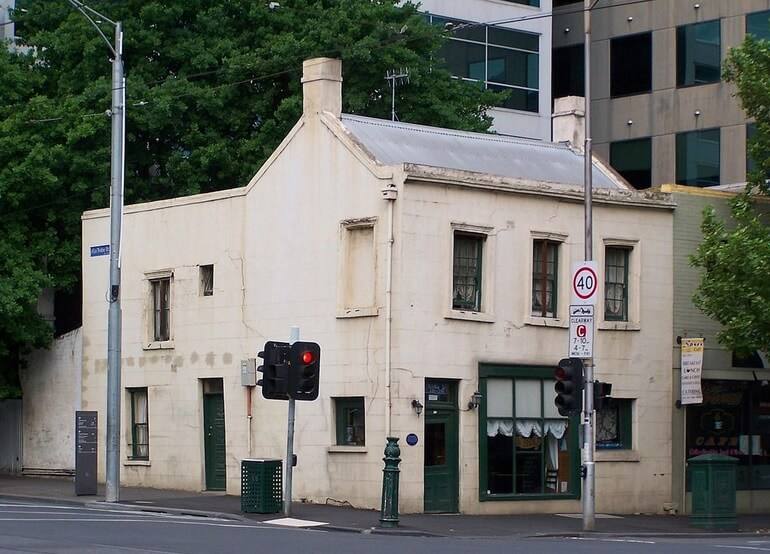
For most people, the appearance of significant cracking in a heritage house points to an obvious conclusion.
The footings must be moving.
In many cases, that's a reasonable assumption.
This particular heritage house, however, taught us a different lesson.
The building had already been underpinned multiple times over several decades. Major investigations had been undertaken. Various remediation works had been completed. Yet the cracking continued, the walls continued to move, and parts of the structure remained significantly out of plumb. The history of repeated underpinning and ongoing movement was a key feature of the building long before we became involved.
What started as a structural investigation ultimately became a lesson in the importance of looking beyond the obvious explanation.
And sometimes, digging a little deeper.
A Building Many Melburnians Already Knew
One aspect that made this project particularly memorable was the level of public interest.
As we began working on the building, we shared a brief update online. What happened next surprised us.
People began commenting with their memories of the building.
Many had walked past it for years.
Others remembered visiting it.
Some simply wanted to see it preserved.
This wasn't just another old building.
It was a building people genuinely cared about.
The property is widely recognised as one of the oldest surviving heritage dwellings within Melbourne's CBD and carried significant heritage importance.
That added a certain weight to every decision we made.
The Cracking That Wouldn't Stop
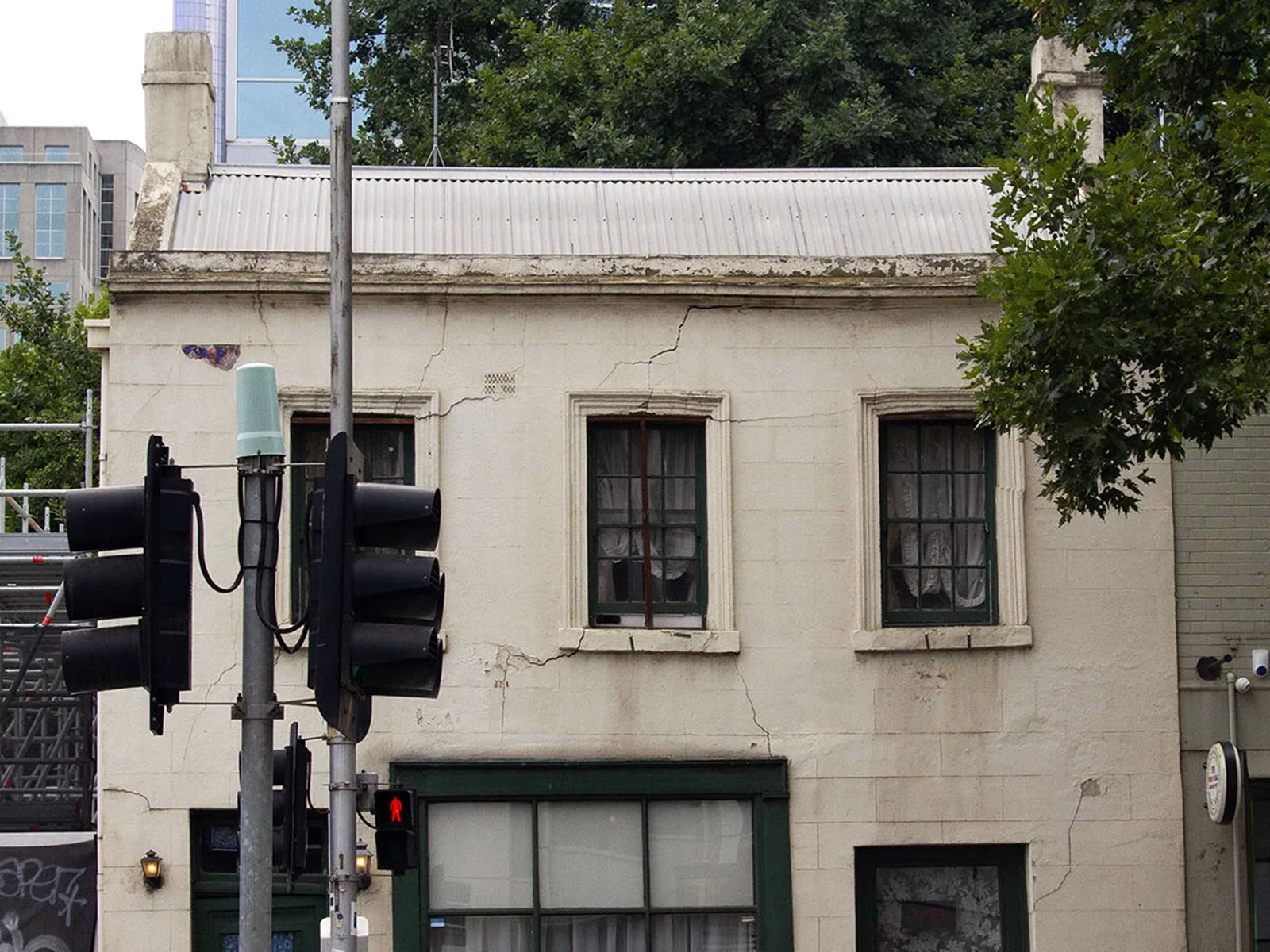
The building had a long history of movement.
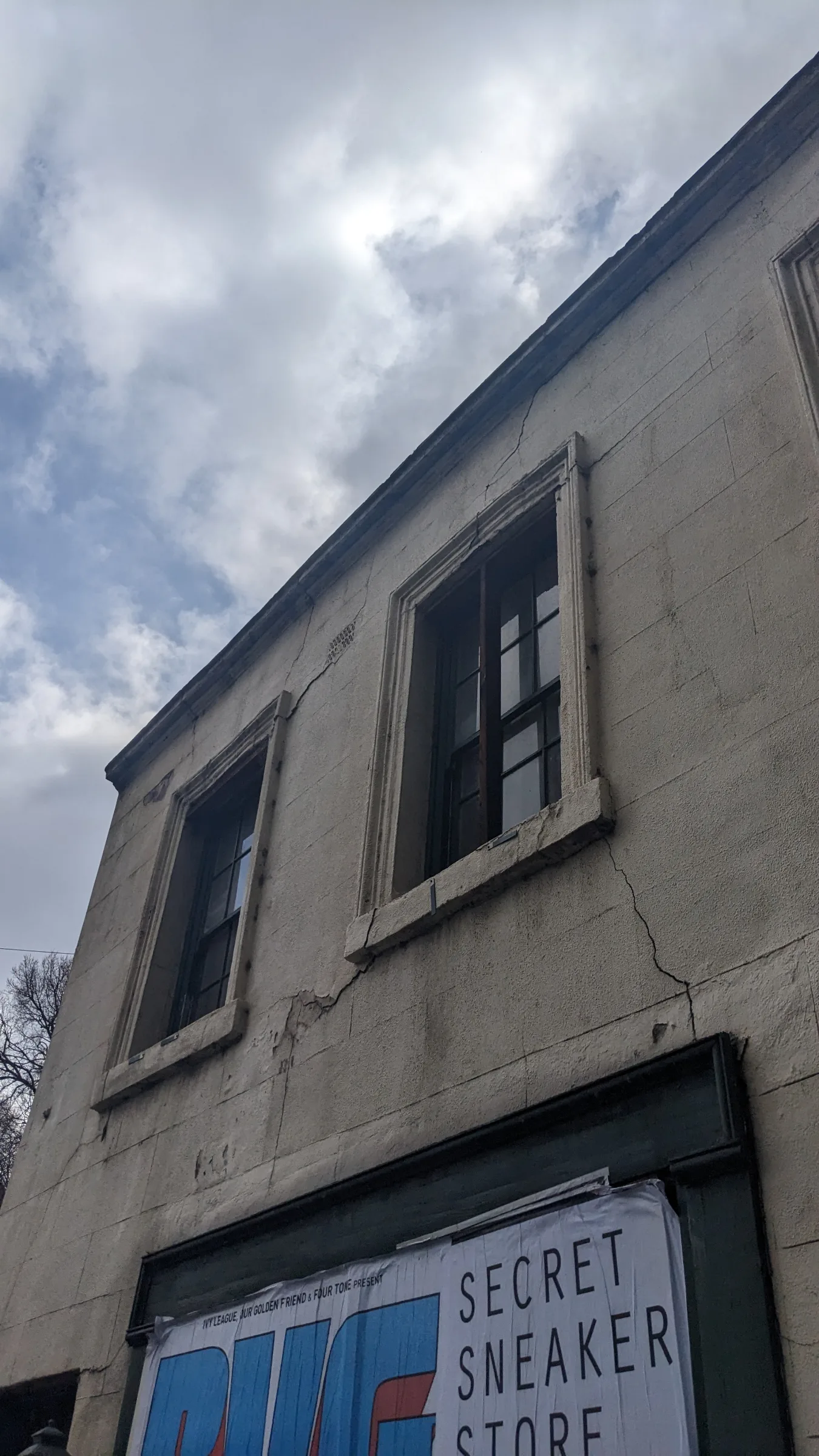
Previous investigations documented significant cracking, wall distortion and movement. Portions of the northern wall were leaning outward and some areas measured several degrees out of plumb. Historic repairs, crack stitching, tie rods, underpinning works and temporary stabilisation measures had already been implemented over many years.
Naturally, the first suspect was footing movement.
After all, differential settlement is one of the most common causes of cracking in older masonry buildings.
Settlement occurs when portions of a building's foundations move at different rates. The resulting distortion can cause walls to crack, windows to distort and floors to slope.
The challenge was that this building had already been underpinned extensively.
And not just once.
Multiple underpinning campaigns had been undertaken over many decades.
So why was the building still moving?
Why The Investigation Wasn't Adding Up
Heritage houses often carry generations of repairs, alterations and hidden surprises. When cracking or movement doesn't appear to align with the obvious explanation, further investigation can often reveal important information that isn't visible from the surface.
Like many forensic investigations, the project began with testing assumptions.
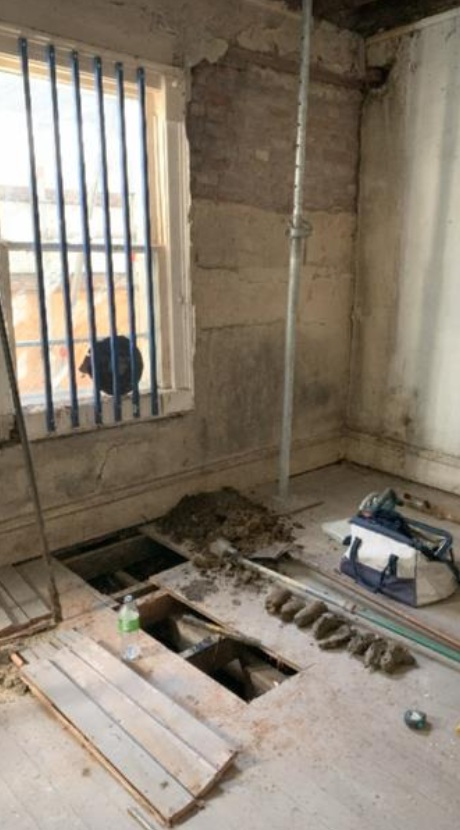
One of our first steps was to investigate the footings.
Test pits were excavated and previous underpinning works were exposed.
To our surprise, the underpinning appeared extensive.
More importantly, it appeared competent.
The concrete was in good condition.
The depth was substantial.
The workmanship appeared reasonable.
The footings didn't look like the primary culprit.
At that point, something wasn't adding up.
The visible movement was significant.
But the foundations weren't telling the same story.
That's usually a sign there are still pieces missing from the puzzle.
The Moment Everything Changed
Every forensic investigation seems to have a moment when the pieces suddenly fall into place.
For us, it happened while investigating the masonry walls.
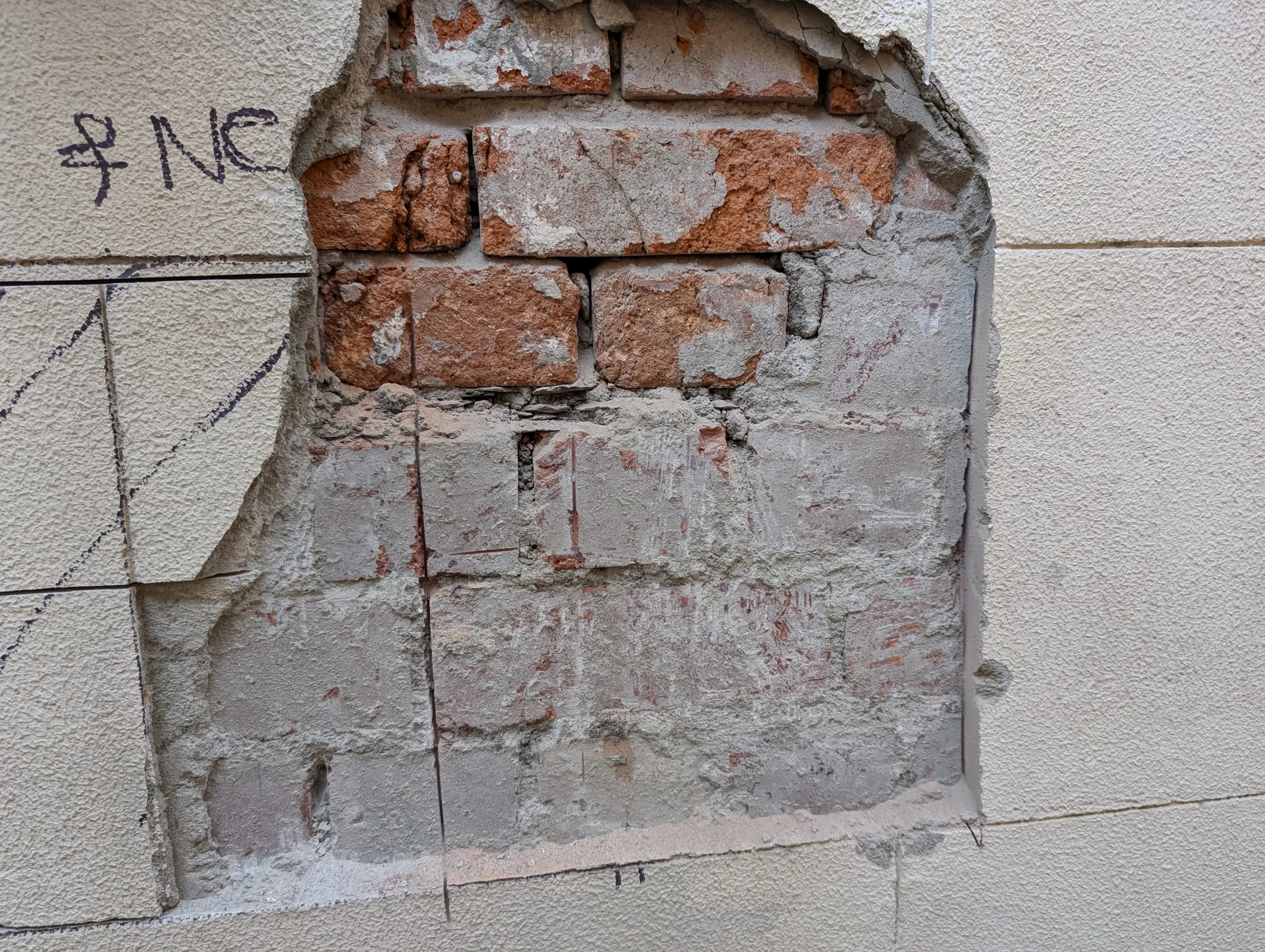
As part of the assessment process, render was removed to expose the original brickwork beneath.
What we discovered completely changed the direction of the investigation.
The mortar wasn't behaving like mortar.
It was behaving like sand.
I remember blowing into one of the open joints between bricks.
A puff of sandy material blew straight back into my face.
That moment stuck with me.
Because suddenly a lot of things made sense.
The walls had not simply been suffering from footing movement.
The walls themselves had lost a significant amount of their integrity.
The original mortar had deteriorated so extensively that large portions of the masonry were no longer performing as intended. Investigation findings and later remediation drawings both identified severe mortar deterioration and extensive masonry repair requirements.
Why Mortar Matters
We frequently find that the visible defect is only part of the story. Understanding the condition of the underlying masonry can help ensure repairs address the true cause of the problem rather than just the symptoms.
Most people naturally focus on bricks when they look at a masonry wall.
Engineers often spend just as much time looking at the mortar.
The mortar is the material between the bricks.
It transfers load.
It helps the wall act as a single structural element.
It provides stability and helps resist movement.
If the mortar deteriorates significantly, the wall can begin to lose its ability to behave as a coherent structure.
That's effectively what we were seeing here.
In many locations, the mortar had deteriorated to the point where substantial repointing was required throughout the retained walls. Extensive mortar replacement and repointing works formed a major part of the final remediation strategy.
The Surprising Role Of The Render
One of the more interesting observations during the project involved the render itself.
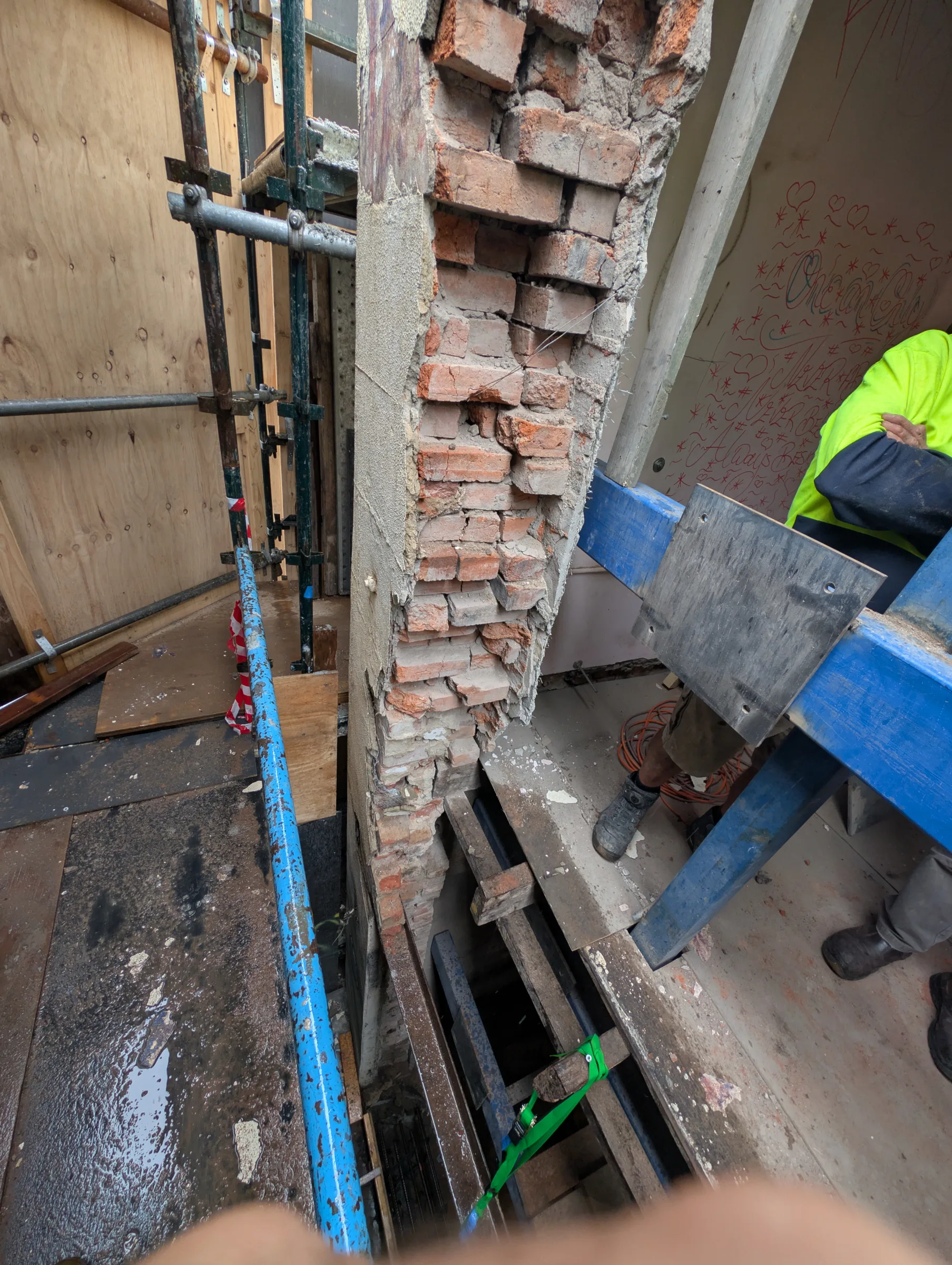
The render was unusually thick, stiff and well bonded to the masonry beneath.
In some areas, removing the render caused damage to the underlying masonry because the bond between the two was so strong.
At times, it almost appeared that the render had been helping support the deteriorated wall beneath.
That's not something we would ever rely upon structurally.
But it was an interesting reminder that old buildings sometimes behave in unexpected ways.
More Than Just A Mortar Problem
The deteriorated mortar was a critical discovery.
But it wasn't the only issue.
As the investigation progressed, we also discovered:
Historic wall movements.
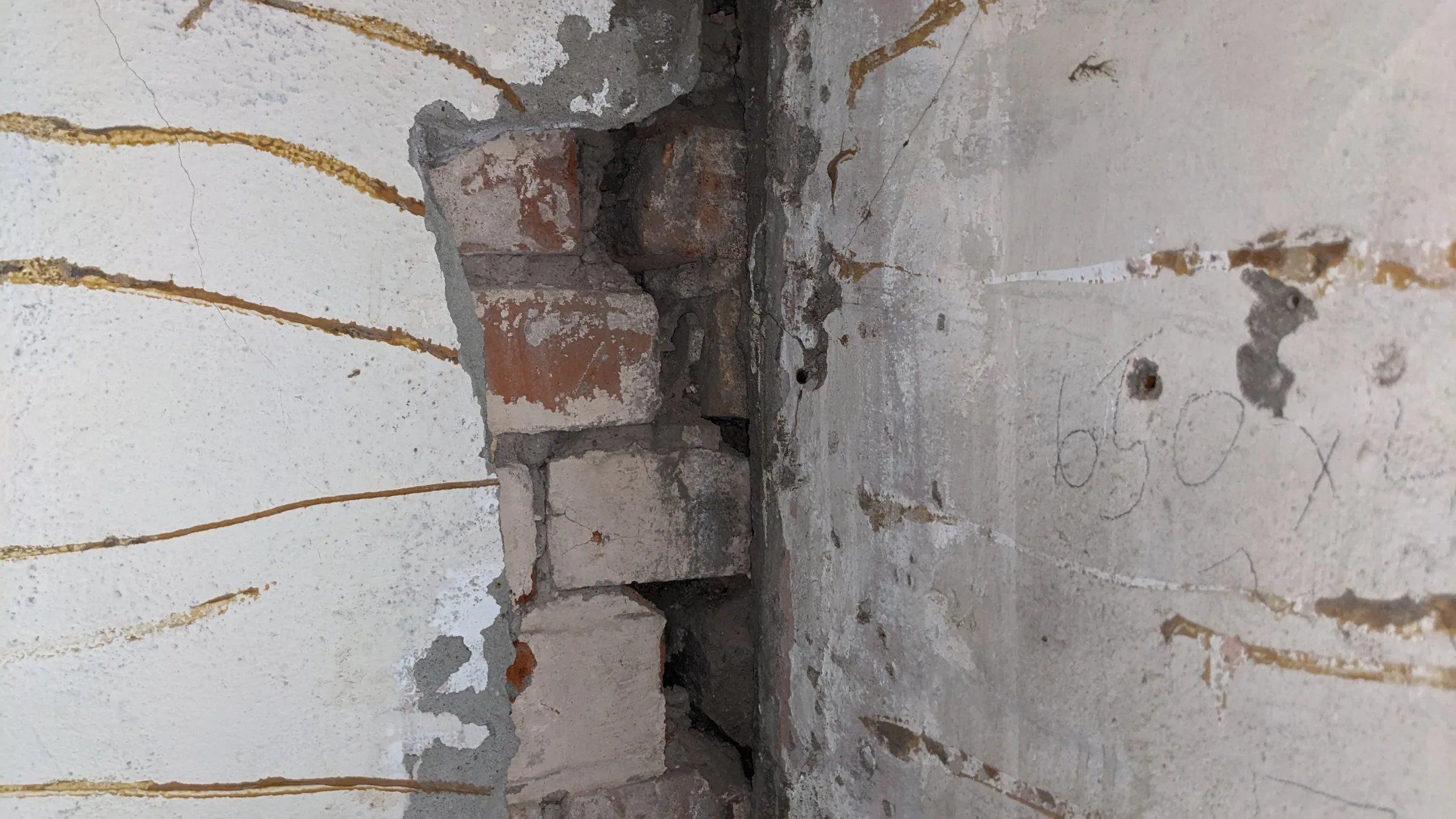
Weak and damaged masonry piers.
Evidence of previous temporary needling works embedded within critical wall locations.
Existing cracking and delamination between walls.
Structural deficiencies associated with adapting the building for future use.
Previous reports also documented poor wall integrity, masonry pockets, inadequate restraint and historical deterioration mechanisms contributing to the building's condition.
Like many existing buildings, the final outcome could not be attributed to a single cause.
We were looking at the cumulative effect of numerous issues developing over a very long period.
Developing A Practical Remediation Strategy
Once the real causes became clear, the focus shifted from investigation to remediation.
Some portions of the building could be retained.
Others could not.
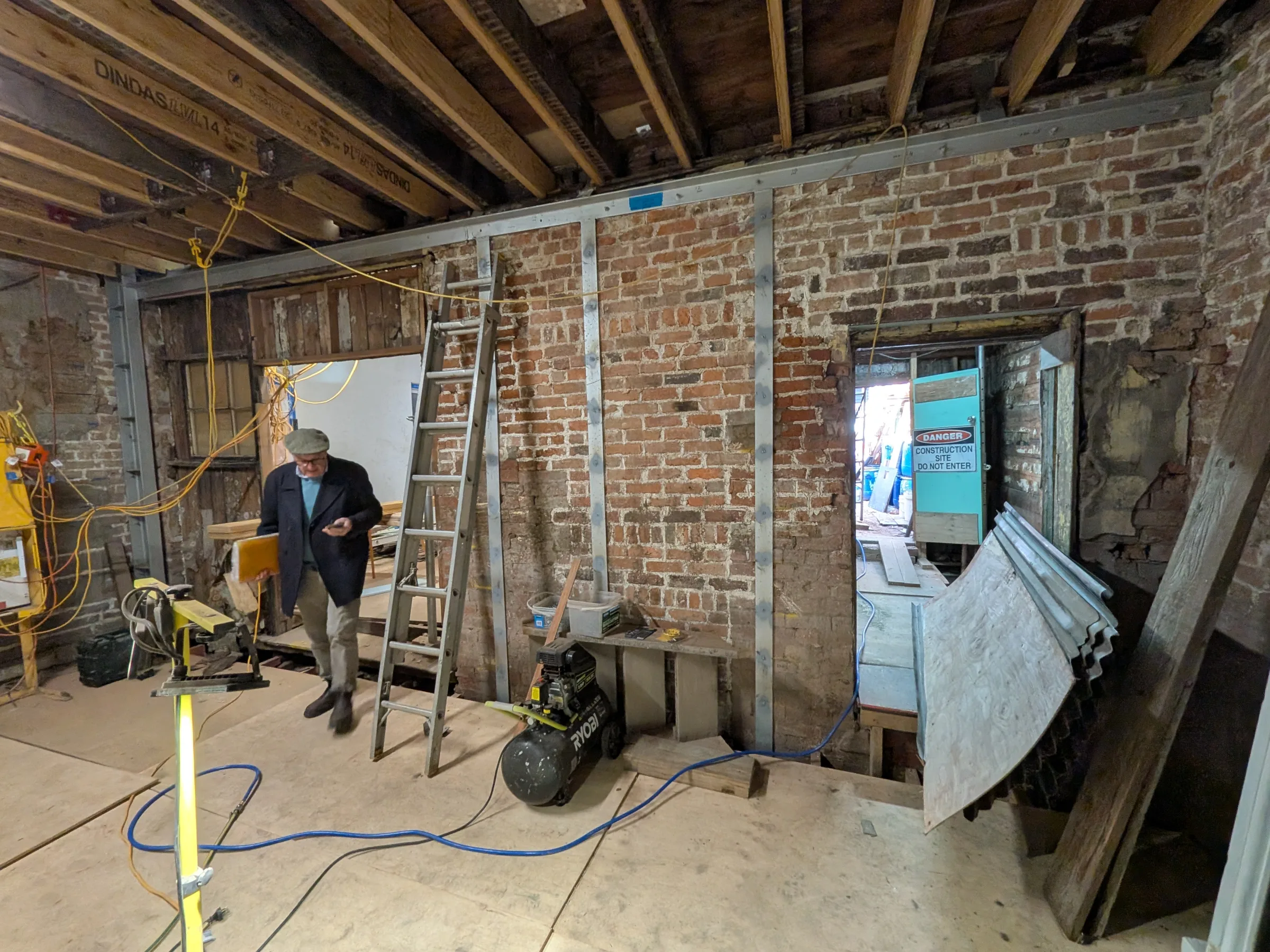
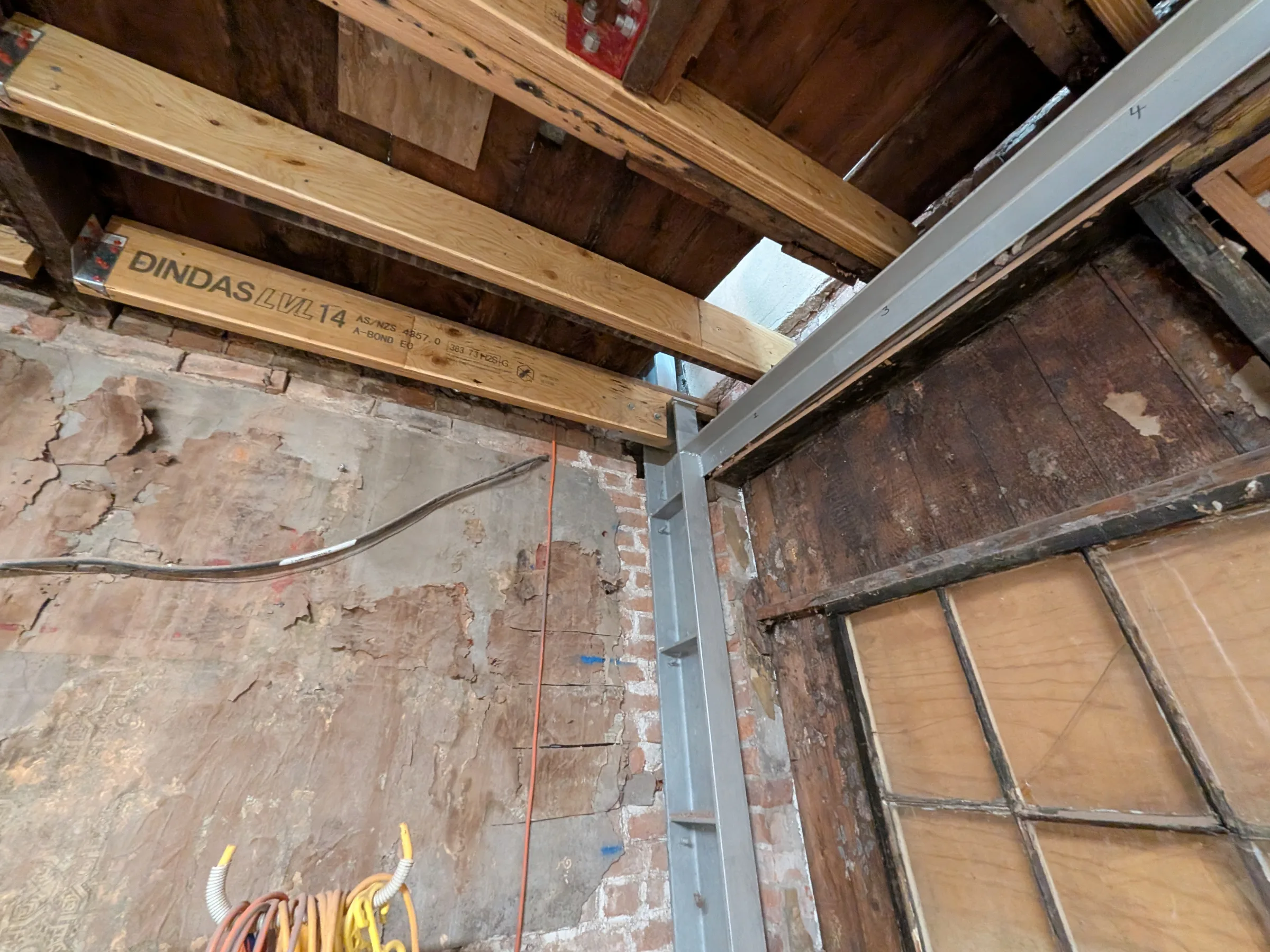
The most severely affected section of the northern wall was beyond practical salvage and required reconstruction. Other retained portions were stabilised through strengthening measures, crack stitching, extensive repointing and new structural restraint systems. The final design incorporated significant masonry repairs, steel strengthening elements and rebuilding works where necessary.
On the western elevation, where historic openings had significantly reduced wall stiffness, reinforced concrete elements were introduced to improve performance and address heavily damaged masonry areas.
The objective was not simply to repair cracks.
The objective was to restore structural integrity while preserving as much significant heritage fabric as reasonably possible.
Key Lessons For Heritage Building Owners
Cracks Don't Always Mean Footing Failure
One of the biggest misconceptions we encounter is the automatic assumption that cracking means foundation failure.
Sometimes that's true.
Often it's only part of the story.
Previous Repairs Should Never End An Investigation
If a building continues to move or crack after repairs, it may be worth revisiting the original diagnosis.
The first explanation is not always the complete explanation.
Removing Finishes Can Be Extremely Valuable
Render, plaster and linings often conceal critical information.
A relatively small amount of investigation can sometimes completely change the understanding of a problem.
Deterioration Can Occur Slowly Over Decades
Many heritage building issues develop gradually.
By the time visible symptoms appear, the underlying deterioration may have been occurring for many years.
Understanding The Cause Is Usually Cheaper Than Guessing
The most expensive repair is often the one that fixes the wrong problem.
Investing in investigation and diagnosis typically provides far better outcomes than jumping straight to remediation.
Common Causes Of Cracking In Heritage Houses
While every project is different, common causes of cracking in heritage homes include:
Differential footing settlement
Deteriorated mortar
Moisture ingress
Brick growth
Corrosion of embedded elements
Timber decay
Structural alterations
Poor historic repairs
Ground movement
Loss of wall restraint
This project is a good reminder that multiple causes can occur simultaneously.
Why Do Heritage Houses Crack?
One of the most common questions we hear from owners of older homes is:
"Why is my heritage house cracking?"
The reality is that heritage buildings rarely have a single cause for cracking.
Unlike modern structures, many heritage houses have been standing for more than a century. During that time they may have experienced changes in ground conditions, alterations by previous owners, water ingress, material deterioration and numerous repairs. These factors can combine over decades and eventually express themselves as visible cracking.
One common cause is foundation settlement, where parts of the building move more than others due to changes in the supporting soil. However, settlement is only one possibility.
We also regularly see cracking caused by:
Deteriorated mortar that has gradually lost strength over time.
Moisture ingress that weakens masonry and timber elements.
Brick growth, where older clay bricks slowly expand over many decades.
Structural alterations that change how loads move through the building.
Corrosion of embedded steel elements such as old lintels and tie rods.
Differential movement between original building sections and later extensions.
Long-term weathering and general deterioration of historic materials.
One of the most important lessons from this project was that cracking does not automatically mean the footings are failing. In this case, decades of underpinning had already been undertaken, yet significant movement and deterioration remained. The true cause only became clear once we exposed the structure and investigated beyond the surface.
For heritage buildings in particular, understanding why the cracking is occurring is often more important than repairing the crack itself. The right repair starts with the right diagnosis.
Frequently Asked Questions
Does underpinning always stop cracking?
No. Underpinning can address foundation-related movement, but it cannot fix unrelated problems such as deteriorated masonry, poor wall restraint or damaged structural elements.
Can mortar deterioration cause structural movement?
Yes. In severe cases, deteriorated mortar can significantly reduce the integrity and stiffness of masonry walls.
How do engineers determine what's causing cracks?
By combining visual inspections, testing, exploratory investigations, structural analysis and historical research to understand how the building is behaving.
Can heritage masonry be repaired rather than replaced?
Often, yes. The appropriate solution depends on the condition of the masonry and the level of deterioration present.
Is cracking always dangerous?
Not necessarily. Many cracks are cosmetic. Others can indicate more significant structural concerns. The cause is generally more important than the crack itself.
Concerned About Cracks In A Heritage House?
Cracking, wall movement and deteriorated masonry can have multiple causes. While footing movement is often the first suspect, heritage buildings frequently contain layers of history, repairs and hidden conditions that deserve closer investigation.
A thorough structural assessment can help identify what is actually happening and ensure repairs target the real cause rather than the symptoms.
Speak with our team about your building and the issues you're observing
Final Thoughts
One reason we enjoy forensic engineering is that buildings rarely tell a straightforward story.
This building certainly didn't.
At first glance, it appeared to be another case of footing movement and settlement.
After all, decades of underpinning history pointed in that direction.
But once we peeled back the render and looked a little deeper, a very different picture emerged.
The experience reinforced a lesson we see time and time again when working with heritage buildings:
The visible symptoms are often only a small part of the story.
Sometimes the most valuable thing an engineer can do is keep asking questions until the full story reveals itself.
Tagged
Never miss a new insight.
Receive email notifications when new articles, project lessons and technical insights are published.
Leave a message.
A thought, a question or a correction on this article — it comes straight to our team. Messages are reviewed by us before they appear beneath the article.
Tell us about your building.
Can’t find the answer you’re looking for? Tell us about your building, project or challenge and we’ll help point you in the right direction.
About The Author

Quentin Suckling
Director - Structural Engineering
Quentin Suckling is the Director and Principal Structural Engineer at Sheer Force Engineering. Passionate about heritage preservation and adaptive reuse, he enjoys understanding how buildings behave and helping clients unlock the potential within existing structures. Through these articles he shares practical lessons from projects, investigations and engineering practice.