
The Garage Crack that Looked Like a Foundation Problem
When we were asked to inspect a garage with severe cracking in the masonry parapet, the property owner feared the building might require major footing repairs. Some of the cracking looked alarming enough that temporary propping had already been installed. Through a detailed investigation, we discovered the problem was not below ground at all. Instead, hidden corrosion within steel lintels was slowly forcing the brickwork apart. This project highlights why visible cracks do not always tell the full story and why understanding the true cause can lead to simpler, more targeted repairs.
Quentin Suckling · September 2026 · 7 min read
Not all cracks tell the story people think they do.
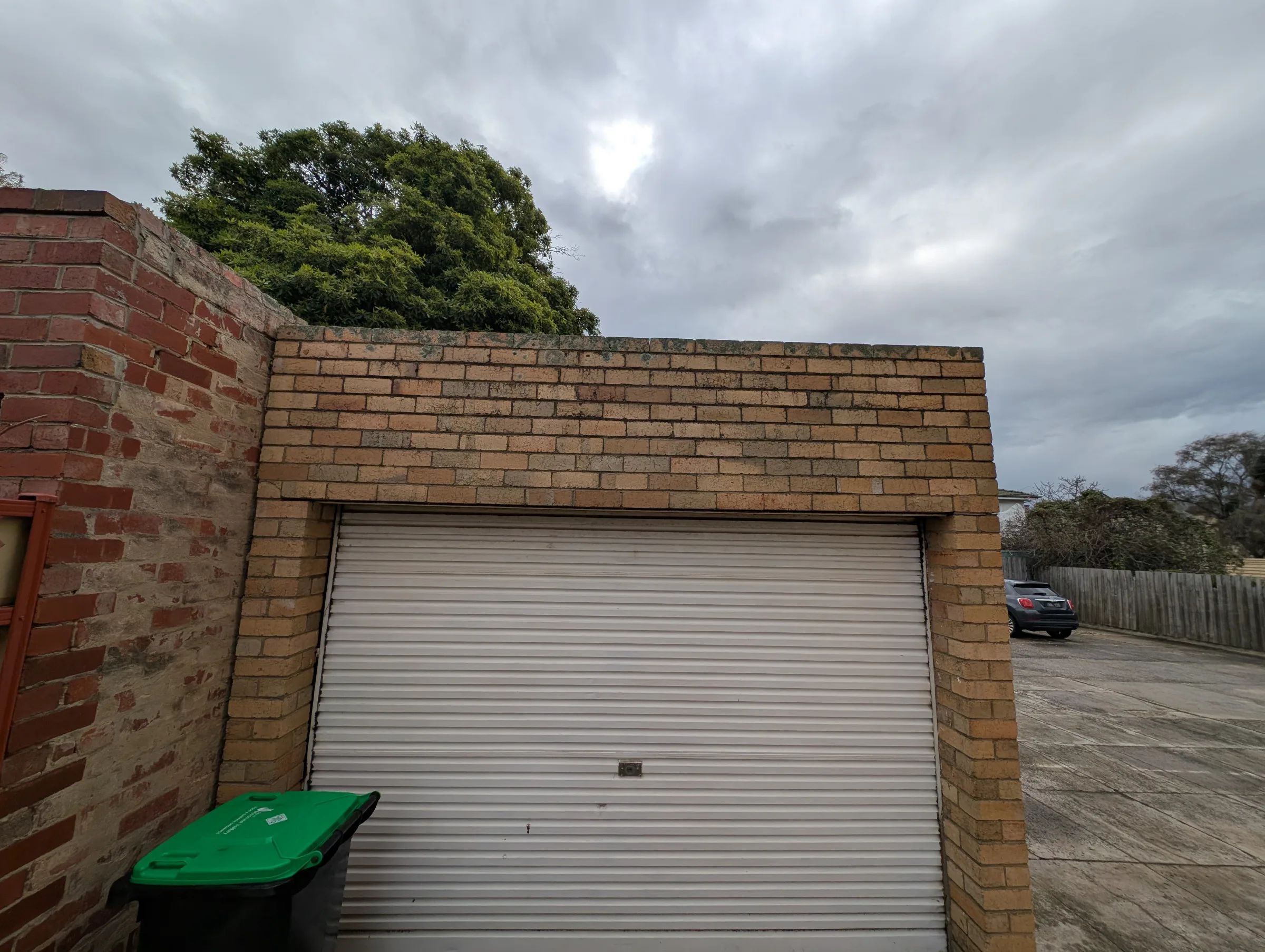
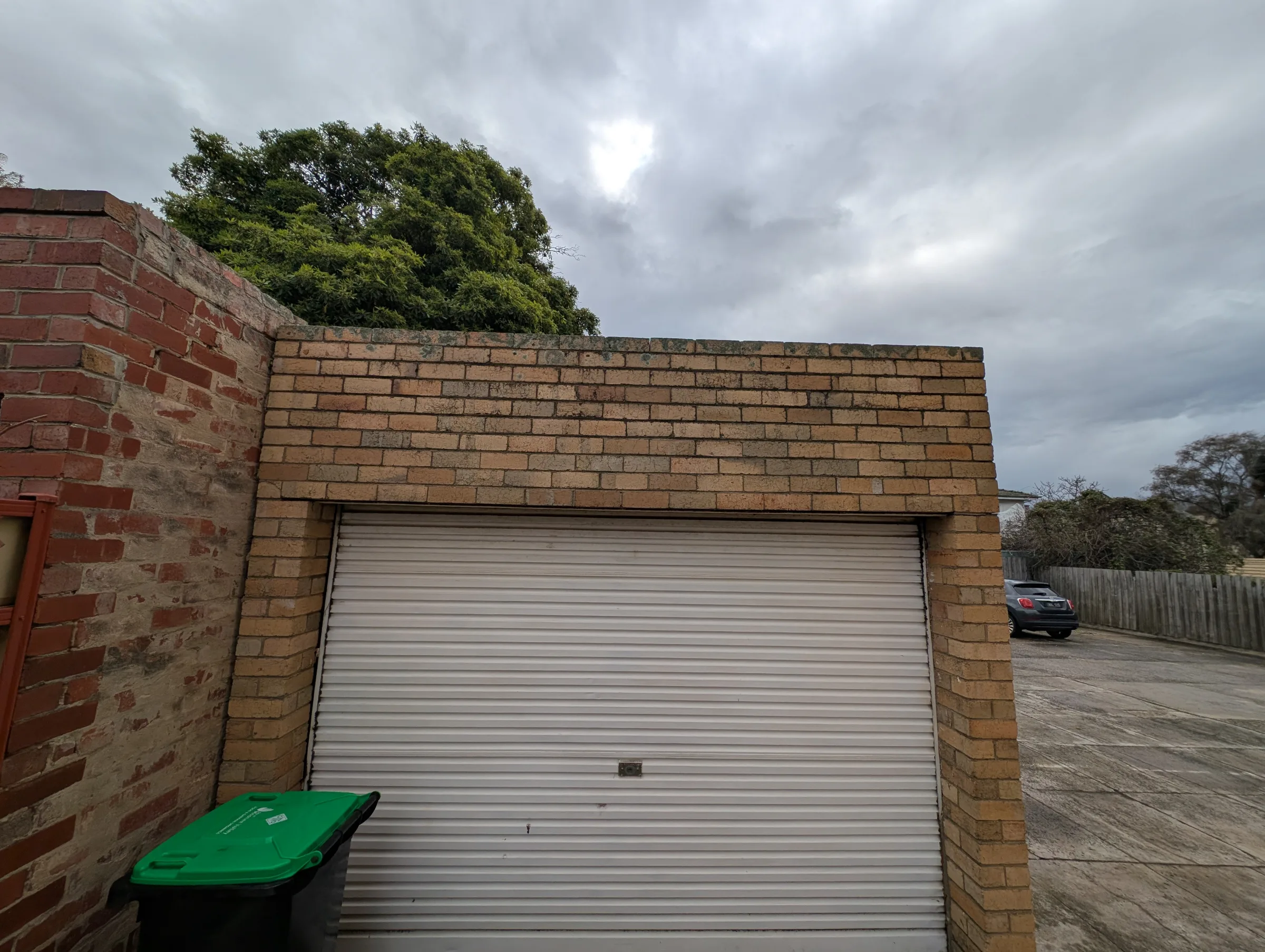
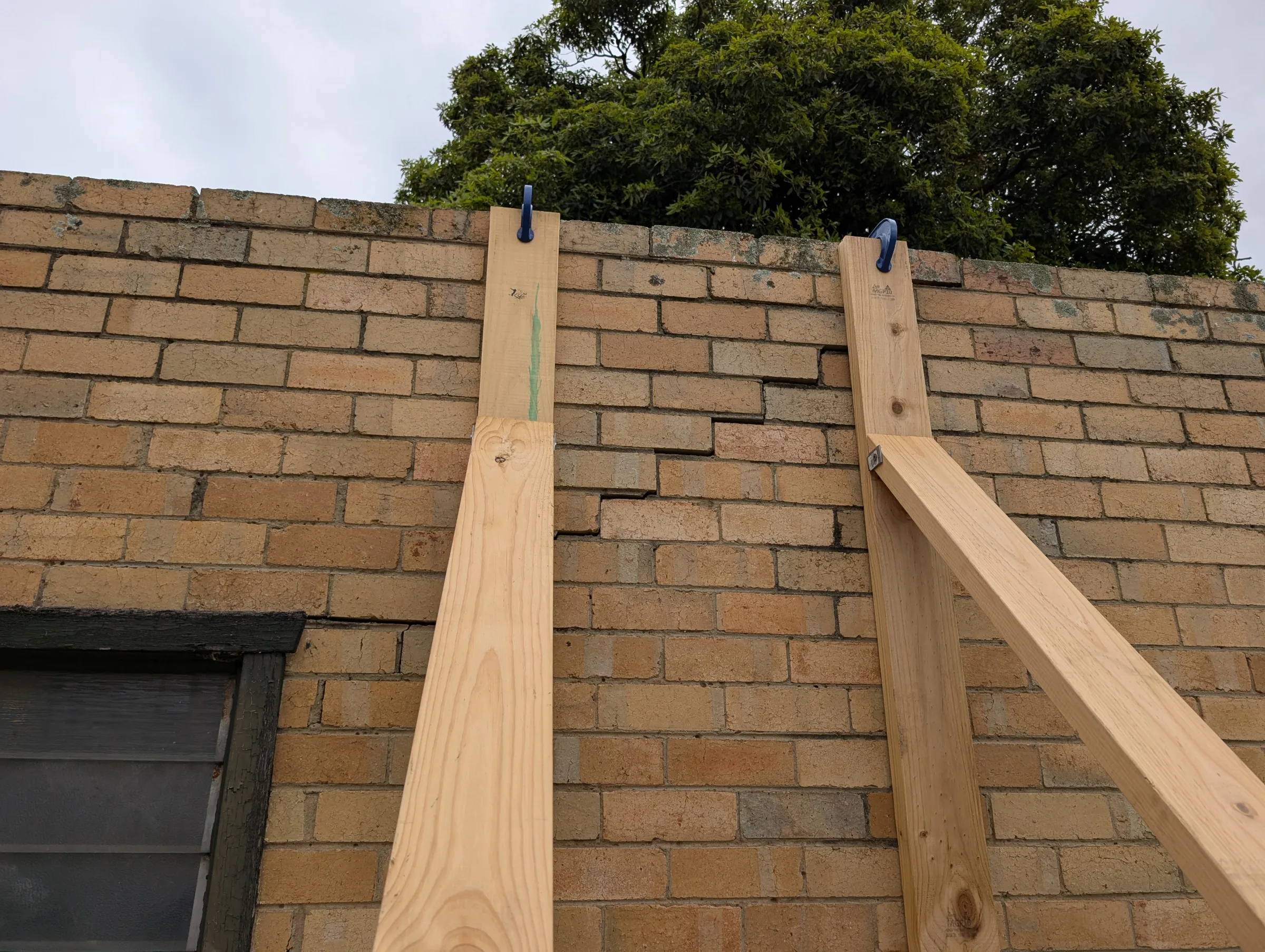
When the owner of a garage in Moonee Ponds first contacted us, the primary concern was a large crack above a garage opening. The cracking was significant, the masonry appeared to be separating, and part of the parapet wall looked unstable enough that temporary propping had already been installed as a precaution. At first glance, it was easy to understand why the owner was worried.
Like many building owners, their initial assumption was that the cracking might be related to footing movement and that expensive underpinning works could be on the horizon.
What immediately caught our attention was the cracking pattern shown in the photographs provided before the inspection. It was certainly significant, but it did not immediately point towards a single obvious cause. That uncertainty is often what makes forensic engineering investigations interesting.
We attended site with one key objective:
What was actually causing the cracking, and how serious was it?
Initial Observations
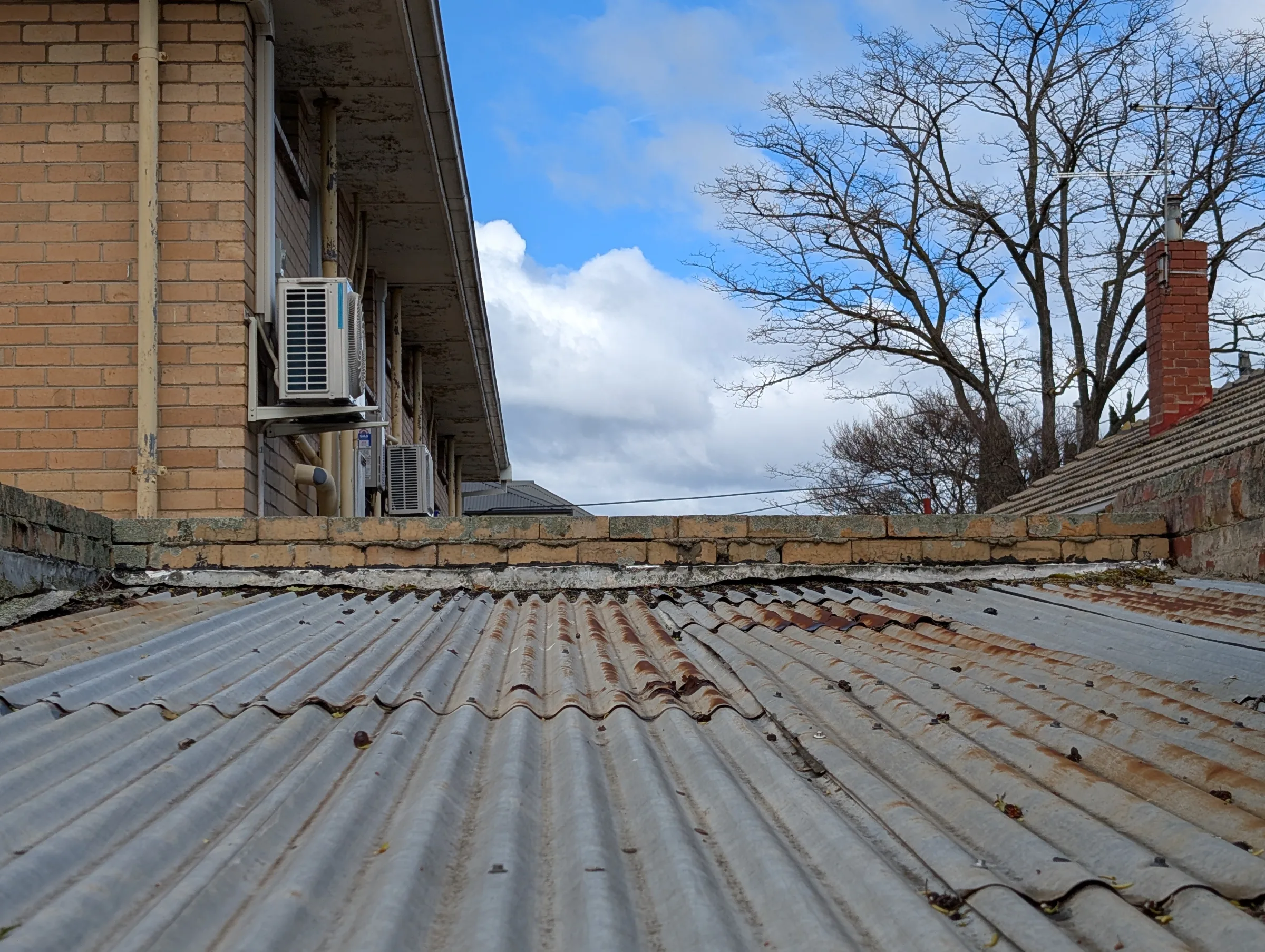
The building was a detached brick garage constructed primarily from single-skin masonry walls with a corrugated sheet roof. The structure appeared typical of many older suburban garages that have remained largely unchanged for decades.
Upon arriving on site, we observed several issues affecting different parts of the building:
Significant cracking and separation of brickwork above the garage door.
Large gaps opening within the masonry.
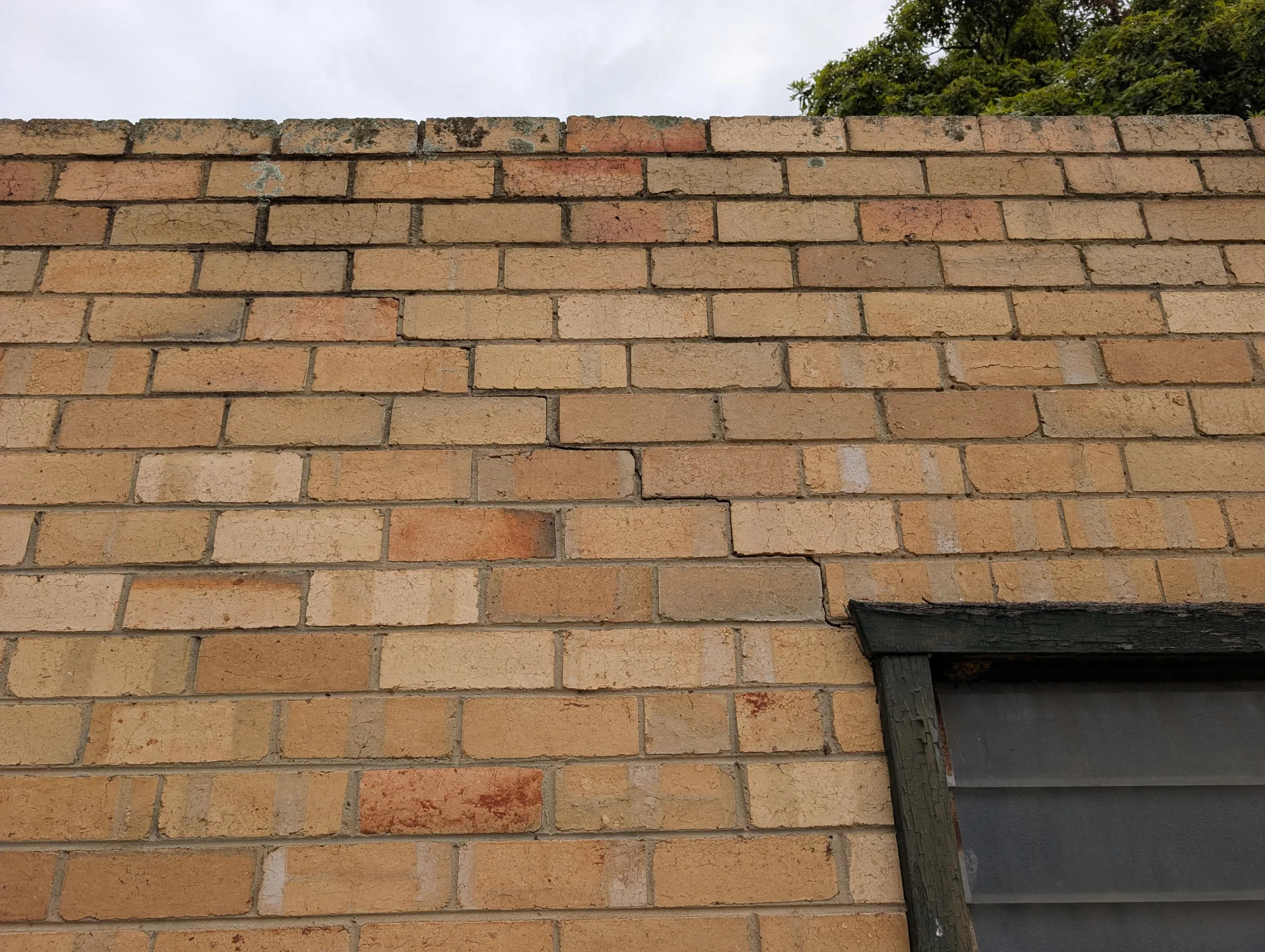
Step cracking adjacent to a window opening.
Localised cracking to internal wall surfaces.
Noticeable sagging of the ceiling.
Extensive deterioration and corrosion within roof sheeting and flashings.
The most striking feature was undoubtedly the cracking above the garage opening and adjacent window.
Cracks in masonry often follow the mortar joints, creating a stair-step pattern that runs diagonally through the wall. This type of defect is commonly referred to as step cracking and is often associated with movement within the structure.
What was interesting in this case was not simply the presence of cracking, but where the cracking occurred and how it related to nearby structural elements.
Investigation Process
One of the misconceptions about structural investigations is that engineers simply look at a crack and instantly know the answer.
The reality is usually more methodical.
Our investigation involved a detailed visual inspection of the garage, review of the defect locations, assessment of the cracking patterns, examination of exposed structural components, and consideration of alternative causes that could explain the observed damage.
When investigating masonry cracking, we are generally asking several questions:
Is the movement coming from above or below?
Is the damage active or historic?
Is moisture involved?
Are structural elements concealed within the wall?
Does the cracking pattern align with the suspected cause?
Many people assume foundations are responsible whenever significant cracking appears. While foundation movement certainly can cause cracking, experienced investigators know that buildings contain many other components capable of creating stress within masonry walls.
Steel lintels are one example.
A lintel is a horizontal beam located above openings such as doors and windows. Its job is to support the masonry above while transferring loads around the opening.
Most people never see these elements because they are either concealed within the wall or partially hidden behind finishes.
In this case, that hidden element would prove to be the key to the entire investigation.
What We Found
The defining moment of the inspection occurred when we were able to closely examine the steel lintels above the affected openings.
The photographs originally supplied by the property owner clearly showed the cracking, but they did not fully reveal the condition of the steel itself.
Once we inspected the lintels directly, the situation became much clearer.
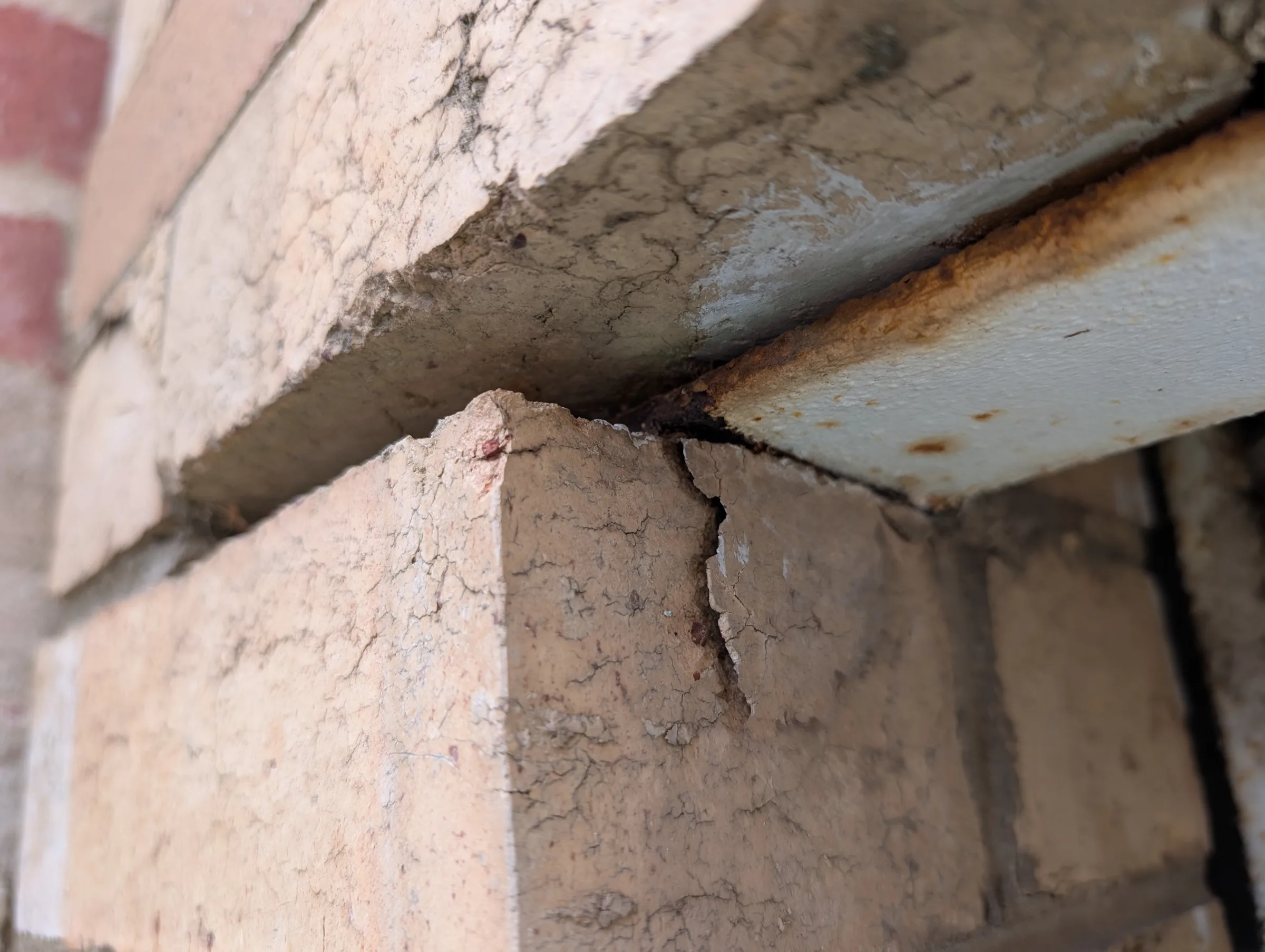
Corrosion was visibly affecting the steel members above both the garage opening and window opening. The associated cracking patterns aligned almost perfectly with the locations of these deteriorating steel elements.
Understanding Corrosion Jacking
This project is a great example of a phenomenon known as corrosion jacking.
When steel corrodes, it doesn't simply rust away.
The corrosion products occupy a greater volume than the original steel. As rust develops, the expanding material acts almost like a slow-moving hydraulic jack, generating pressure against the surrounding masonry.
Over time, that pressure can become surprisingly large.
The expanding steel begins pushing against the bricks around it, forcing them apart and creating cracks that appear to have originated from structural movement elsewhere.
In simple terms:
The steel gets bigger as it rusts, and the bricks crack because they have nowhere else to go.
This was exactly what we observed in the garage.
The expanding lintel was exerting upward and outward pressure on the masonry parapet above the garage opening, producing substantial cracking and visible gaps. Similar behaviour was also occurring near the window opening.
Why the Cracks Weren't a Foundation Problem
One of the most valuable parts of any forensic investigation is ruling out causes that may initially appear likely.
In this case, the cracking pattern did not behave like typical foundation movement.
If footing settlement had been the primary cause, we would generally expect evidence of movement extending through larger portions of the wall system, often including lower sections of the structure.
Instead, the most severe distress was concentrated around the lintel locations. The lower portions of the walls showed no equivalent pattern of structural distress.
That distinction was extremely important because it dramatically altered the repair strategy.
Rather than pursuing invasive foundation works, the remediation could focus on the affected lintels and associated masonry.
The building owner was relieved to learn that the foundations were not the primary issue.
In fact, the eventual repair strategy was considerably less disruptive than they had initially anticipated.
Engineering Insights
This project highlights an important lesson we regularly encounter in forensic engineering.
Cracks Don't Always Point to the Real Cause
Buildings can be surprisingly deceptive.
Visible cracks are often symptoms rather than causes.
It's similar to seeing a warning light on a car dashboard. The light tells you something is wrong, but it doesn't necessarily tell you why.
The crack above the garage opening was very real. The concern was justified.
However, the underlying problem was not hidden beneath the building. It was concealed within the wall itself.
Steel Can Damage Masonry Long Before It Looks Dangerous
Another misconception is that corrosion only matters once a steel member appears heavily rusted.
By the time corrosion becomes visible externally, it may have been developing for many years.
Small amounts of hidden corrosion can generate enough expansion to crack brickwork long before the steel loses significant structural capacity.
This is one reason regular maintenance remains so important.
Masonry Buildings Still Need Maintenance
Many owners view brick buildings as almost maintenance-free structures.
After all, unlike painted timber, masonry often appears durable and permanent.
But masonry buildings frequently contain embedded steel components, flashings, wall ties, and lintels that remain vulnerable to moisture.
If water reaches these concealed elements for long enough, deterioration can occur out of sight.
The corroded roof flashings and deteriorated roof sheeting observed during our inspection likely contributed to ongoing moisture exposure within the structure.
Outcome
Although some of the cracking initially appeared severe, the investigation ultimately produced a positive outcome.
We concluded that the primary cause of the most significant masonry cracking was corrosion-induced expansion of the steel lintels above the garage door and adjacent window.
The recommended remediation strategy focused on:
Temporary support during repairs.
Removal and replacement of heavily corroded lintels.
Crack stitching of affected masonry.
Repointing defective mortar joints.
Protective corrosion treatment.
Improved sealing to reduce future moisture ingress.
Because the cause had been correctly identified, repairs could be targeted directly at the source of the problem.
Rather than undertaking extensive footing works, the effort could be concentrated where it would deliver the greatest benefit.
This is precisely why forensic investigations matter. The right diagnosis often leads to a dramatically different solution.
Key Takeaways
Not all masonry cracking is caused by footing movement. Hidden structural components can sometimes be responsible.
Corroded steel expands as it rusts. This expansion can generate enough force to crack surrounding masonry.
Visible cracks are symptoms, not necessarily causes. Proper investigation is needed before deciding on repairs.
Water is often the underlying trigger. Keeping moisture away from embedded steel can significantly extend a building's service life.
Older masonry buildings still require maintenance. Hidden components cannot simply be assumed to last forever.
Correct diagnosis can save significant repair costs. Understanding the root cause often leads to more efficient and less invasive remediation.
Tagged
Never miss a new insight.
Receive email notifications when new articles, project lessons and technical insights are published.
Leave a message.
A thought, a question or a correction on this article — it comes straight to our team. Messages are reviewed by us before they appear beneath the article.
Tell us about your building.
Can’t find the answer you’re looking for? Tell us about your building, project or challenge and we’ll help point you in the right direction.
About The Author

Quentin Suckling
Director - Structural Engineering
Quentin Suckling is the Director and Principal Structural Engineer at Sheer Force Engineering. Passionate about heritage preservation and adaptive reuse, he enjoys understanding how buildings behave and helping clients unlock the potential within existing structures. Through these articles he shares practical lessons from projects, investigations and engineering practice.