
When a Basement Starts Cracking: Looking Beyond the Surface
When we were asked to investigate cracking and water ingress within a large multi-level basement car park, the immediate concern was whether several prominent cracks indicated a serious structural problem. Through a detailed inspection covering hundreds of defect locations, we discovered a more nuanced story involving concrete shrinkage, restrained movement, construction detailing, and waterproofing performance. This project highlights why understanding the cause of defects is just as important as identifying them, and why moisture inside a basement should never be ignored.
Quentin Suckling · September 2026 · 6 min read
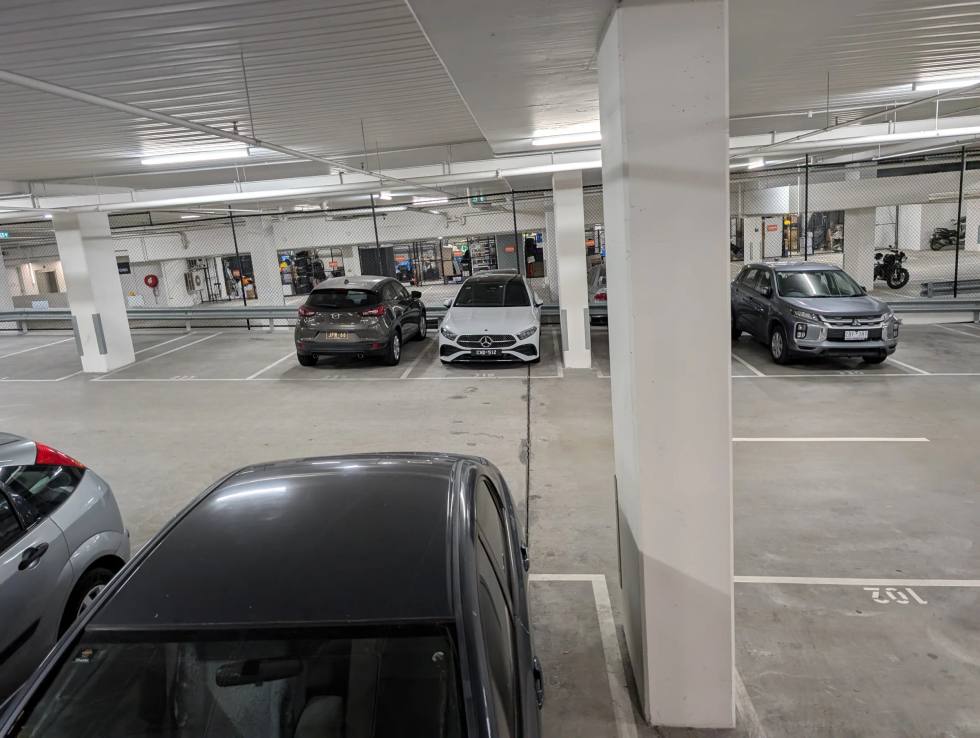
Not all cracks tell the same story.
We were engaged to assess a large commercial basement car park in Collingwood after concerns were raised about widespread cracking, water ingress and general deterioration throughout the structure. The basement extends across multiple levels and covers a substantial floor area. By the end of the inspection, we had walked thousands of steps documenting defects, photographing crack locations and piecing together a picture of how the structure had behaved since construction.
What initially caught everyone's attention were several prominent diagonal cracks occurring where the basement slabs connected into perimeter walls and piles. These cracks looked significant and naturally raised concerns about structural performance.
However, as is often the case with existing buildings, the first impression was only part of the story.
What We Found When We Arrived
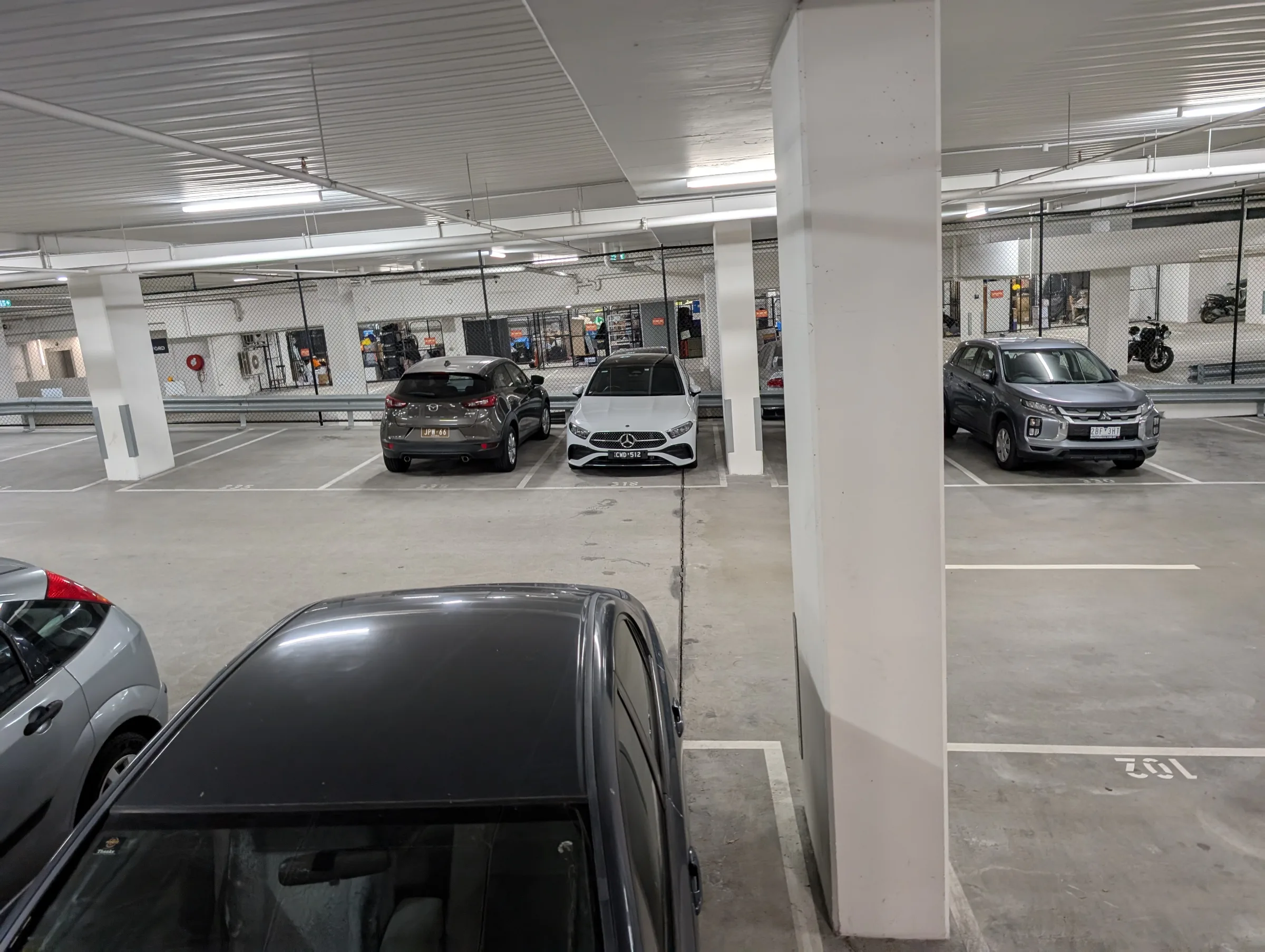
From the moment we started inspecting the basement, it was clear that this wasn't a case of a single isolated defect.
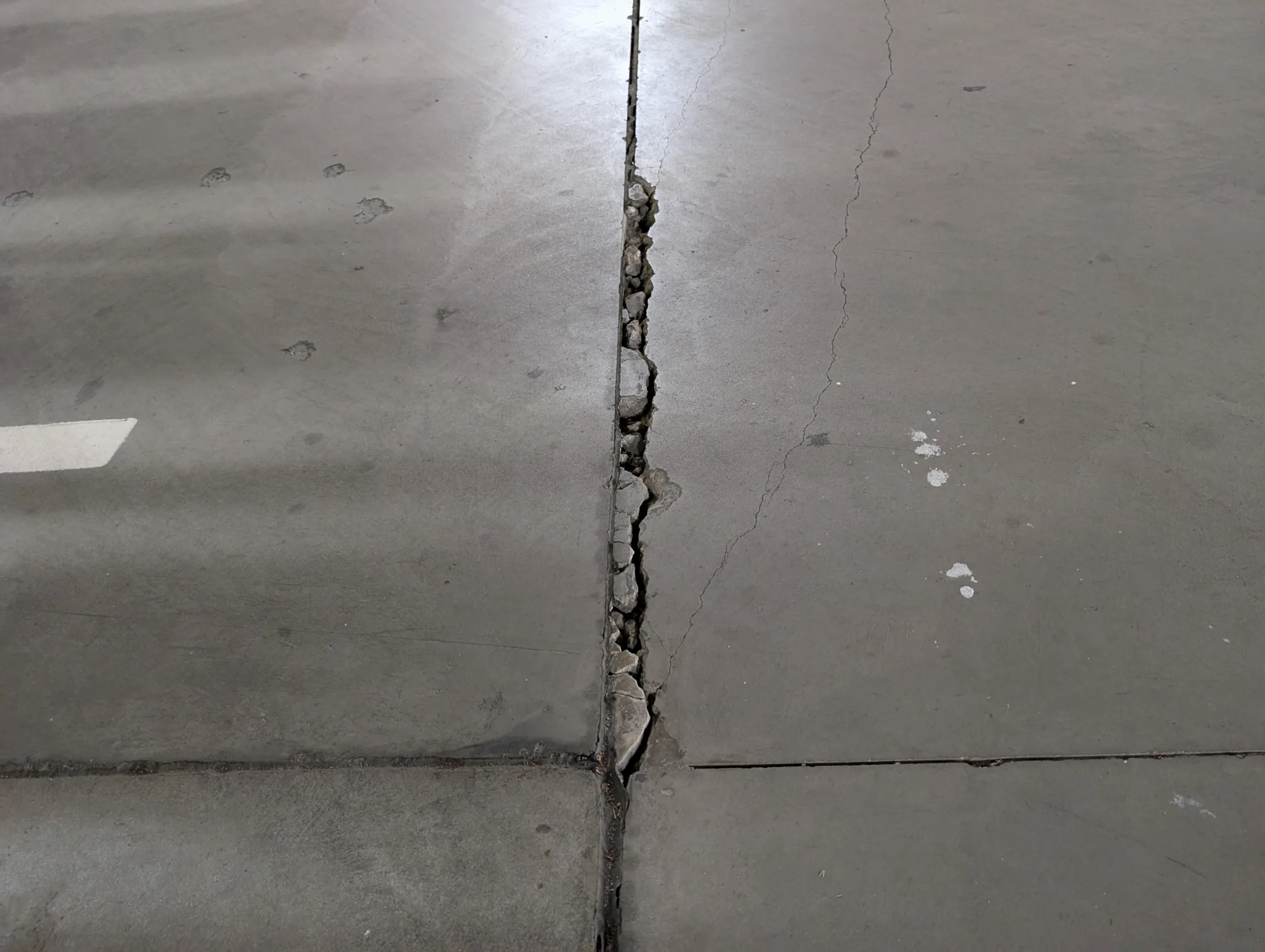
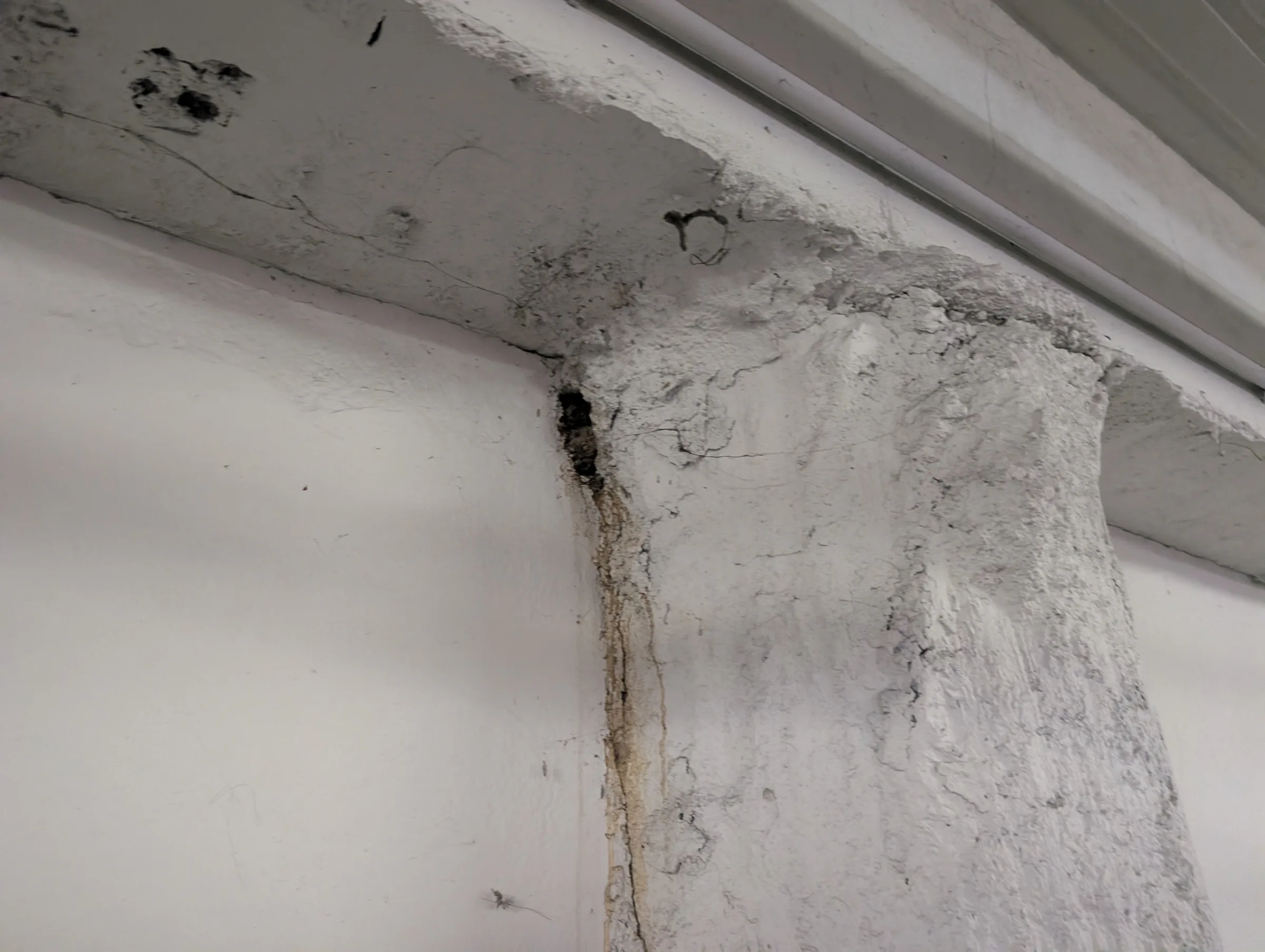
Cracking was present across ground-supported slabs, suspended slabs, edge beams and retaining wall systems. We also observed movement joints that had opened over time, localized concrete spalling around joints, moisture staining, water ingress, exposed reinforcement and evidence of construction-related detailing issues.
Some areas exhibited long diagonal cracks that extended across slab surfaces. Other locations showed horizontal cracking running continuously along retaining walls. Elsewhere, moisture was finding its way through cold joints and interfaces between different parts of the structure.
At first glance, the quantity of cracking could easily lead someone to conclude that the structure was experiencing significant structural distress.
The reality was more interesting.
Following the Clues
When investigating existing structures, one of the most important questions we ask is:
"What mechanism is causing the defect?"
Cracks themselves are not the problem. They are often symptoms of something else.
To understand what was happening, we reviewed the defect patterns, construction details, slab layout, retaining wall arrangement and overall structural configuration.
One of the most revealing observations involved the post-tensioned concrete slabs.
Post-tensioning is a construction method where steel tendons inside the concrete are tensioned after the concrete has hardened. This introduces compression into the slab, allowing it to span longer distances with less concrete. It's an efficient and widely used structural system.
However, like all concrete, post-tensioned slabs also shrink as they cure.
If that shrinkage is restrained, cracks can develop.
That's exactly what we found.
The Cracks That Told the Story
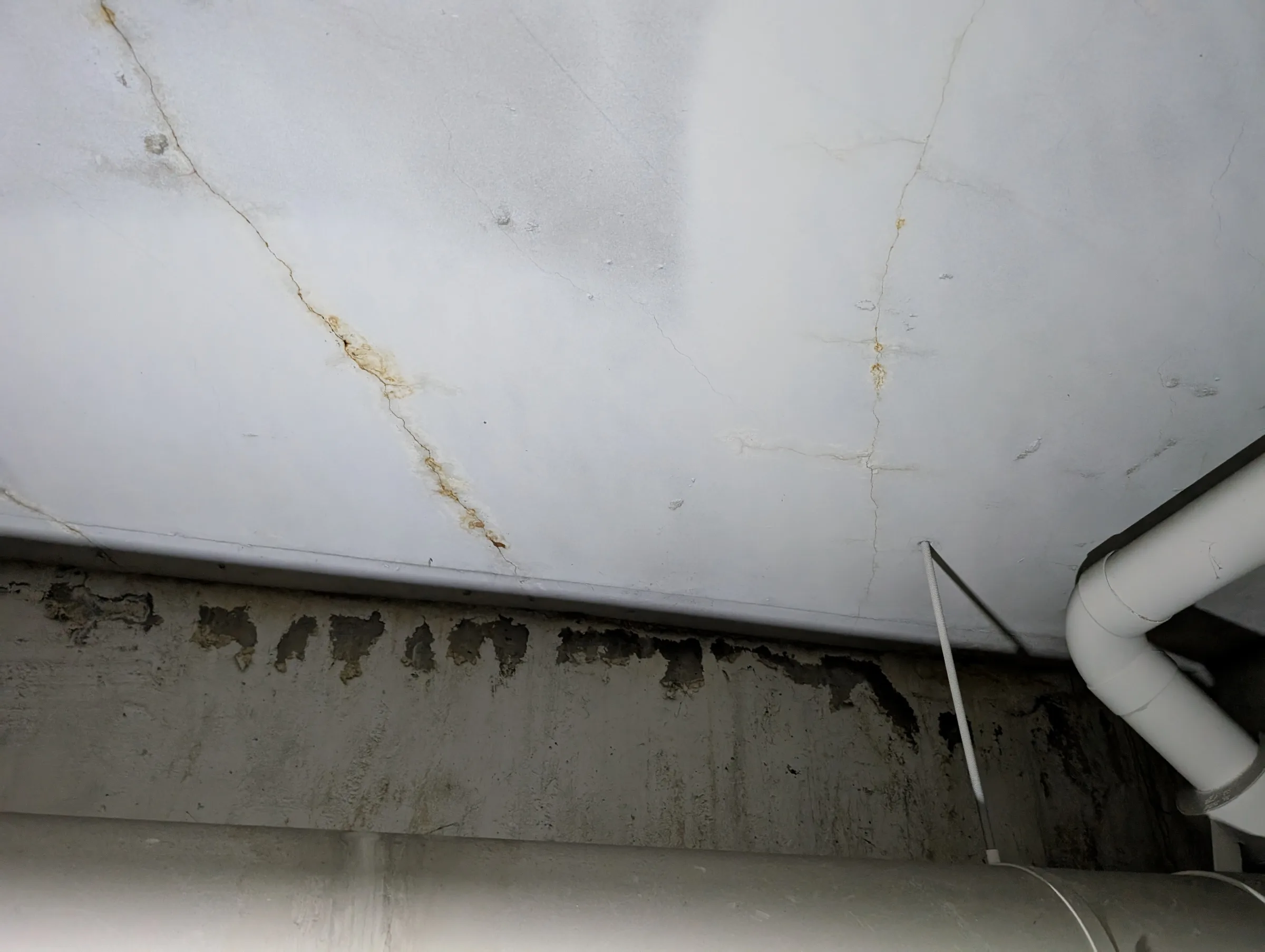
One of the most interesting aspects of the project was the pattern of diagonal cracking occurring where slabs met retaining walls and pile-supported perimeter elements.
There is a common misconception that larger cracks automatically mean a structural failure is occurring.
In this case, the crack pattern suggested something quite different.
We observed that many of the cracks radiated diagonally from locations where the slab was effectively locked into surrounding structural elements. The slabs wanted to shrink as they cured and as the post-tensioning forces were applied. The perimeter walls and piles resisted that movement.
An easy way to visualise this is to imagine trying to shrink a sheet of paper while gluing both ends firmly in place. Eventually stresses build up and a tear forms somewhere in the middle.
Concrete behaves in a similar way.
The diagonal cracking was largely consistent with shrinkage restraint rather than evidence of an overloaded or failing structure. This was an important finding because it significantly reduced the level of concern surrounding these particular defects.
For the client, this was reassuring. The cracks looked serious, but their cause was far less alarming than many people initially assumed.
Water Was the Bigger Long-Term Threat
While the cracking attracted attention, the water ingress was arguably the more important long-term issue.
We observed moisture penetration at several locations including:
Interfaces between piles and shotcrete walls
Construction joints
Slab-to-wall junctions
Existing cracks
Areas exhibiting deterioration and staining
Water was entering through the paths of least resistance and finding weaknesses within construction joints and interfaces.
This leads to another misconception we often encounter.
People frequently refer to wet basements, dry basements and leaking basements as though these are interchangeable concepts.
From an engineering perspective, basement waterproofing systems generally fall into two broad categories.
A drained basement collects water before pressure builds against the wall and redirects it away from the structure.
A tanked basement prevents water from penetrating and relies on the walls themselves resisting hydrostatic pressure.
Regardless of the system used, moisture entering through cracks, joints or construction interfaces is generally undesirable.
Water doesn't simply create stains.
Over time it can contribute to reinforcement corrosion, concrete deterioration and expanding maintenance costs.
What the Basement Revealed About Construction Quality
Another recurring theme throughout the inspection involved construction detailing.
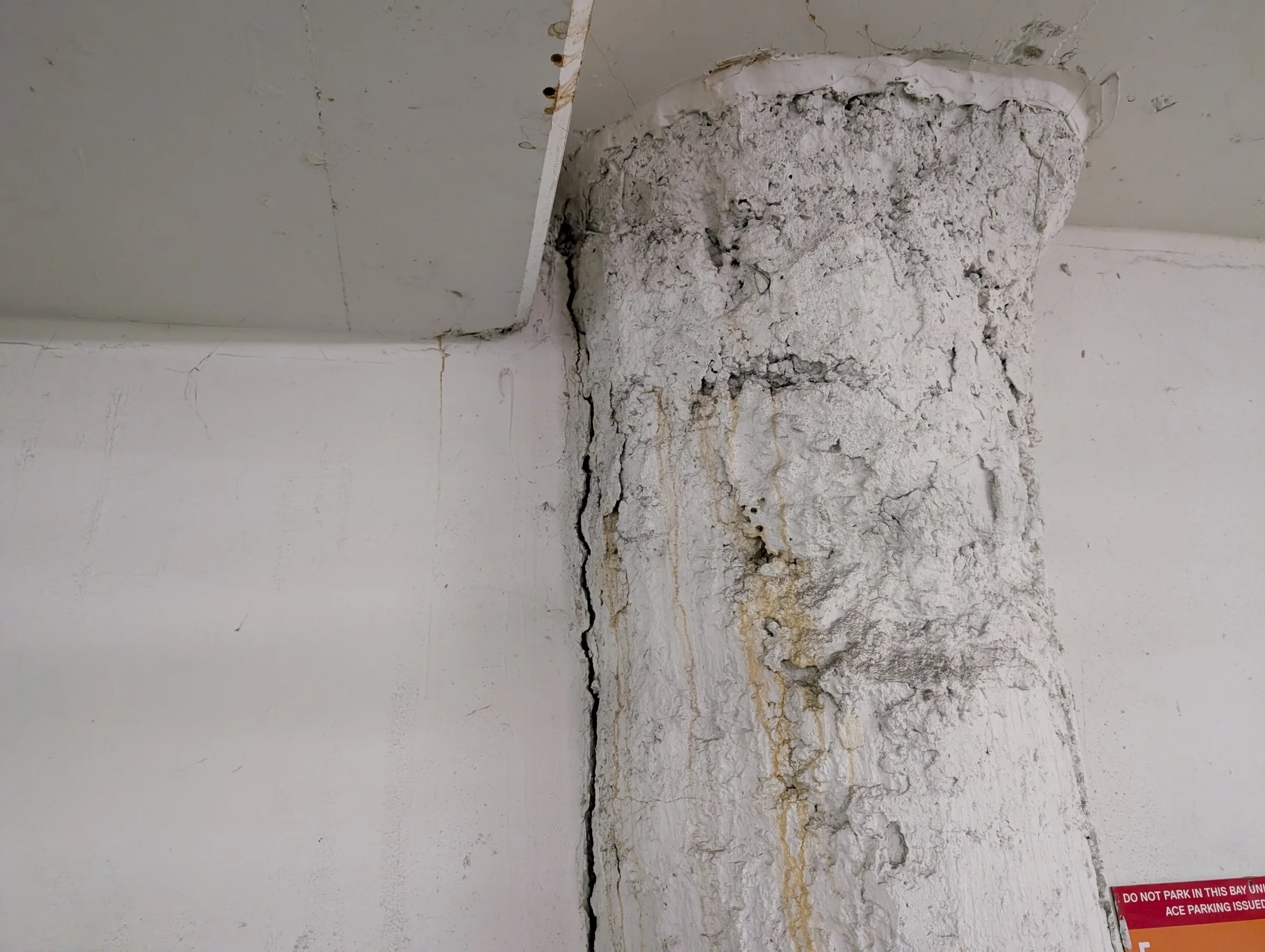
Several horizontal cracks corresponded closely with shotcrete construction joints. We also observed evidence of reduced reinforcement cover in some piles and localized deterioration at movement joints.
Movement joints are a particularly important feature in concrete structures.
Concrete expands.
Concrete contracts.
Concrete shrinks.
Movement joints exist to accommodate that movement.
When movement joints are poorly detailed, insufficiently protected, left unsealed or inadequately maintained, they often become the starting point for future durability problems.
In many ways, this project reinforced a lesson we frequently see in existing structures.
The long-term performance of a building is often determined by how well its joints and interfaces were designed, detailed and maintained.
Not the large structural elements.
The small details.
So Was the Structure Unsafe?
This is often the question people want answered.
Based on our inspection, many of the observed defects were assessed as durability and maintenance concerns rather than indicators of immediate structural instability. Several crack patterns appeared consistent with shrinkage, restraint and expected concrete behaviour rather than active structural failure.
That doesn't mean the defects should be ignored.
It means the remediation strategy can be focused on protecting the structure from long-term deterioration rather than reacting to a short-term safety issue.
This distinction matters because it changes how owners prioritise repairs, allocate budgets and plan maintenance programs.
The Outcome
The investigation provided a clear pathway forward.
The most visually alarming cracks were largely attributed to shrinkage restraint effects associated with the interaction between post-tensioned slabs and restrained perimeter elements.
At the same time, water ingress pathways, deteriorated movement joints, exposed reinforcement and localized construction defects were identified as areas that required planned remediation to preserve long-term durability.
The client ultimately gained something more valuable than a list of defects.
They gained an understanding of why the defects existed, which issues warranted attention first and how the basement could continue to remain serviceable for decades to come.
Engineering Insights
This project reinforced several lessons that apply to many concrete structures:
Large cracks do not automatically mean a serious structural problem.
Understanding why a crack formed is often more important than measuring its width.
Water ingress is one of the most significant long-term durability threats in basements.
Construction joints and movement joints deserve careful attention during both construction and maintenance.
Post-tensioned slabs can develop shrinkage-related cracking when movements are restrained.
Early remediation is almost always more economical than waiting for deterioration to accelerate.
Key Takeaways
If you notice water entering through basement walls or joints, investigate it early.
Not all cracking indicates structural failure, but all cracking should be understood.
Movement joints require ongoing inspection and maintenance.
Moisture ingress can eventually lead to reinforcement corrosion and concrete deterioration.
Small detailing issues at construction joints can have long-term consequences.
Understanding the cause of a defect is essential before deciding how to repair it.
Tagged
Never miss a new insight.
Receive email notifications when new articles, project lessons and technical insights are published.
Leave a message.
A thought, a question or a correction on this article — it comes straight to our team. Messages are reviewed by us before they appear beneath the article.
Tell us about your building.
Can’t find the answer you’re looking for? Tell us about your building, project or challenge and we’ll help point you in the right direction.
About The Author

Quentin Suckling
Director - Structural Engineering
Quentin Suckling is the Director and Principal Structural Engineer at Sheer Force Engineering. Passionate about heritage preservation and adaptive reuse, he enjoys understanding how buildings behave and helping clients unlock the potential within existing structures. Through these articles he shares practical lessons from projects, investigations and engineering practice.