
When Modular Buildings Meet Real-World Weather: A Forensic Engineering Investigation
When we were engaged to assess a modular apartment building in Queensland, the expectation was that it had some age-related defects but was generally in reasonable condition. What we discovered told a different story. Through intrusive investigations, site inspections, and a review of deterioration throughout the building, we found widespread moisture ingress driving corrosion, façade deterioration, waterproofing failures, and concealed damage. This project highlights an important lesson about modular construction: the modules themselves are only part of the story.
Quentin Suckling · September 2026 · 6 min read
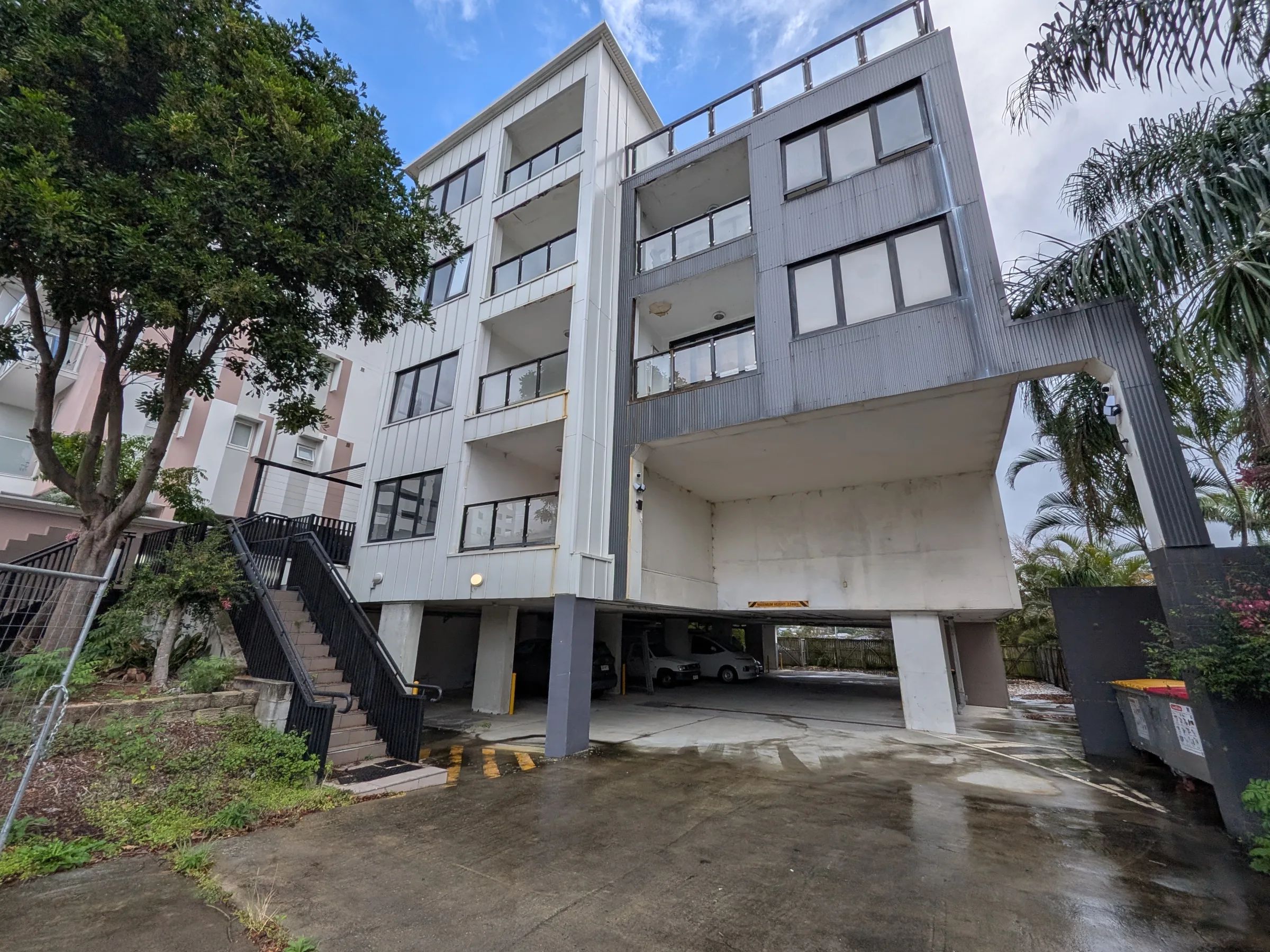
Modular construction has become increasingly popular over the past decade, and for good reason. Manufacturing large portions of a building in a controlled factory environment can improve quality, reduce waste, and significantly shorten construction programs.
But one project we investigated reminded us that even the most sophisticated modular building still has to deal with an age-old enemy:
Water.
This project involved a five-storey modular residential apartment building in Queensland, constructed around 2015 using stacked steel-framed modular units. The owners commissioned us to undertake a forensic engineering assessment as part of a broader due diligence exercise before a proposed property sale. They wanted a factual understanding of the building's condition, what remediation may be required, and whether any significant risks existed that future purchasers should be aware of.
For us, the project was particularly memorable.
It was our first major forensic engineering investigation in Queensland and also the first time we had undertaken a comprehensive forensic assessment of a modular apartment building. We knew going in that it would be interesting. What we didn't realise was just how much the building would teach us about the importance of waterproofing, interfaces, and construction coordination.
Initial Impressions: A Building That Looked Better on Paper Than in Person
Before attending site, we reviewed the available information which included previous building inspection material.
Based on that information, our initial impression was that the building had defects, but perhaps not to an unusual extent for a structure of its age.
That assessment changed fairly quickly once we arrived.
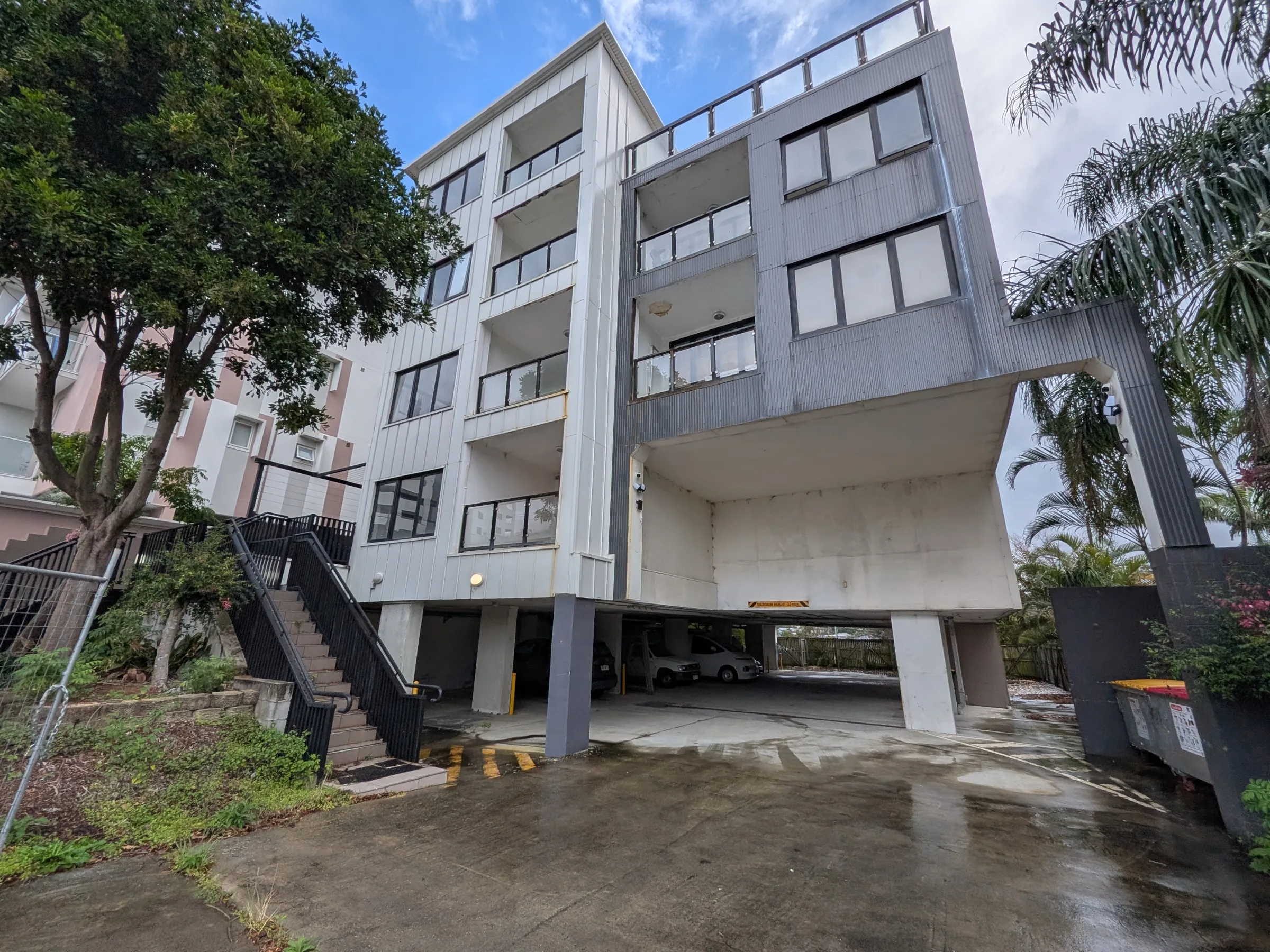
As we moved through the building, we began observing recurring signs of moisture-related distress:
Cracking around façades and balconies.
Corrosion staining.
Deteriorated ceiling linings.
Water ponding in external areas.
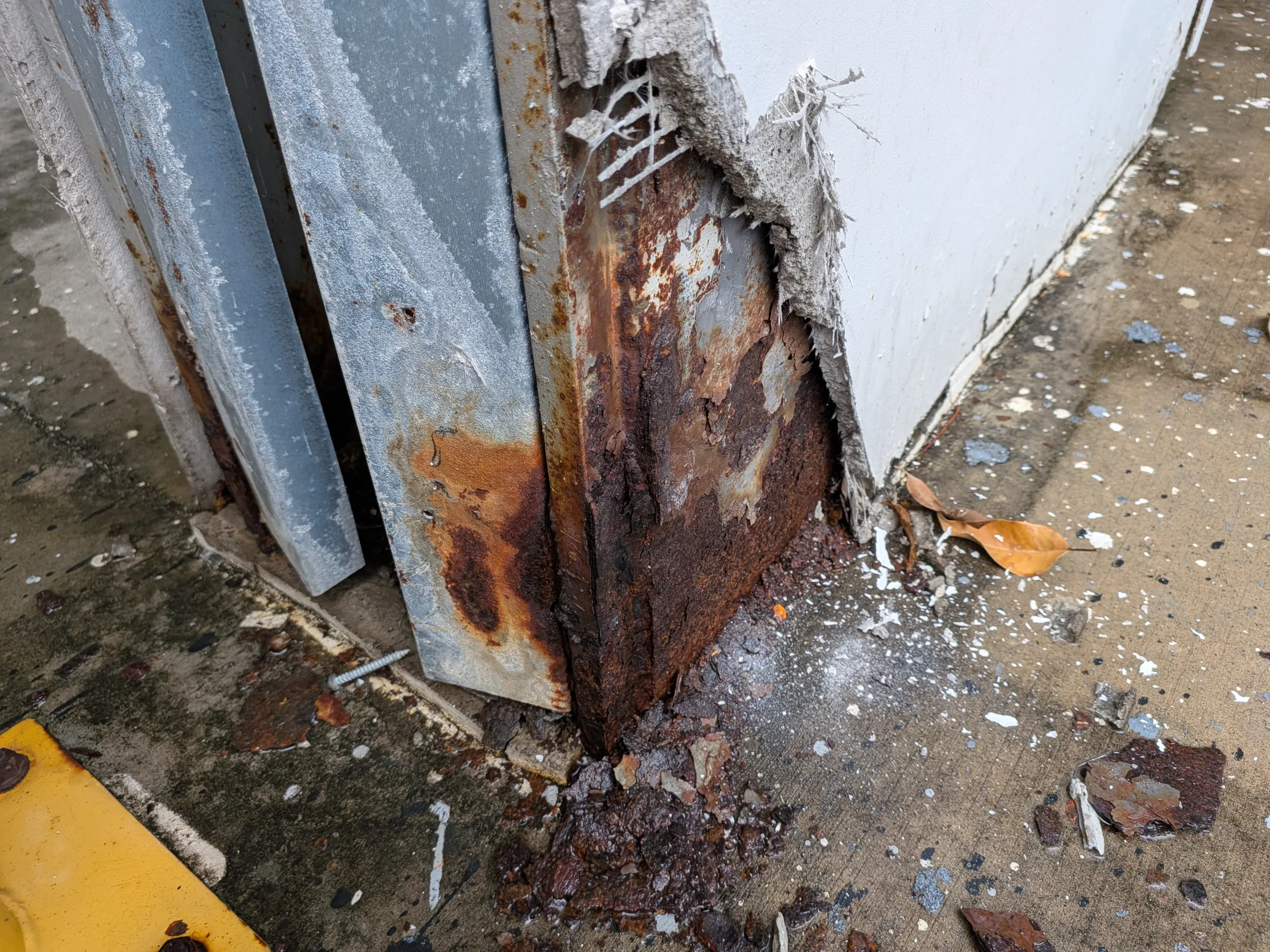
Corroded steelwork.
Balcony deterioration.
Façade components showing signs of detachment.
Individually, none of these observations necessarily explained the whole story.
Together, they began forming a pattern.
The Investigation Process
A forensic engineering investigation is rarely about finding one defect.
More often, it's about linking hundreds of observations together until a coherent explanation emerges.
We undertook:
A detailed visual inspection of accessible areas.
Review of available information.
Assessment of façade and balcony systems.
Examination of areas exhibiting cracking and deterioration.
Intrusive investigations into concealed spaces.
Inspection of exposed structural steel elements.
Assessment of drainage and waterproofing arrangements.
One of the realities of modular construction is that much of the important structure remains hidden behind plasterboard, tiles, façade systems, ceilings, and finishes.
What you can see on the surface often represents only a fraction of what's occurring behind the scenes.
That meant some level of intrusive investigation was essential.
When the Pieces Started Falling Into Place
People often imagine that engineering investigations involve a dramatic "eureka" moment.
This one didn't.
Instead, the understanding developed gradually.
First came the façade deterioration.
Then evidence of corrosion behind building elements.
Then balcony deterioration and waterproofing failures.
Then concealed corrosion discovered through opening-up works.
By the time we stepped back and looked at everything together, the picture had become much clearer.
The real issue wasn't the modular structure itself.
The real issue appeared to be how water was getting into the building and, more importantly, how long it had been getting in.
What We Found
The investigation identified widespread signs of moisture ingress affecting multiple parts of the building. Moisture ingress simply means water finding pathways into areas where it was never intended to be.
Think of it like a raincoat.
If the stitching, seams, and joins aren't properly detailed, water eventually works its way inside no matter how good the fabric is.
The same principle applies to buildings.
The observations suggested deficiencies around:
Façade interfaces.
Balcony waterproofing.
Flashing details.
Waterproofing penetrations.
Drainage systems.
Junctions between building components.
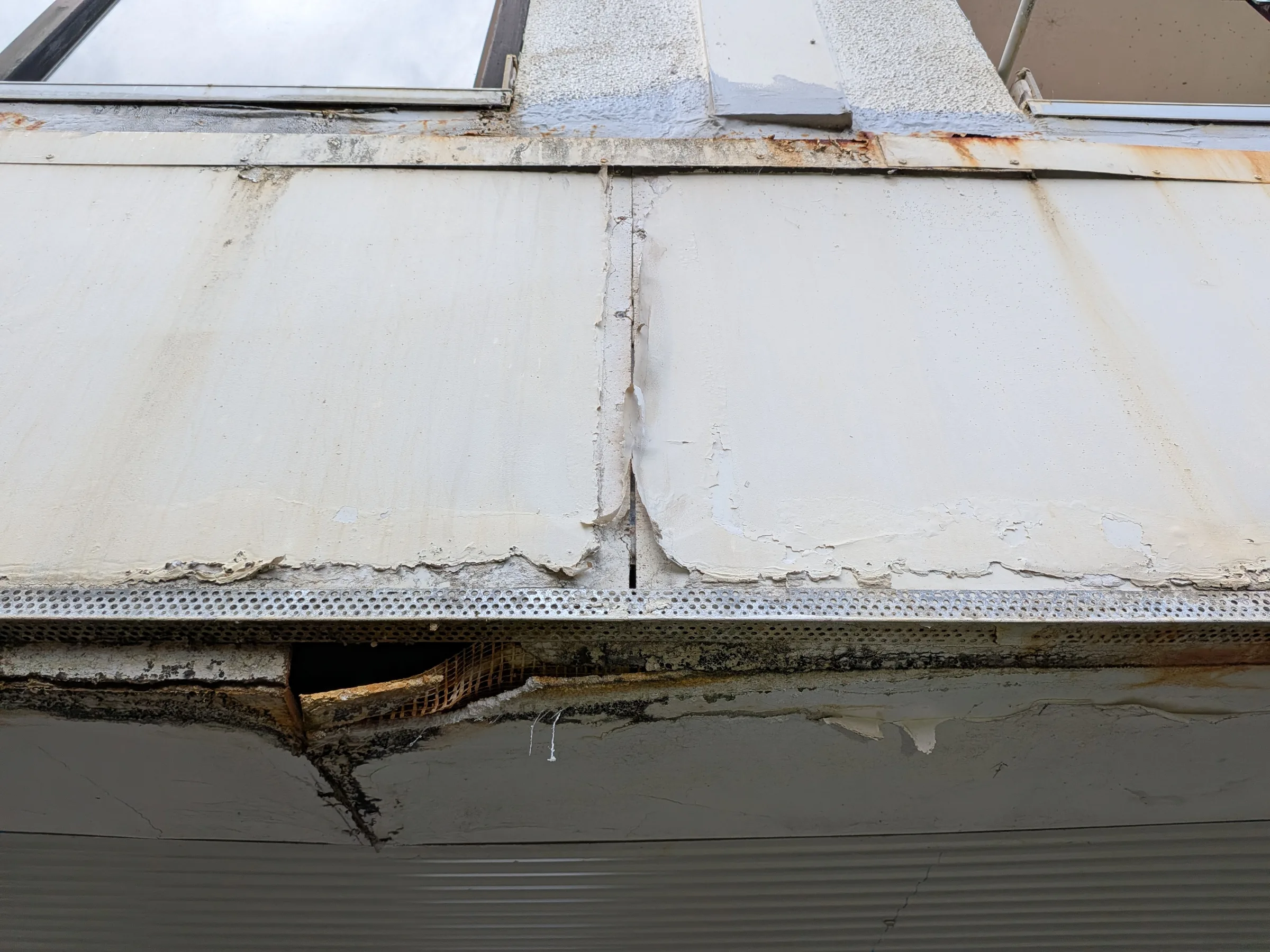
The consequences extended well beyond cosmetic damage.
The inspection identified:
Structural steel corrosion.
Ceiling deterioration.
Corrosion inside concealed cavities.
Balcony deterioration.
Falling façade components.
Widespread cracking.
Potential compliance concerns relating to façade and safety systems.
Most significantly, intrusive investigations confirmed that corrosion was occurring within concealed structural areas associated with balcony construction and steel framing.
Why Water Is Often Worse Than People Realise
One of the biggest lessons from this project is that water damage is rarely just about water.
Water is often the starting point for a chain reaction.
A small waterproofing defect can lead to:
Moisture ingress.
Corrosion of steel components.
Expansion of corrosion products.
Cracking of surrounding materials.
Further water entry.
Accelerated deterioration.
By the time significant damage becomes visible, the original defect may have existed for years.
This was particularly important in a modular building where many critical structural elements were concealed.
The building's steel framing largely sat behind finishes, meaning corrosion could continue developing without obvious external warning signs.
The Modular Construction Lesson
Perhaps the most interesting takeaway from the project had nothing to do with corrosion.
It was about perception.
Many people view modular construction as simply stacking completed building modules on top of one another.
There is a misconception that once the modules arrive on site, the hard work is done.
In reality, some of the most critical details occur at the interfaces between modules and the site-constructed elements.
The building still needs:
Effective waterproofing.
Proper flashing.
Façade integration.
Drainage coordination.
Weatherproofing continuity.
Durable junction detailing.
If these interfaces are not resolved properly, water can exploit the smallest weakness.
If I were explaining the project to a friend over coffee, I'd probably put it this way:
"Modular construction can be excellent, but the building still needs to function as one building. It's not simply a matter of stacking boxes together. The waterproofing and façade systems still need to work seamlessly across all those connections."
Corrosion Doesn't Always Mean Collapse
A common misconception we encounter is that corrosion automatically means a building is unsafe.
That's not necessarily true.
Corrosion is a deterioration mechanism rather than a conclusion.
What matters is:
How much steel has been affected.
How deep the corrosion is.
Whether material loss has occurred.
Whether critical structural elements are involved.
Whether deterioration is continuing.
In this case, no evidence of immediate global structural instability was identified during the assessment. However, the extent of concealed deterioration remained uncertain and warranted further investigation.
That distinction is important.
Engineering investigations are not about creating alarm.
They're about understanding risk accurately.
Outcome and Recommended Next Steps
The investigation concluded that the building was experiencing a largely systemic deterioration mechanism driven by moisture ingress and building envelope deficiencies.
The recommended approach was staged:
Further intrusive investigations.
Building envelope and waterproofing remediation.
Structural steel assessment and corrosion remediation.
Safety and compliance reviews.
Reinstatement of internal finishes after underlying defects had been addressed.

Engineering Insights
This project reinforced several lessons we see repeatedly across forensic engineering investigations:
Water is often the real problem, even when corrosion, cracking, or deterioration appear to be the symptom.
Small waterproofing details can have building-wide consequences.
Modular construction still relies heavily on quality site coordination.
Hidden deterioration can exist for years before becoming obvious.
Cosmetic repairs rarely succeed if underlying moisture pathways remain active.
The cost of investigating early is usually far lower than the cost of repairing advanced deterioration.
Key Takeaways
Don't ignore early signs of water ingress, staining, or recurring cracking.
Waterproofing failures rarely stay isolated to one location.
Corrosion within concealed spaces can remain hidden for extended periods.
Modular buildings require careful coordination of interfaces, waterproofing, and façade systems.
Building inspections are valuable, but seeing conditions firsthand often provides a much clearer understanding of severity.
Understanding the cause of deterioration is more important than simply repairing the visible symptoms.
Tagged
Never miss a new insight.
Receive email notifications when new articles, project lessons and technical insights are published.
Leave a message.
A thought, a question or a correction on this article — it comes straight to our team. Messages are reviewed by us before they appear beneath the article.
Tell us about your building.
Can’t find the answer you’re looking for? Tell us about your building, project or challenge and we’ll help point you in the right direction.
About The Author

Quentin Suckling
Director - Structural Engineering
Quentin Suckling is the Director and Principal Structural Engineer at Sheer Force Engineering. Passionate about heritage preservation and adaptive reuse, he enjoys understanding how buildings behave and helping clients unlock the potential within existing structures. Through these articles he shares practical lessons from projects, investigations and engineering practice.