
Why These Apartment Building Cracks Weren't a Footing Problem
When residents began noticing cracks appearing throughout a three-storey apartment building, concerns quickly turned to movement, foundations, and potentially costly repairs. But as we worked our way around the building, the clues told a different story. What initially looked like a significant structural problem turned out to be an excellent example of how brick buildings naturally move over time and what can happen when that movement isn't properly accommodated. In this article, we share what we found, explain the role of articulation joints, and explore why understanding the cause of cracki
Quentin Suckling · September 2026 · 7 min read
When an Owners Corporation contacts us about cracking throughout a building, the conversation is often filled with anxiety.
The questions are usually the same:
"Is the building moving?"
"Do we have a footing problem?"
"Is this going to cost a fortune to fix?"
That was exactly the situation when we were asked to inspect a three-storey apartment building in Ascot Vale.
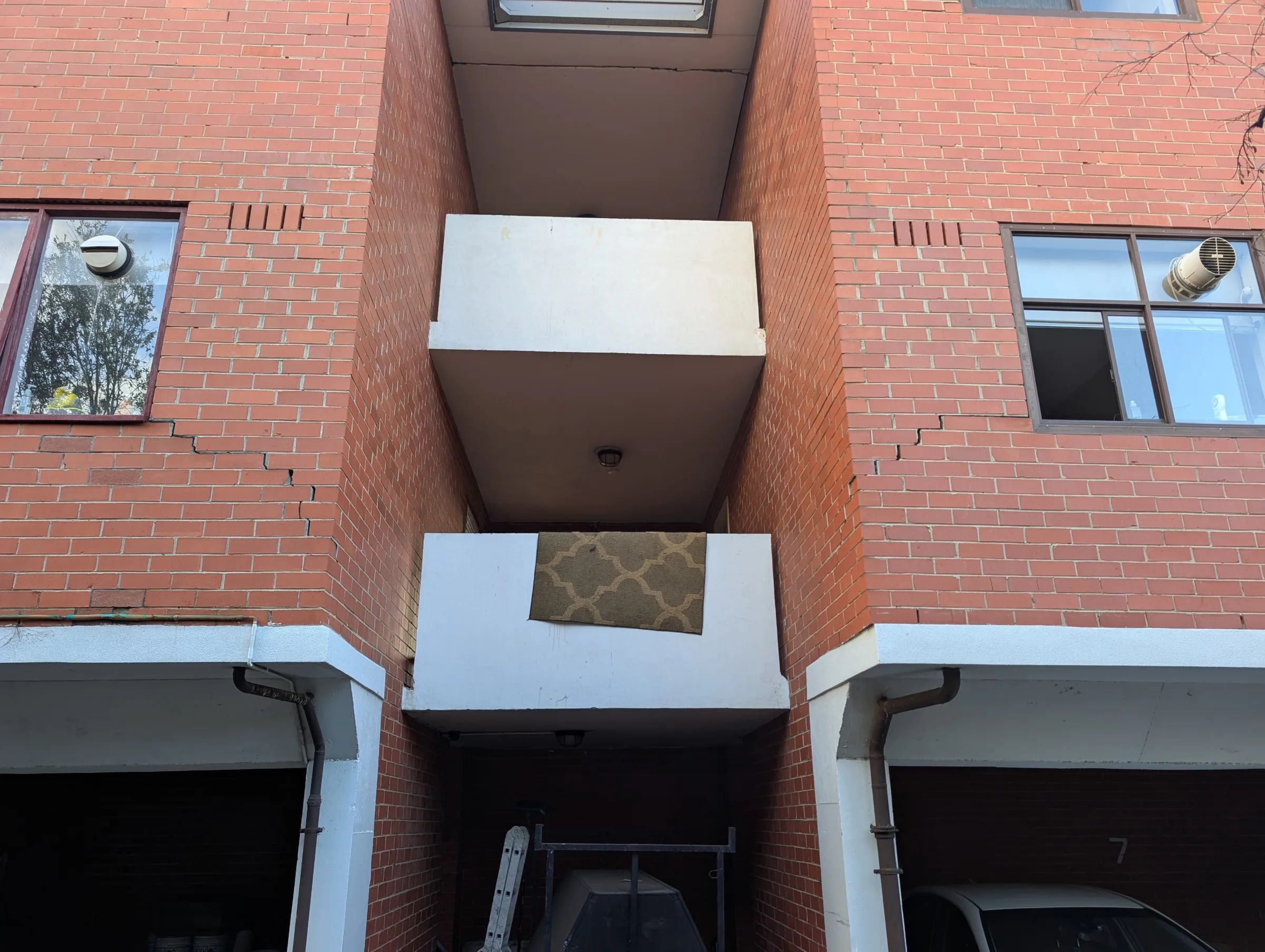
Residents and stakeholders had noticed cracking appearing throughout various parts of the brickwork. Some previous repairs had already been attempted, and there was growing concern that the building may have been experiencing footing movement or structural settlement.
For many people, cracks in a brick building immediately trigger thoughts of serious structural problems.
Interestingly, one of the first things we discovered was that this project wasn't really about foundations at all.
In many ways, it became a great reminder of why understanding why a crack forms is often more important than simply repairing the crack itself.
A Different Kind of Investigation
This project was personally interesting for us because it was one of the first large Owners Corporation investigations we became involved with after completing a significant number of heritage building projects.
Heritage work often involves investigating deterioration that has developed over many decades. This project felt different. The building was more contemporary, the concerns were immediate, and the focus was on determining whether visible defects represented a serious structural issue or something much less alarming.
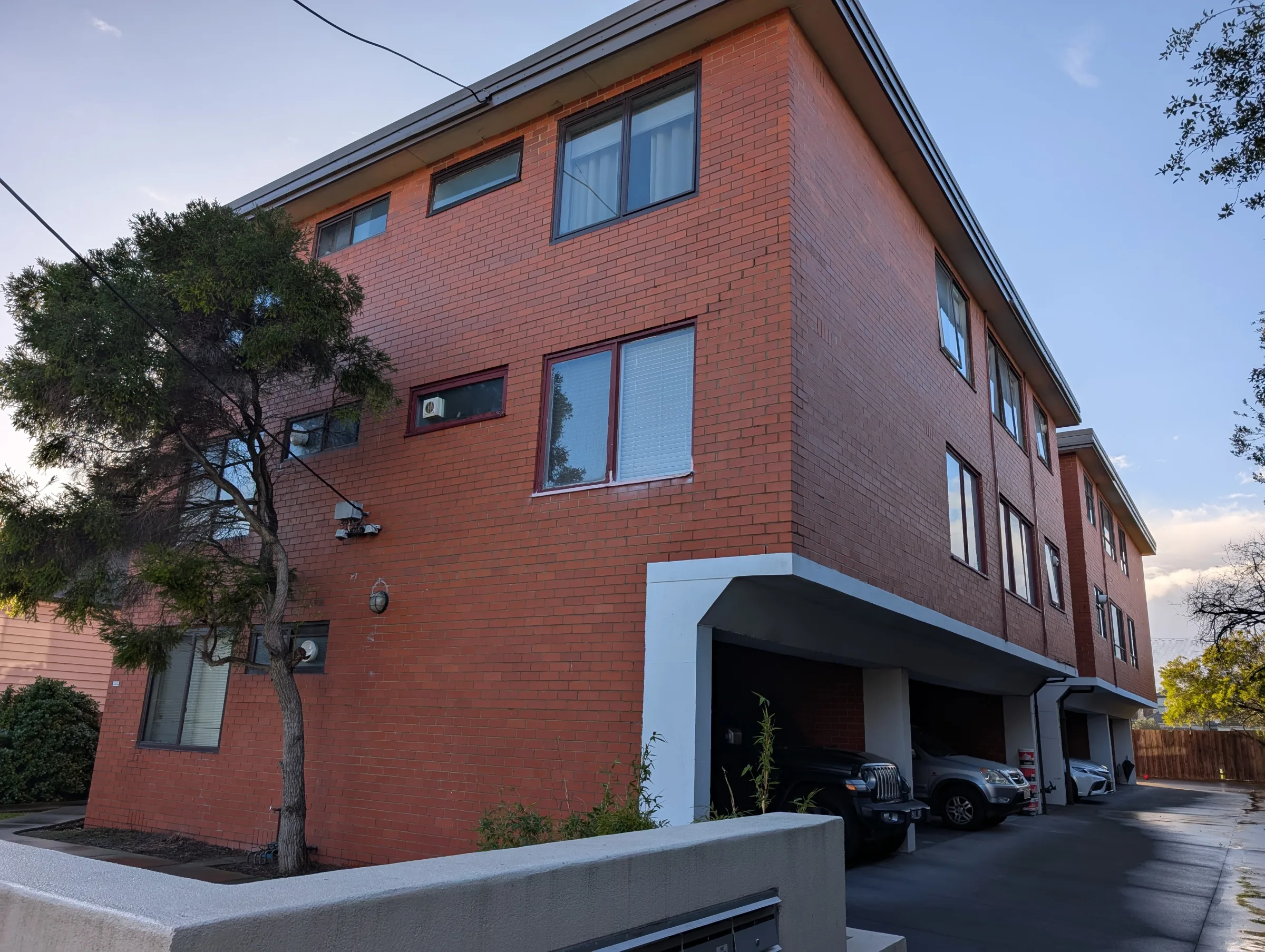
The building itself was a typical three-storey apartment complex constructed around the 1960s to 1970s, comprising brick masonry walls, reinforced concrete floors and concrete structural framing.
At first glance, the volume of cracking understandably worried people.
And to be fair, if you walked around the site without understanding how masonry behaves, you could easily conclude that significant footing movement was occurring.
That's why site investigations are so important.
Sometimes buildings tell a very different story once you know what to look for.
What We Observed on Site
As we worked our way around the building, several patterns began to emerge.
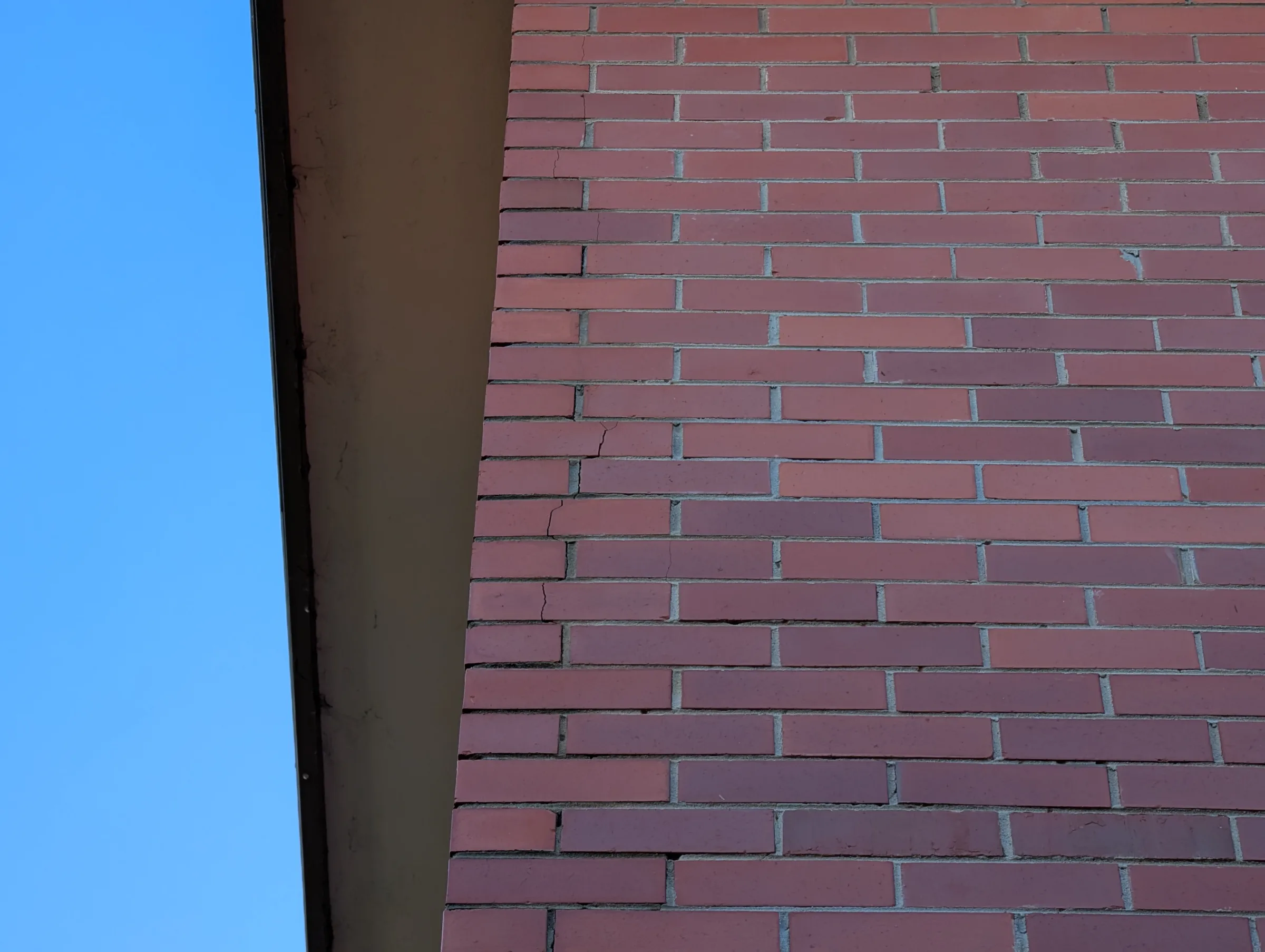
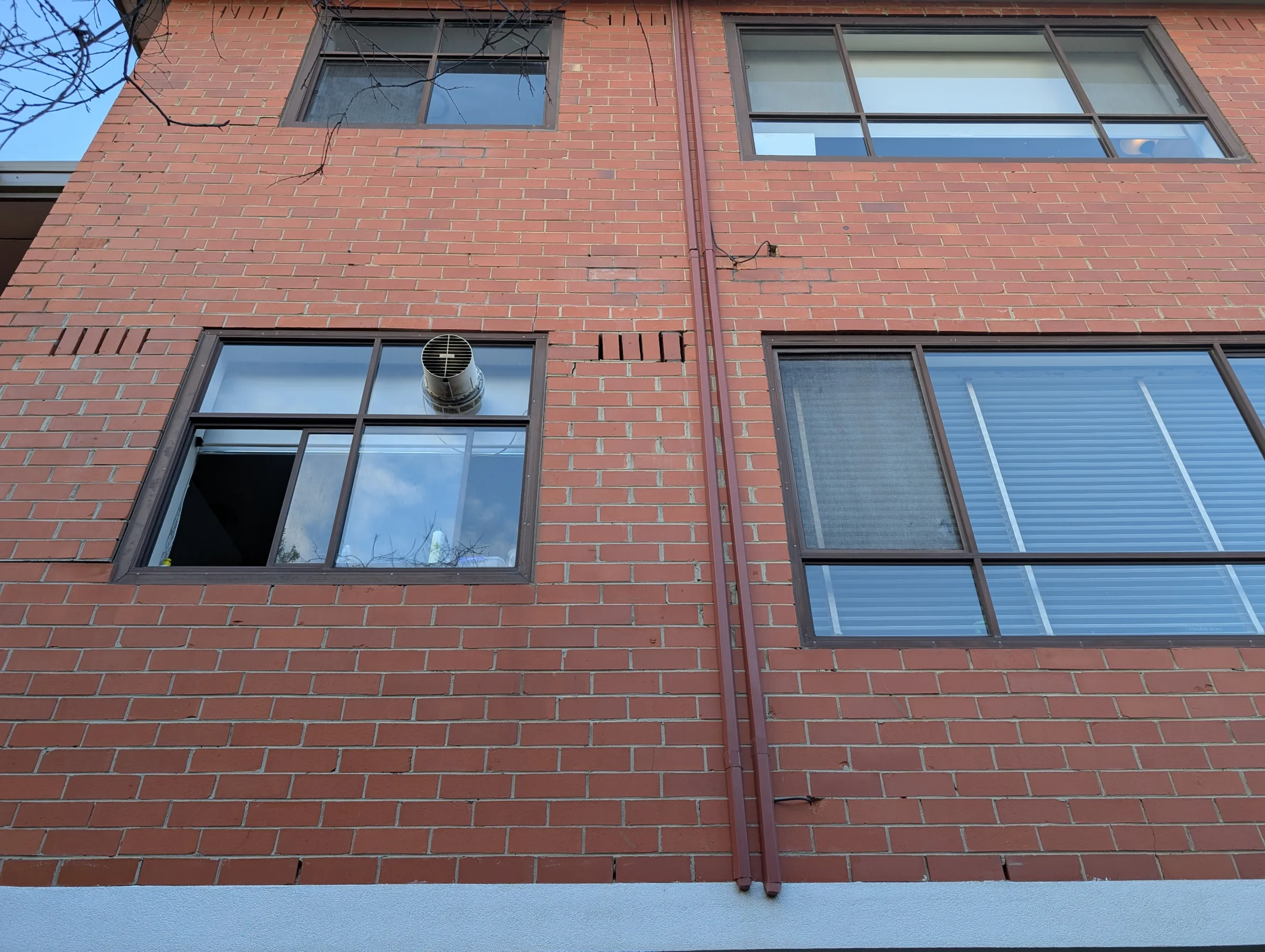
The most obvious defects were vertical cracks running through various areas of the brickwork. We also observed step cracking, where cracks follow the mortar joints in a stair-step pattern rather than cutting directly through the bricks.
More importantly, these cracks appeared repeatedly in similar locations.
They were often located near corners, near openings, and along long uninterrupted stretches of brickwork.
That pattern immediately caught our attention.
In forensic engineering, patterns are everything.
A random crack might indicate a localised issue.
Multiple cracks occurring in predictable locations often point towards a building-wide mechanism.
As we continued the inspection, another detail became increasingly important:
The building had very few articulation joints.
The Moment Things Started to Make Sense
One of the most useful skills in forensic engineering isn't calculating loads.
It's recognising clues.
For us, the location and orientation of the cracks were the giveaway.
The vertical cracks occurring near building corners were particularly telling. Many of them looked exactly like the type of cracking we often see when brickwork expands and contracts over time but has nowhere to relieve the resulting stresses.
That observation quickly shifted our thinking away from footing movement and toward masonry movement.
This is where a common misconception often causes confusion.
Most people assume cracks automatically mean the foundations are moving.
In reality, that's often not the case.
In our experience, particularly with masonry apartment buildings, cracking caused by brick expansion, mortar behaviour and missing articulation joints is often more common than genuine footing-related movement.
The building was effectively providing us with clues about how it wanted to move.
The cracks were simply revealing where that movement was occurring.
Understanding Articulation Joints
This is the point in the story where it helps to explain a concept many people have never heard of.
An articulation joint is essentially a controlled gap intentionally built into masonry construction.
Think of it like the expansion joints you see in concrete footpaths.
Concrete expands and contracts as temperatures change.
Brickwork does exactly the same thing.
Without articulation joints, a wall becomes locked in place. As seasonal temperature changes occur year after year, internal stresses gradually build up until the masonry eventually cracks.
The building is trying to move.
The crack is simply the mechanism that allows that movement to happen.
Ironically, the crack may actually be reducing stress within the wall.
That's why simply filling every crack with rigid mortar can create problems.
You may remove the visible crack, but you haven't removed the movement.
Instead, the stress often reappears somewhere else.
An Interesting Clue Hidden in Previous Repairs
One of the most revealing aspects of this project was the building's repair history.
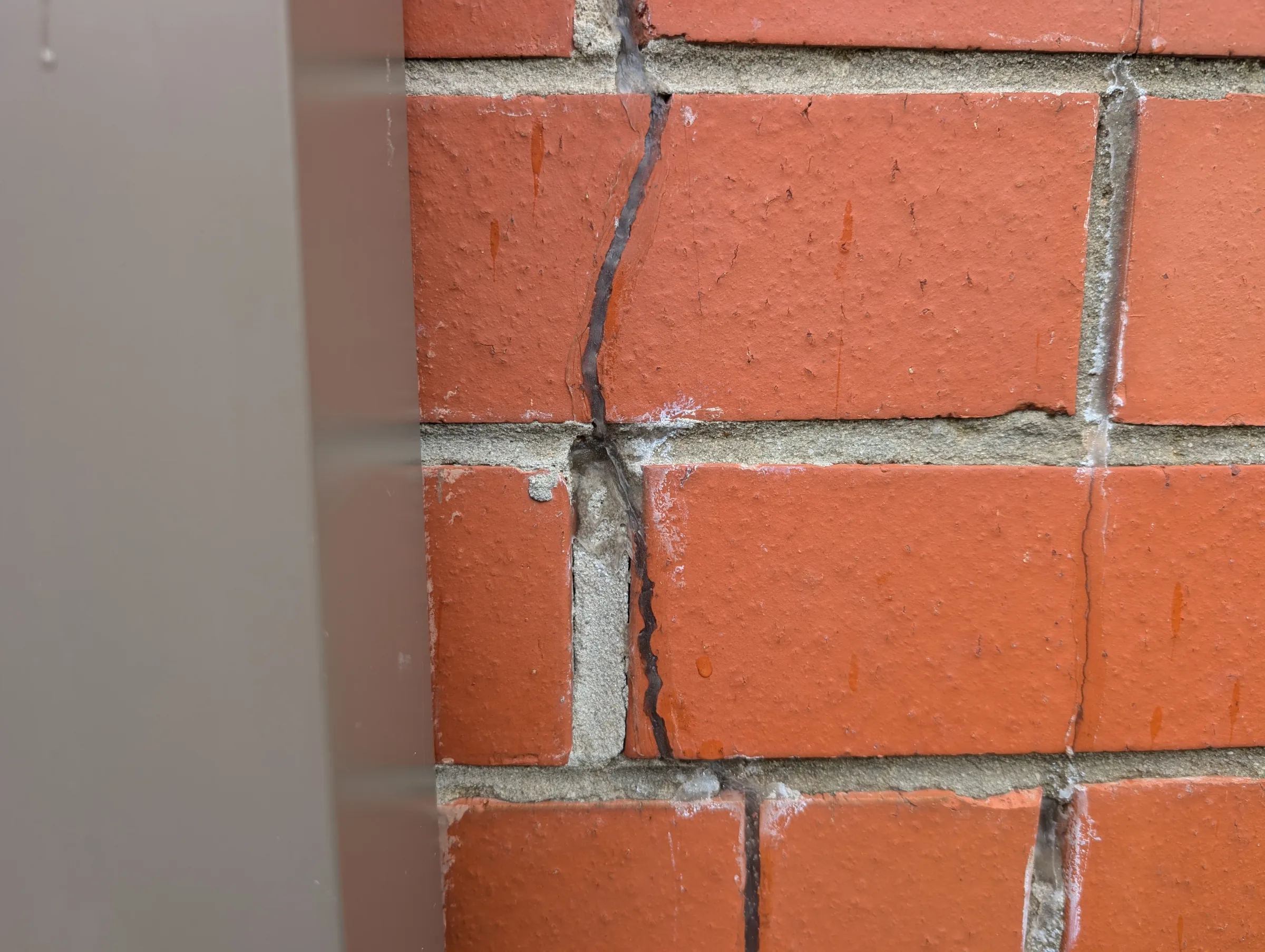
Throughout the inspection we found evidence of previous remediation attempts. Some cracks had been repaired using flexible silicone sealant. Others had been repaired using traditional mortar-based methods.
This provided a real-world experiment.
The areas repaired using silicone generally appeared to be performing better. There was less evidence of recurring cracking in these locations compared with areas that had been rigidly repointed using mortar.
That observation reinforced our conclusions.
The building wasn't asking to be made more rigid.
It was asking for a way to move.
Why the Outcome Was Better Than Expected
When building owners hear words like "structural cracking", many automatically imagine underpinning works, excavation and major construction expenses.
That's why the outcome of this investigation was so encouraging.
Based on the observed crack patterns, the absence of articulation joints and the history of previous repairs, we formed the view that the majority of cracking was related to masonry movement rather than significant footing distress.
That distinction matters enormously.
If footing movement is causing cracks, the solution typically involves addressing the foundations.
If thermal movement and masonry expansion are causing cracks, the solution may simply involve allowing movement to occur safely.
In fact, we explained to the Owners Corporation that many of the existing cracks had effectively created articulation joints already.
The building had found its own way to relieve stress.
Rather than fighting that movement, a practical approach could involve treating selected cracks with flexible sealants and allowing them to continue functioning as movement joints.
Sometimes the best engineering solution is not forcing a building to stop moving.
It's helping it move properly.
The Bigger Lesson for Building Owners
This project highlights a mistake that can become very expensive.
If someone immediately assumes every crack is a footing problem, they may end up spending substantial amounts of money investigating or even underpinning foundations that were never the root cause.
And the worst part?
The cracks may still return afterwards.
The real lesson is that cracks should always be assessed in context.
Engineers don't just look at the crack itself.
We look at:
The crack direction
The crack location
The surrounding construction
Building age
Repair history
Movement patterns
Environmental influences
The crack is usually just a symptom.
The important part is understanding the mechanism behind it.
This project was a perfect example of that principle.
What initially looked like a significant structural concern turned out to be a much more manageable masonry movement issue.
However, it also revealed an important warning.
Implementing the wrong repair method could actually make future cracking worse by preventing the building from accommodating the movement that naturally occurs over time.
Outcome
Following our assessment, we concluded that the observed masonry cracking was predominantly consistent with expansion and contraction of the brickwork combined with a lack of articulation joints throughout sections of the façade.
The building did contain several maintenance items that warranted attention, including localised concrete deterioration, corrosion-related defects and soffit damage. However, the widespread masonry cracking itself was generally not indicative of imminent structural failure.
The recommended strategy focused on practical remediation:
Flexible crack sealing where appropriate.
Avoiding rigid repairs that may simply relocate future cracking.
Monitoring movement over time.
Considering articulation joints where feasible.
For the Owners Corporation, the outcome was significantly better than anticipated.
Instead of facing major footing repairs, they gained clarity about what was actually occurring and how to manage it appropriately.
Key Takeaways
Not all cracks indicate footing movement. Many masonry cracks are caused by expansion, contraction and normal building movement.
Patterns matter. Crack location, direction and repetition often reveal the true cause.
Articulation joints are important. They allow brickwork to move without cracking.
The wrong repair can make things worse. Rigid mortar repairs may simply force cracks to reappear elsewhere.
Buildings often tell a story. Previous repairs and historical crack patterns can provide valuable forensic evidence.
Always investigate before repairing. Understanding why a crack formed is usually more important than fixing the crack itself.
Tagged
Never miss a new insight.
Receive email notifications when new articles, project lessons and technical insights are published.
Leave a message.
A thought, a question or a correction on this article — it comes straight to our team. Messages are reviewed by us before they appear beneath the article.
Tell us about your building.
Can’t find the answer you’re looking for? Tell us about your building, project or challenge and we’ll help point you in the right direction.
About The Author

Quentin Suckling
Director - Structural Engineering
Quentin Suckling is the Director and Principal Structural Engineer at Sheer Force Engineering. Passionate about heritage preservation and adaptive reuse, he enjoys understanding how buildings behave and helping clients unlock the potential within existing structures. Through these articles he shares practical lessons from projects, investigations and engineering practice.